
Why You Should Audit a Listing Before Reaching Out
Most buyers treat a car listing as a starting point for a conversation. Experienced buyers treat it as a document to interrogate. The details a listing includes - and the ones it omits - tell you whether the asking price has any grounding in market reality, and whether pursuing the vehicle is worth your time.
This checklist gives you a consistent framework to apply to any listing, whether you found it on a dealer's website, a private-seller platform, or a classified aggregator. Work through it before you send a message or schedule a visit. By the time you finish, you'll know exactly which questions to ask and which numbers to verify.
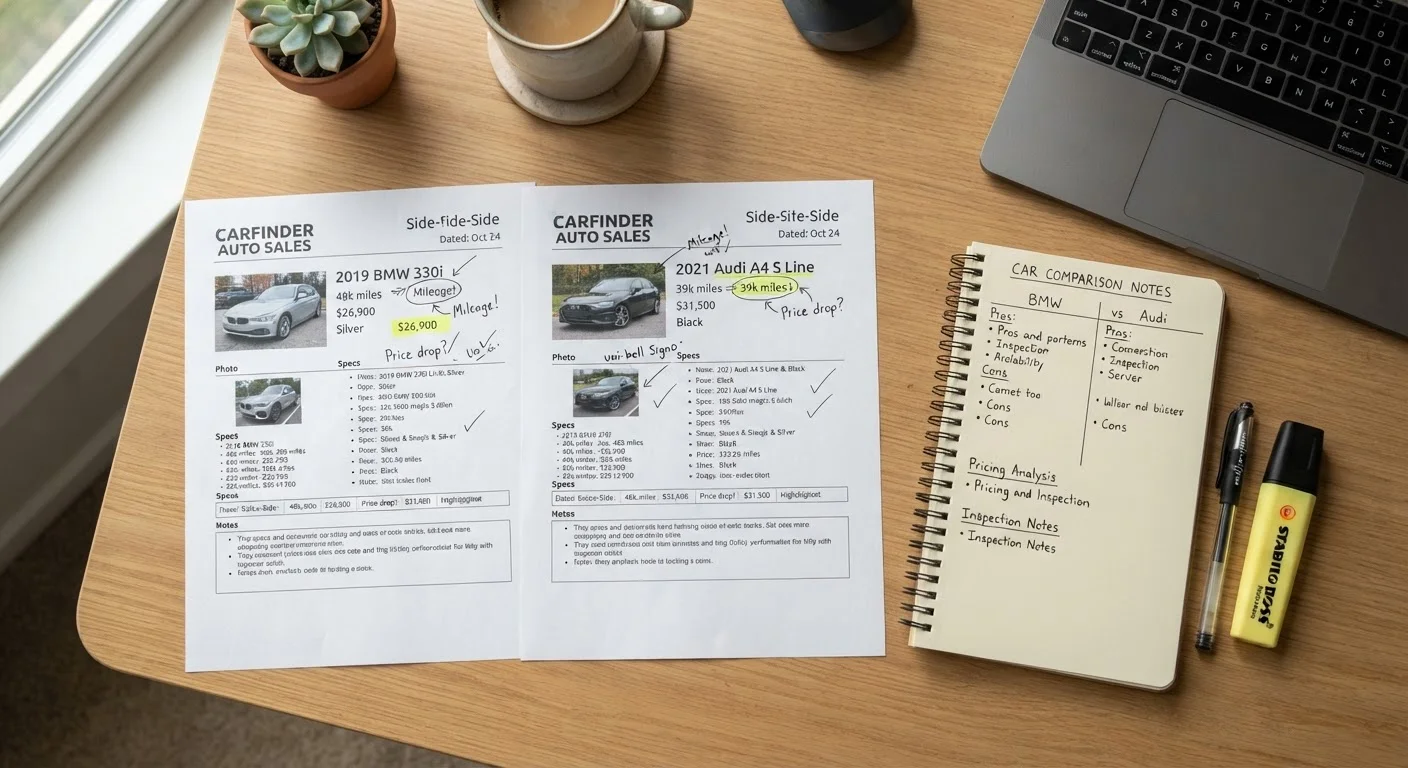
Once you've evaluated individual listings, see our structured approach to comparing multiple listings to rank your options systematically.
Vehicle Identity & Specification
Mileage & Usage History
Accident & Title History
Condition & Maintenance Documentation
Price & Market Benchmarking
Seller Transparency & Listing Quality
What to Do With What You Find
After working through the checklist, you should have a clear picture of three things: what the listing tells you, what it doesn't, and how the asking price sits relative to comparable vehicles. Gaps in the listing aren't automatically disqualifying - but they should shape how you open a conversation with the seller.
Listings Without a VIN Are High-Risk
Any private or dealer listing that omits the VIN makes independent verification impossible before you visit. Without a VIN you cannot check recall status, confirm title history, or validate the odometer record. Treat a missing VIN as a firm reason to request it in writing before investing further time. Sellers with nothing to hide have no reason to withhold it.
Valuation Tools Reflect Ranges, Not Fixed Prices
Publicly available pricing tools estimate market value based on aggregated data and may lag current regional supply and demand by weeks. Use them to establish a reasonable range and flag outliers, not to arrive at a single 'correct' price. Condition, documented service history, and local market factors all justify deviation from a published estimate.
If the listing passes your initial review, your next step is preparing for the actual visit or negotiation. Our pre-negotiation checklist walks you through setting limits, scripting key questions, and understanding dealer tactics before you walk in. If financing is involved, review how to read a loan offer before signing so the terms you agreed to in conversation match what appears in writing.
For used sedans specifically, pair this listing review with a structured physical inspection checklist once you're on-site. A listing can only tell you so much - condition details require eyes on the vehicle.
This article provides general informational guidance on evaluating vehicle listings. It is not a substitute for professional mechanical inspection, legal advice, or personalised financial counsel. Consult qualified professionals for decisions specific to your situation.