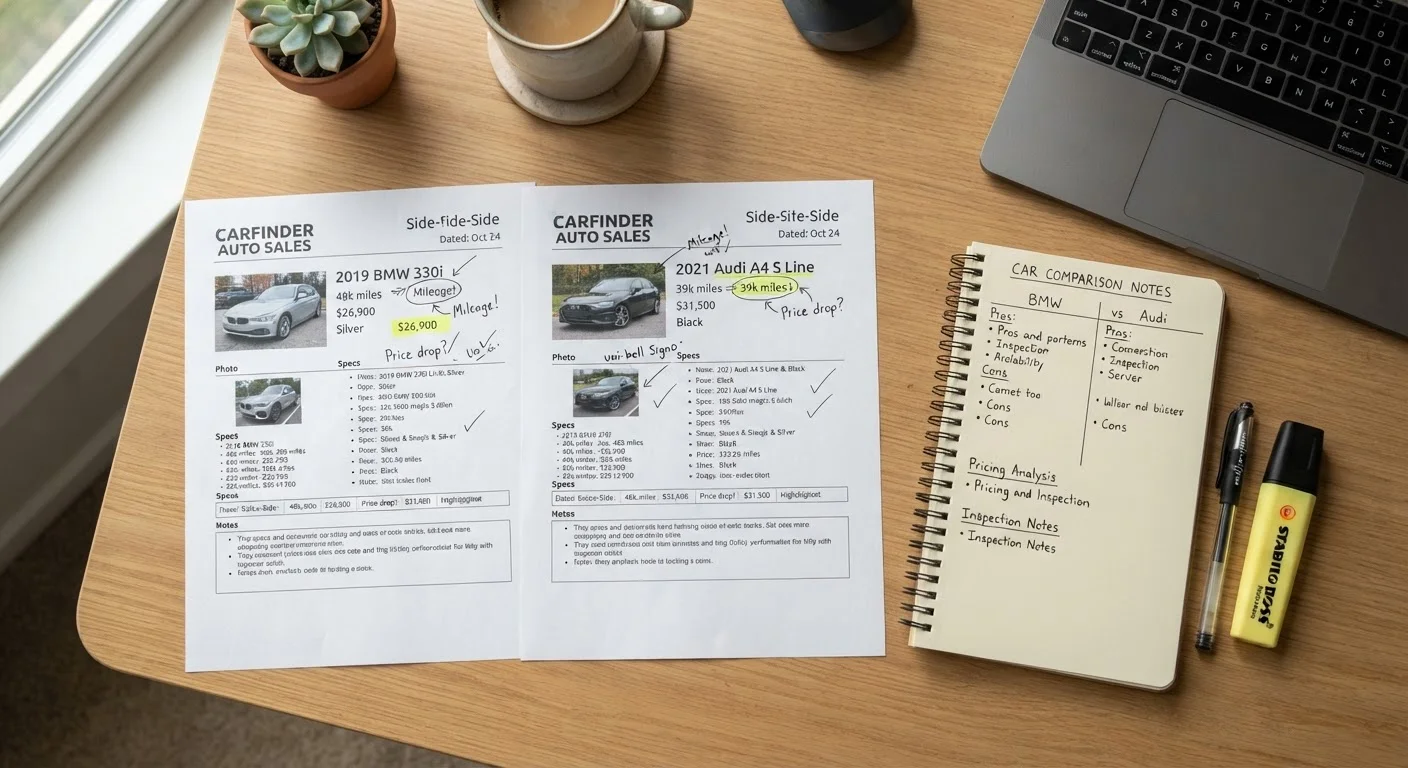

Why Preparation Is Your Most Valuable Negotiating Tool
Most buyers spend more time researching a restaurant than they do preparing for a car purchase that could commit them to thousands of dollars over several years. The result is a structural disadvantage: salespeople negotiate every day; buyers negotiate once every few years. The gap closes when you arrive with documented research, clear limits, and a rehearsed position.
This checklist is designed to be worked through before you contact a dealer or visit a lot. Complete it at home, where you can think without time pressure or social dynamics nudging your decisions. If you haven't yet assessed a specific listing in detail, the pre-offer listing checklist pairs directly with this guide. For a deeper look at what happens when buyers skip the numbers step entirely, see Negotiating Without a Number in Mind.
Market Research
Your Numbers
Financing Preparation
Trade-In Preparation
Dealer Tactics Awareness
Logistics and Mindset
Tools You'll Need to Work Through This Checklist
These aren't software endorsements - they're categories of resources. Use whichever specific tools or platforms you have access to within each category.
Vehicle Valuation Tool
Used to establish independent market value estimates for the vehicle you're buying and the trade-in you're selling.
Comparable Listing Aggregator
Used to collect real asking prices for similar vehicles in your region to anchor your offer with market data.
Credit Report Access
Used to review your credit file from all three major bureaus and identify errors before applying for financing.
Loan Calculator
Used to model how different interest rates and loan terms affect total cost and monthly payment, so you can evaluate financing offers accurately.
State DMV Fee Reference
Used to look up registration, title, and tax fees in your state so you can calculate a realistic out-of-door price estimate.
Recall Database
Used to check whether the specific vehicle you're considering has any open safety recalls that haven't been remedied.
Know Your Financing Position Before You Walk In
One of the most common dealer advantages is controlling the financing conversation. When a buyer doesn't know their credit standing or what rate they qualify for externally, the dealer's finance office becomes the only reference point. Arriving with a pre-approval letter from a bank or credit union doesn't obligate you to use that lender - it gives you a number to compare against whatever the dealer offers.
Don't Let Financing and Purchase Price Get Merged
Dealers may present a single blended monthly payment that obscures how much you're actually paying for the vehicle versus the financing. Always confirm the out-the-door vehicle price as a separate line item before discussing loan terms. If those conversations are repeatedly merged, ask for each figure in writing before proceeding.
Review your credit report for errors before applying anywhere. Disputed inaccuracies can take weeks to resolve and may affect the rate you're quoted. The credit readiness checklist walks through exactly what to examine. Once you have a loan offer in hand, the loan offer review checklist helps you verify every figure before signing. For broader context on how rates and terms affect total cost, the Rates & Terms hub is a useful reference.
Your Walk-Away Price Must Be Set Before You Arrive
Once you're in a finance office, emotional investment, time spent, and social pressure all work against your ability to make a clear-eyed decision. The walk-away number you set at home - calmly, with full information - is more reliable than any figure you arrive at under negotiation conditions. Write it down and treat it as a commitment to yourself, not a starting point for compromise.
This article provides general educational information about car-buying preparation. It is not personalised financial, legal, or investment advice. Consult a qualified financial professional for guidance specific to your circumstances.