Why Spec Sheets Matter More Than the Box Photo
A floor liner is one of the most utilitarian accessories you can add to a vehicle - but marketing photography makes nearly every option look equally capable. The spec sheet is where meaningful differences actually appear. Just as sedan buyers benefit from learning which figures carry real weight (see our guide to reading sedan spec sheets), floor liner shoppers gain a real edge by knowing which spec entries matter and which are filler.
The key spec categories to evaluate are: material composition and grade, construction method, retention system, wall height, and fitment precision. Each one has a direct, practical implication for how the liner performs in daily use.
Material Composition and Temperature Performance
Most quality floor liners use one of three base materials: thermoplastic elastomer (TPE), thermoplastic olefin (TPO), or high-density polyethylene (HDPE). Each formulation has a different flexibility profile, particularly in cold temperatures.
TPE liners tend to stay pliable in sub-freezing conditions, which matters if you're pulling a liner out to shake it clean in a northern winter. HDPE-based liners are often more rigid by design - useful for holding a molded shape under heavy boots but more prone to cracking when bent sharply in the cold. TPO sits between those two poles.
Check the Temperature Rating, Not Just the Label
Terms like 'all-season' and 'all-weather' appear on liners across the full quality range. A stated temperature flexibility rating - such as 'remains pliable to −40°F' - is a concrete, verifiable claim. If the spec sheet lacks a number, the label alone isn't a reliable guide to cold-weather performance.
Beyond the material name, look for a stated temperature range on the spec sheet - for example, "remains flexible to −40°F." That single line tells you far more about real-world durability than a vague "all-weather" claim.
Fitment Precision: What Laser Scanning and CAD Actually Mean
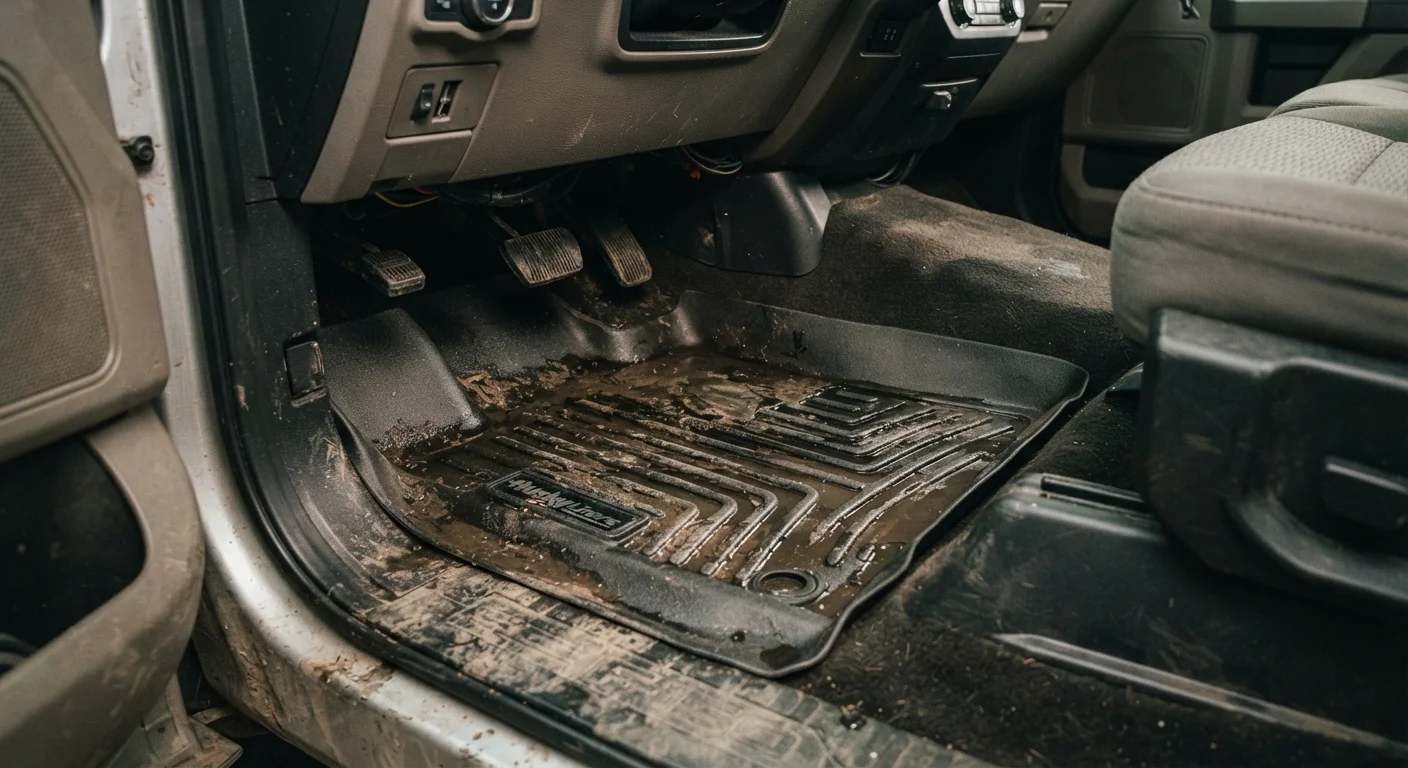
Fitment precision is where floor liners diverge most sharply in quality. Spec sheets will often note whether the mold was generated from laser scanning or CAD modeling of the actual vehicle floor. This is meaningful: a liner built from accurate scan data will hug the contours of the footwell closely, leaving fewer gaps underneath where dirt and moisture can migrate onto the carpet.
Universal-fit liners use generalized dimensions and rarely achieve full-footwell coverage. Semi-custom liners use hand measurements for specific models but may not account for trim-level differences. Full custom liners, built from vehicle-specific scan data, provide the tightest fit - and the spec sheet should say so explicitly, ideally listing compatible years and trim levels rather than just a model name.
Trim-Level Fitment Is Not Optional Detail
Vehicle floor geometry can vary between trim levels of the same model year due to features like all-weather packages, in-floor storage bins, or different center console configurations. A spec sheet that lists only a model name without trim distinctions may be intentionally vague. Always confirm your trim is explicitly listed or contact the manufacturer before purchasing.
Retention Systems and Wall Height: The Safety-Critical Specs
Two specs that directly affect driver safety are often underread: the retention system and the wall height.
Retention clips or anchors attach the liner to factory-installed hook points in the vehicle floor. The spec sheet should identify whether the retention system is compatible with your vehicle's OEM anchor design. A liner that relies solely on friction - or that uses a retention clip not designed for your floor hook pattern - may shift underfoot. Federal Motor Vehicle Safety Standard No. 226 (FMVSS 226) sets requirements for floor covering retention in new vehicles; aftermarket liners should reference compatibility with those anchor points.
Wall height determines how effectively the liner contains spills and debris. Spec sheets may list this in inches along the door sill, the firewall, and the center console edge. Higher walls (typically 2" or more) are effective for work trucks, camping rigs, or vehicles used in wet or muddy conditions. Lower-profile liners are lighter and easier to remove but sacrifice containment.
FMVSS 226
Federal standard governing floor mat retention
NHTSA's Federal Motor Vehicle Safety Standard No. 226 sets retention requirements for floor coverings to prevent pedal interference - a benchmark aftermarket liners should reference.
3D Scan
Fitment method that most closely mirrors factory floor geometry
Laser scanning captures floor contours to within fractions of a millimeter, reducing the fit gaps common in hand-measured or universal liner designs.
Reading the Spec Sheet in Sequence
When you're comparing liners, work through the spec sheet in a consistent order: material and temperature rating first, then fitment method and listed trims, then retention compatibility, then wall height. That sequence surfaces the performance-critical information before you're distracted by weight, color, or accessories included.
Weight itself is a minor spec, but it can indicate material density. An unusually light liner for its size may indicate thinner walls or a lower-grade compound. A heavier liner isn't inherently better, but a meaningful weight discrepancy between two otherwise similar-looking options is worth investigating.
The spec sheet won't tell you everything - factors like texture grip under wet boots or ease of installation only emerge through use. But it will filter out liners that are fundamentally mismatched to your vehicle or your conditions before you get that far.