What Each Product Actually Does
Walk into any auto parts store and you'll find seat covers and seat protectors shelved near each other, often marketed interchangeably. They're not the same thing, and treating them as such leads to buying the wrong product for your situation.
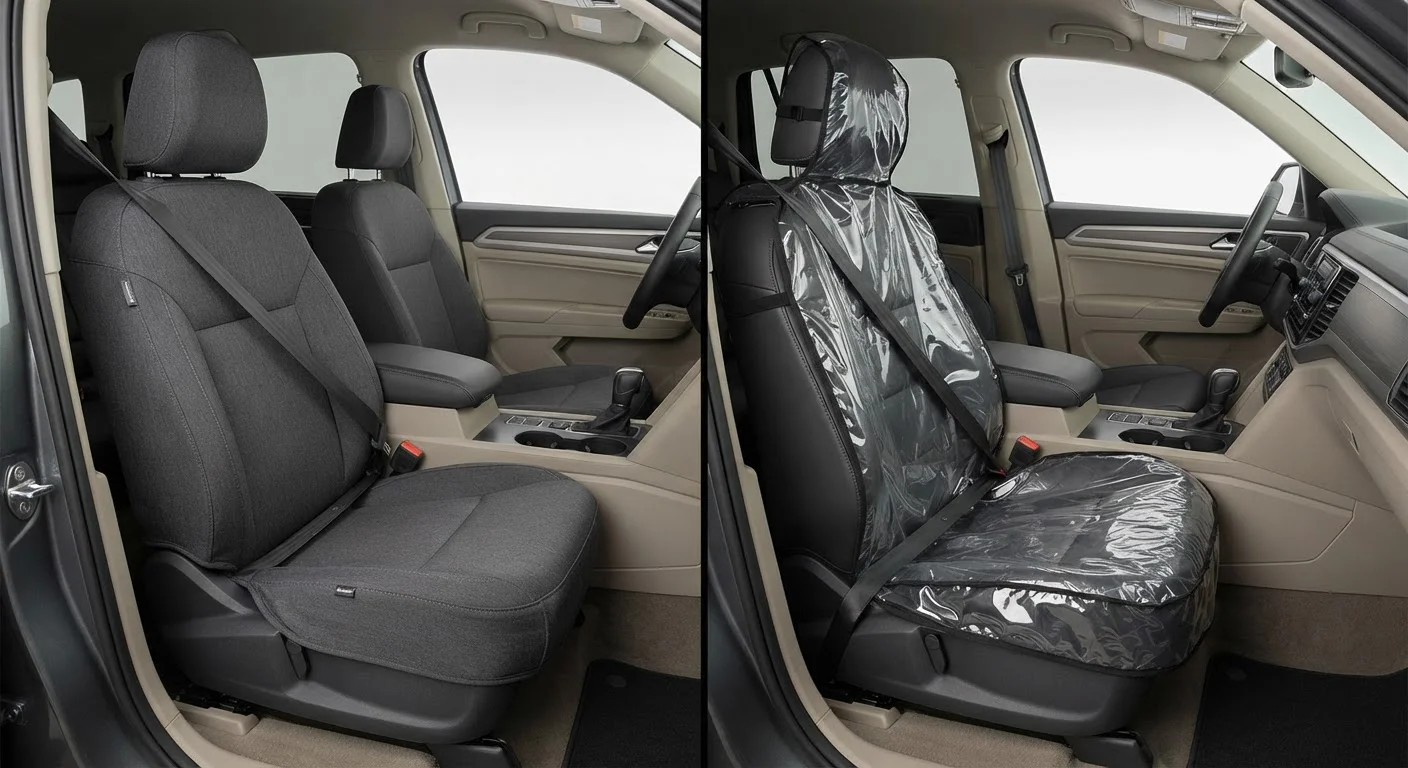
Seat covers are full enclosures - they wrap around the seat back, cushion, and sometimes the headrest to replace what's visible. Think of them as a new skin for your seat. They come in materials ranging from basic polyester to neoprene, canvas, leatherette, and sheepskin. Because they're engineered to fit the entire seat, they typically require more involved installation.
Seat protectors are purpose-built shields for a specific zone or use case. A rear-seat kick mat, a bench-top waterproof liner for hauling a wet dog, or a cargo-area overlay - these are seat protectors. They're thinner, faster to install, and designed to be removed when the threat is gone. They don't alter the underlying appearance of your interior.
| Criterion | Seat Covers | Seat Protectors |
|---|---|---|
| Coverage area | Full seat - back, cushion, headrest | Targeted zone (surface, back panel, etc.) |
| Installation time | 15-45 minutes per seat | 1-5 minutes |
| Aesthetic impact | High - changes interior look entirely | Low - minimal or invisible |
| Airbag compatibility risk | Possible - must verify fit type | Lower risk in most configurations |
| Best use scenario | Long-term wear protection or style refresh | Frequent, temporary hazard protection |
| Cleaning ease | Varies by material - some hand-wash only | Usually machine washable or wipe-clean |
| Typical price range | Higher - custom fit costs more | Lower - simpler construction |
Fit, Safety, and Compatibility Considerations
One of the most overlooked factors when shopping either product is side-impact airbag compatibility. Many factory seats integrate side airbags into the seat bolster - the outer edge of the seat back. A poorly fitting seat cover can impede airbag deployment in a collision.
Look specifically for seat covers labeled airbag-compatible or side-airbag safe, which use a seam designed to split cleanly on impact. Universal-fit covers are more likely to present this issue than vehicle-specific custom-fit options. Seat protectors - because they typically drape over the top surface rather than enclosing the full seat - are less likely to interfere, though it's worth confirming with your vehicle's owner manual.
Custom-fit seat covers also retain better access to seat adjustment controls, LATCH anchors for child seats, and seat belt mechanisms. If you use a child safety seat regularly, verify that the cover doesn't compromise the belt path or anchor access before installing.
Child Seat and LATCH Anchor Access
Federal safety standards require LATCH (Lower Anchors and Tethers for Children) anchors to be accessible and functional in equipped seating positions. Seat covers that block or impede anchor access create a real safety concern. If you install a seat cover on a position used for a child restraint, confirm that all anchors and belt paths remain fully accessible before use. When in doubt, consult the seat cover manufacturer's compatibility notes for your specific vehicle.
Durability, Materials, and Real-World Trade-Offs
Material selection drives how long either product lasts and how well it performs under pressure.
For seat covers, canvas handles abrasion from tools, boots, and rough use better than polyester blends. Neoprene - the same material used in wetsuits - repels water effectively and holds up in wet or muddy conditions. Leatherette is easier to wipe clean but can crack over time in climates with extreme temperature swings. Sheepskin remains comfortable across temperatures but requires more maintenance to prevent matting.
Seat protectors are typically made from polyester, oxford cloth, or reinforced waterproof materials. The key performance indicator is the waterproof membrane - look for a fully bonded waterproof layer, not just a water-resistant coating that degrades with washing. Silicone-backed mats stay in place better than plain fabric; this matters if the protector shifts every time someone gets in and out.
Ease of cleaning also separates the two products in practice. Most seat protectors are machine washable or can be wiped clean in under a minute. Seat covers vary - some can be machine washed, others require spot cleaning or professional care. This matters more than most buyers anticipate once daily life sets in.
~60%
Resale value impact from interior condition
Vehicle appraisers generally cite interior condition - including upholstery - as a major factor in used-car valuations, with some estimates placing interior damage among the top causes of value reduction.
15-45 min
Typical seat cover installation per seat
Custom-fit covers take longer than universal options due to more precise tucking and fastening, particularly on seats with integrated side airbags or complex bolster shapes.