Where the Price Gap Comes From
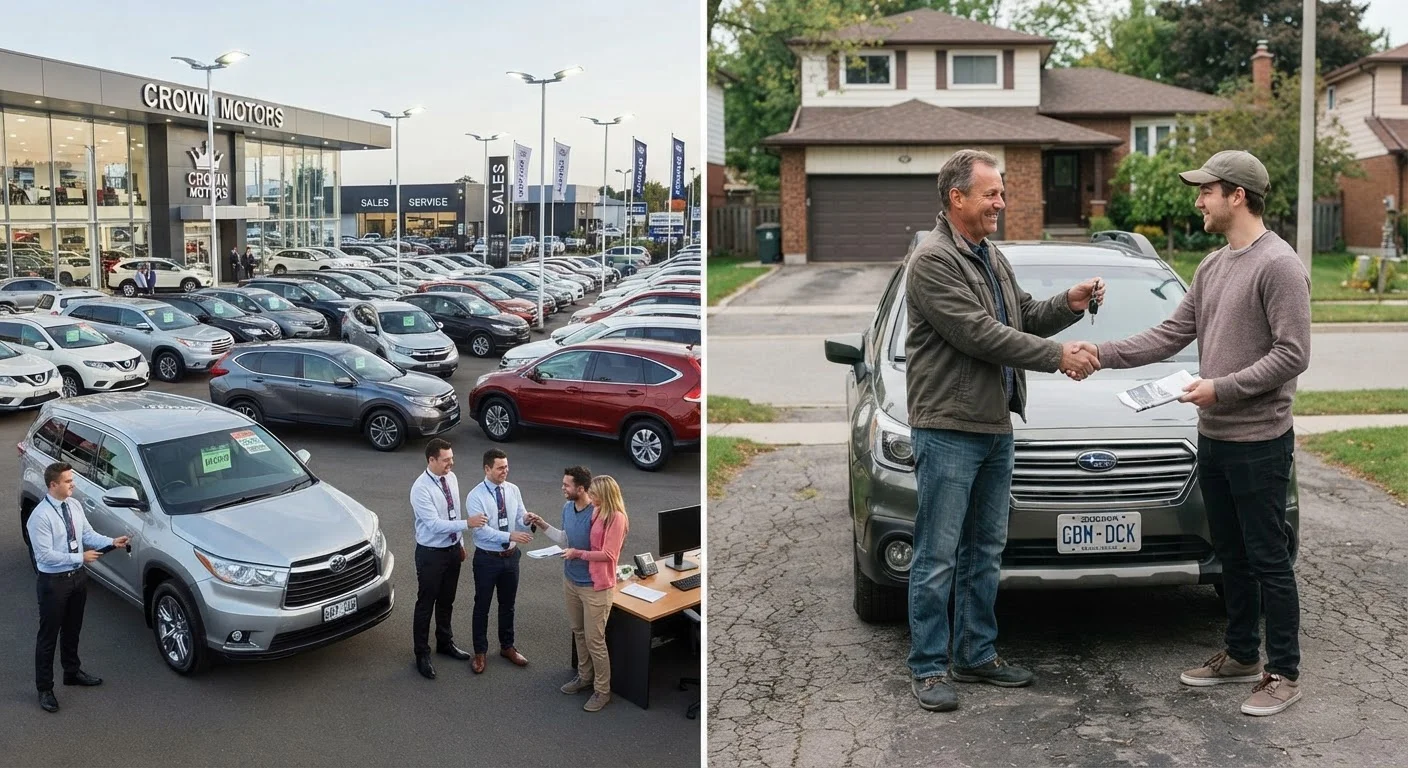
When dealers acquire a used vehicle - through trade-in, auction, or direct purchase - they don't simply mark it up and place it on the lot. Before any buyer sees it, the vehicle typically goes through a reconditioning process: mechanical inspection, fluid changes, cosmetic repairs, and sometimes a safety certification. Those costs are embedded in the asking price.
On top of reconditioning, dealers carry structural overhead: lot rent or mortgage, staff wages, insurance, advertising, and compliance costs. A private seller has none of these. That structural difference alone can account for several hundred to several thousand dollars in price separation for a comparable vehicle.
Dealer prices also reflect a margin for negotiation. Most retail listings are not the dealer's final number - they are a starting point. Understanding this helps you approach a dealer price not as a fixed fact but as an opening position. For a detailed look at how the numbers on a dealer's window sticker relate to each other, see Invoice Price, MSRP, and Market Value.
| Criterion | Dealer Price | Private Sale Price |
|---|---|---|
| Typical price level | Higher - overhead and margin included | Lower - no structural overhead |
| Reconditioning included | Usually yes, reflected in price | Rarely; condition varies widely |
| Warranty or guarantee | Often available (CPO or limited) | Typically sold as-is |
| Financing options | On-site financing common | Buyer arranges own financing |
| Negotiation room | Built into asking price | Variable; depends on seller motivation |
| Documentation and title process | Handled by dealer | Buyer and seller manage independently |
| Due diligence burden | Lower - dealer provides history, inspection | Higher - buyer must verify independently |
What Private Sale Pricing Actually Signals
A private sale price is usually closer to what the market calls "wholesale" or "trade-in" value - the price a dealer would pay to acquire the vehicle, not resell it. Because a private seller doesn't need to recover reconditioning or overhead costs, they can price lower and still walk away satisfied.
That lower price, however, shifts due-diligence responsibility to the buyer. There is typically no warranty, no certified inspection, and no formal recourse if a problem surfaces after the sale. This is not a reason to avoid private sales - it is a reason to budget for a pre-purchase inspection by a qualified mechanic before committing.
10-20%
Typical dealer-to-private price gap
Industry valuation guides generally show private party values running 10-20% below dealer retail for comparable vehicles in similar condition.
$500-$1,500
Estimated dealer reconditioning cost
Reconditioning expenses - mechanical checks, detailing, and minor repairs - are routinely factored into dealer asking prices before a vehicle reaches the lot.
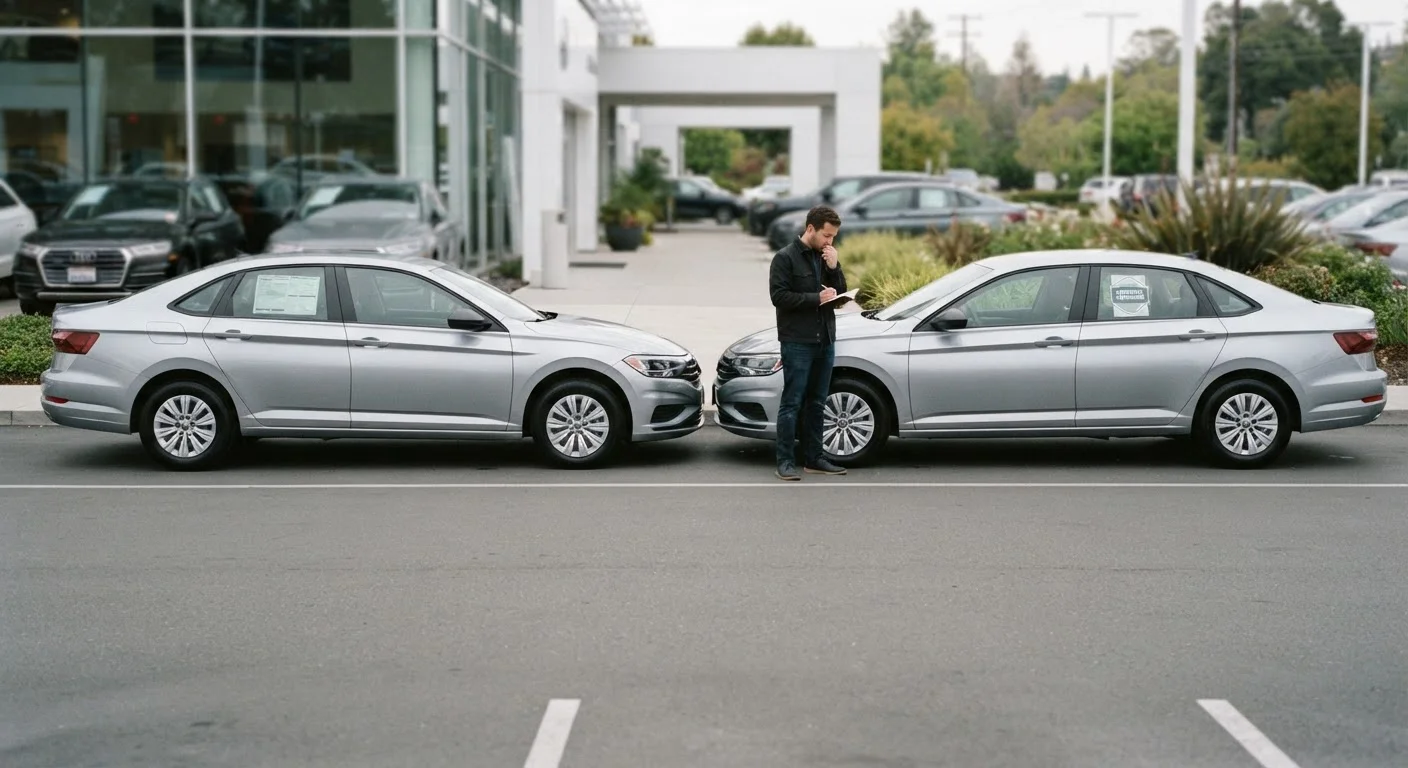
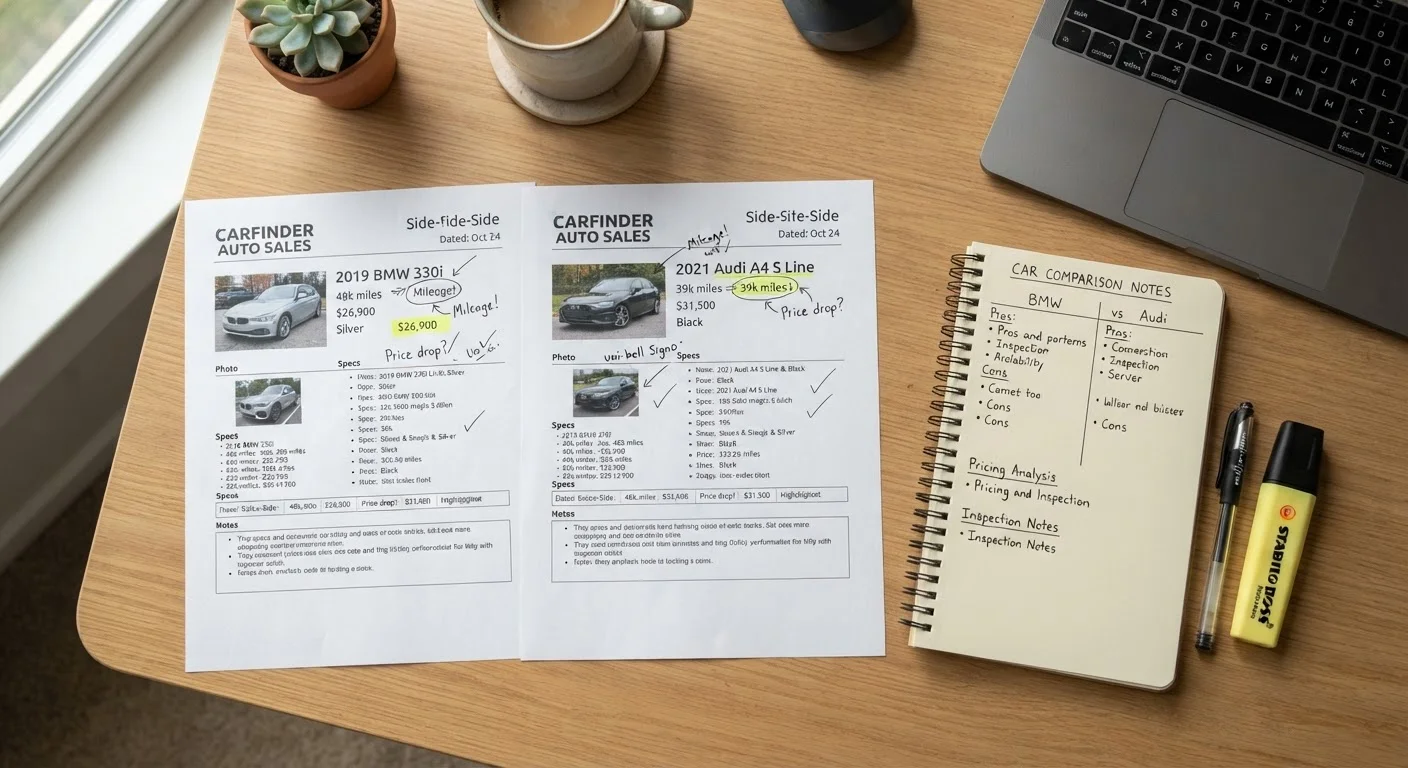
Private prices also carry more variability. A motivated seller relocating quickly may price 15% below comparable dealer listings. A seller with unrealistic expectations may price at or above dealer retail. Reading pricing distribution across multiple private listings - not just the lowest one - gives you a more accurate market picture. See Comparing Multiple Listings for the Same Model for a structured way to do that analysis.
Using Both Prices as Calibration Tools
Savvy buyers treat dealer retail and private sale prices as the upper and lower anchors of a vehicle's realistic value range. If a dealer listing sits close to current private-market prices, the room to negotiate is smaller - but the gap itself tells you something. If a private listing is priced at dealer retail, ask why: has the seller over-invested in the vehicle, or is it a genuinely rare configuration?
Timing also plays a role. Demand for certain vehicle types shifts seasonally, compressing or widening the spread between dealer and private prices. Seasonal patterns in vehicle pricing can shift both reference points by a meaningful margin depending on the time of year and vehicle category.
One more caution worth keeping in mind: a low asking price - dealer or private - is not the same as a good deal once all costs are on the table. Registration fees, deferred maintenance, and financing terms can erase an apparent saving quickly. Why a Low Asking Price Can Be the Most Expensive Number on the Page walks through how to account for those factors systematically.
Pre-Purchase Inspections Close the Gap
For private sales, a pre-purchase inspection (PPI) by an independent, qualified mechanic typically costs $100-$200 and can surface mechanical or safety issues that aren't visible during a test drive. If a seller declines to allow an inspection, that itself is meaningful information. Factor any flagged repair estimates directly into your offer or walk-away calculation.
This article is for general informational purposes only. Vehicle pricing varies by market, condition, and individual circumstances. Consult a qualified automotive professional or financial adviser before making purchasing or financing decisions.