Three Numbers, Three Different Stories
Walk onto any dealership lot and you'll encounter at least three distinct pricing figures before you sit down to negotiate. Each one tells you something different - and confusing them is one of the most common ways buyers leave money on the table. This reference breaks down what each number actually represents, where it comes from, and how it should shape your approach.
| MSRP Set By | The vehicle manufacturer |
| Invoice Price Set By | The manufacturer's billing to the dealer |
| Market Value Determined By | Aggregated real transaction data in a given region |
| Holdback Range (typical) | 1-3% of MSRP (Industry estimates; varies by manufacturer) |
| Window Sticker Label | Monroney label (federally mandated) (Automobile Information Disclosure Act (U.S.)) |
| Most Actionable Number for Buyers | Market value - reflects what buyers are currently paying |
For a deeper look at how these figures interact with real-world transactions, see the numbers behind a vehicle's listed price for additional context.
MSRP: The Manufacturer's Suggested Retail Price
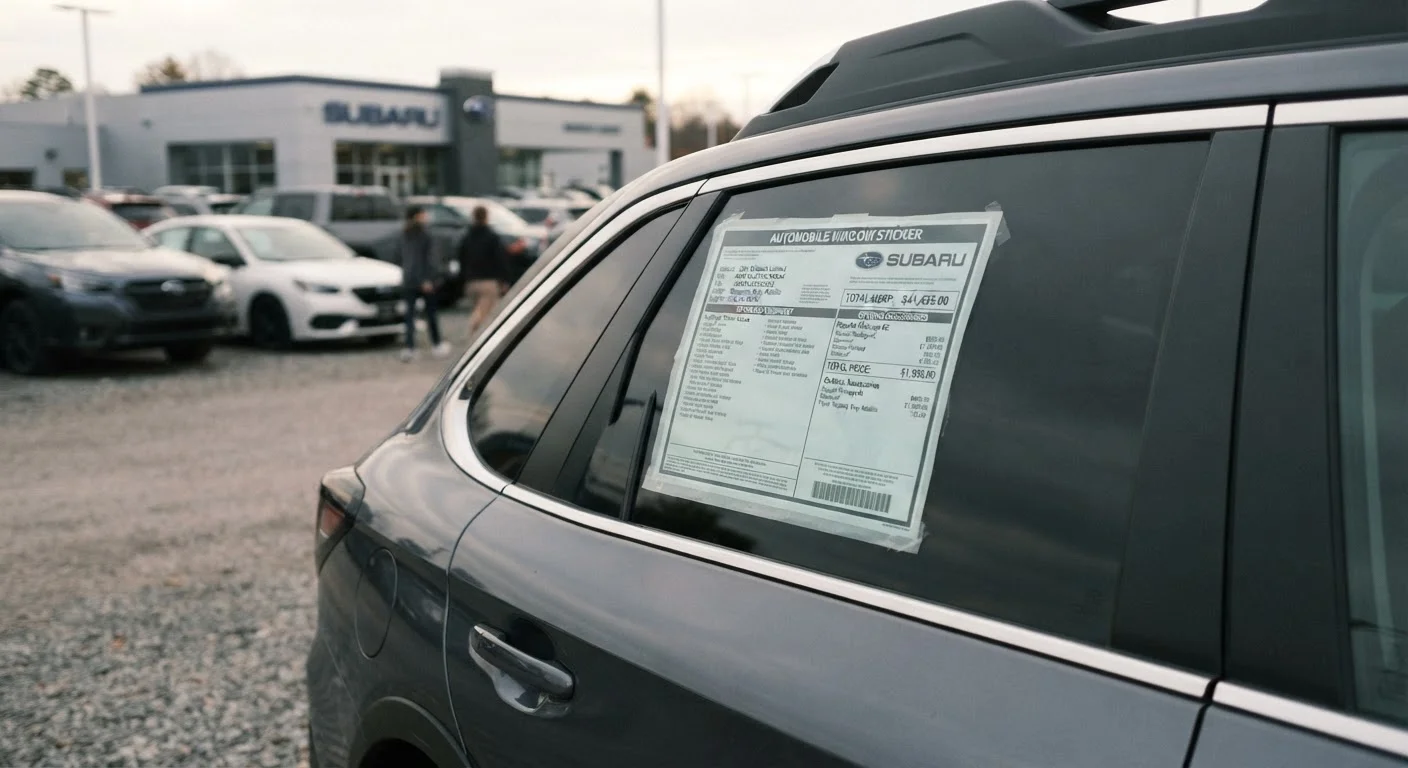
MSRP - Manufacturer's Suggested Retail Price - is the figure the automaker recommends as a selling price. It appears on the federally required Monroney label (the window sticker) and covers the base vehicle plus any factory-installed options. The operative word is suggested: dealers are not legally bound to sell at MSRP, and many don't.
MSRP serves two practical purposes for a buyer. First, it gives you a standardized baseline for comparing similarly equipped vehicles across different dealers. Second, it anchors the conversation - understanding where MSRP sits relative to invoice and market value tells you how much negotiating room typically exists.
On high-demand vehicles, dealers routinely add a market adjustment above MSRP. On slow-selling models, selling below MSRP is common. Neither outcome is inherently unfair - it reflects supply and demand - but you need to know which situation you're in before you start talking numbers.
Invoice Price: What the Dealer Paid (Approximately)
Invoice price is the amount on the manufacturer's bill to the dealer. It includes the base vehicle cost, factory options, and a destination charge. For decades, buyer guides positioned invoice as the dealer's true cost, making "invoice minus X" the holy grail of negotiation. The reality is more layered.
MSRP
Manufacturer's Suggested Retail Price - the automaker's recommended selling price, displayed on the federally mandated window sticker. It is a suggestion, not a legal cap on what dealers may charge.
Invoice Price
The amount on the manufacturer's bill to the dealer for a vehicle. It includes base cost, options, and destination charges, but does not reflect holdback payments or other incentives that reduce the dealer's actual net cost.
Holdback
A periodic payment from the manufacturer to the dealer, typically calculated as a percentage of MSRP, that is returned after the vehicle sells. It lowers the dealer's effective cost below invoice.
Market Value
The price at which comparable vehicles are actually selling in a specific region, derived from aggregated transaction data. It fluctuates with inventory, demand, and economic conditions and differs from both MSRP and invoice.
Market Adjustment
A dealer-added amount above MSRP, typically applied to high-demand or limited-supply vehicles. It is a separate line item and is negotiable in principle, though market conditions may justify it.
Dealer Cash
A manufacturer incentive paid directly to the dealer - distinct from consumer rebates - that further reduces the dealer's effective cost on a unit. It is not always disclosed voluntarily.
Dealers routinely receive payments that reduce their effective cost below invoice, including:
- Holdback: A percentage of MSRP (commonly 1-3%) that manufacturers rebate to dealers after a sale, effectively lowering their floor cost.
- Dealer cash / dealer incentives: Manufacturer payments made directly to the dealer, separate from consumer rebates. These are not always disclosed at the negotiating table.
- Volume bonuses: Dealers who hit monthly or quarterly sales targets may receive additional payments per unit.
This means that a price at invoice can still be profitable for the dealer - sometimes substantially so. Invoice is a useful data point, not a hard floor. To understand how manufacturer incentives flow through a deal, the article on manufacturer incentives and dealer cash explains the mechanics in detail.
Market Value: What Buyers Are Actually Paying
Market value is the price real transactions are clearing at - what buyers in your region paid for a comparable vehicle in recent weeks. Unlike MSRP or invoice, market value isn't set by the manufacturer; it's produced by aggregating actual sales data and can shift week to week based on inventory levels, interest rates, and seasonal demand.
Market Value Varies by Location and Timing
The same vehicle model can carry meaningfully different market values in different metro areas or regions, reflecting local supply and demand. Data from third-party automotive pricing resources is typically based on recent transactions and may lag real-time market shifts by several weeks. Always cross-reference multiple sources before treating a single figure as definitive.
Market value is arguably the most actionable number for a buyer. If market value sits below MSRP on a given model, you have factual evidence that other buyers paid less - which is a stronger negotiating position than simply asking for a discount. If market value is running above MSRP, as occurs with limited-supply vehicles, you'll know that paying over sticker may simply reflect current conditions rather than a dealer markup scheme.
For a full explanation of how market value is calculated and why it varies by location and condition, see what market value actually means. Also worth noting: the gap between dealer and private-sale prices can give you additional leverage when evaluating whether a dealer's ask is reasonable.
This article is for general informational purposes only and does not constitute financial, legal, or purchasing advice. Pricing figures and market conditions vary by region, time, and vehicle. Consult qualified professionals before making significant financial decisions.