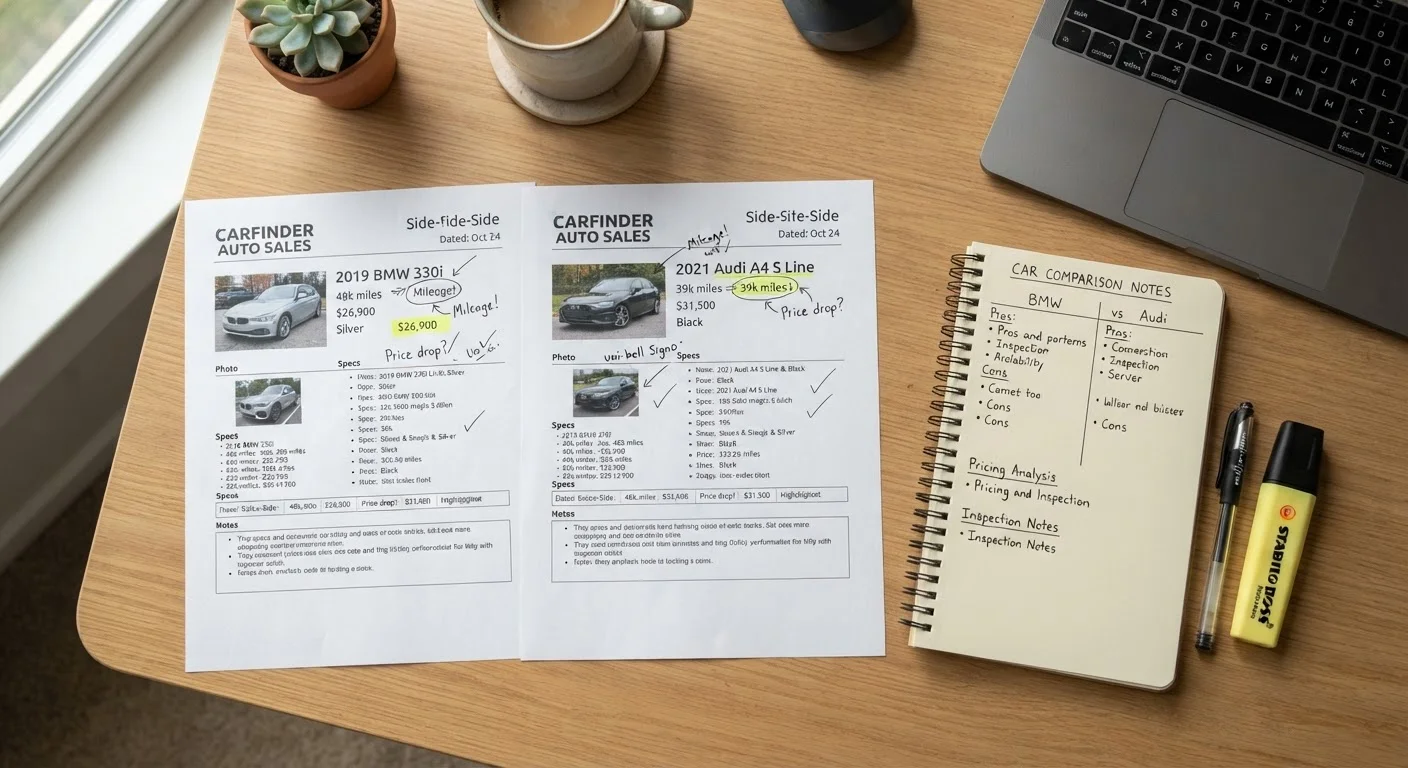

Why Vehicle Pricing Feels Confusing
Walk into a dealership or open a listings site for the first time and you'll encounter a layered stack of numbers: sticker price, asking price, trade-in value, dealer fees, and more. Each figure serves a different purpose, and sellers control which ones are most visible. That's not accidental.
Unlike buying a television or a pair of shoes, vehicle pricing involves negotiation, regional market variation, condition-based adjustments, and financing bundled in ways that obscure the true cost. First-time buyers are at a structural disadvantage simply because they haven't seen these patterns before.
The good news is that pricing evaluation is a learnable skill. It requires collecting the right data, understanding what each number represents, and comparing apples to apples. This guide walks you through that process step by step. For a broader look at how perception shapes pricing conversations, see how dealers use price anchoring - understanding those tactics makes your benchmarks even more powerful.
Key Price Terms Every Buyer Should Know
Before you can evaluate a price, you need a shared vocabulary. Misunderstanding these terms is one of the most common ways first-time buyers lose ground in negotiations.
MSRP
Manufacturer's Suggested Retail Price - the price the automaker recommends dealers charge. It's a starting point for negotiation on new vehicles, not a fixed or final price.
Invoice price
The amount a dealer paid the manufacturer for a vehicle before any holdbacks or manufacturer incentives. It sets a rough cost floor, though actual dealer costs can be lower.
Market value
What comparable vehicles are actually selling for in a given region and time period. This is the most practical benchmark for evaluating whether a listed price is fair.
Trade-in value
The estimated amount a dealer will credit you for your current vehicle when purchasing another. This figure is typically lower than private-party sale value.
Out-the-door price
The total amount you'll pay including vehicle price, taxes, registration, and dealer fees. This is the only number that allows a true apples-to-apples comparison between offers.
Depreciation
The reduction in a vehicle's value over time. New vehicles depreciate rapidly in their first few years, which is why lightly used vehicles often represent a different value proposition than new ones.
One term that deserves extra attention is out-the-door price. This is the total you'll actually pay - vehicle price plus taxes, registration fees, and dealer documentation fees. Always request this figure in writing before comparing offers, because two listings at the same asking price can have meaningfully different out-the-door costs depending on dealer fees and local tax rates.
If you're still building familiarity with financing terms that interact with price - such as APR, loan term, and capitalized cost - the auto financing fundamentals guide covers those foundations clearly.
How to Find Market Value Benchmarks
A benchmark is only as good as the data behind it. Use at least two or three independent sources to triangulate a realistic range rather than anchoring to a single figure.
- Online valuation tools: Several widely used platforms generate estimated trade-in and retail values based on vehicle year, make, model, trim, mileage, and condition. These are useful starting points. For a detailed breakdown of their strengths and blind spots, see how to use online valuation tools effectively.
- Active listings: Search for five to ten comparable vehicles currently listed in your region. Filter by the same trim level, a similar mileage band (within 10,000-15,000 miles), and comparable condition. Note both asking prices and any price-drop history visible in the listing.
- Sold/completed listings: Asking price is not transaction price. Some platforms show completed sales data, which reflects what buyers actually paid - a more grounded benchmark than asking prices alone.
- Seasonal context: Prices are not static. Demand for trucks, convertibles, and four-wheel-drive vehicles shifts with the calendar. The guide to seasonal pricing patterns explains when inventory tends to loosen and prices soften.
Use Local Listings as Your Primary Benchmark
National valuation estimates average across many markets and may not reflect your local supply and demand. If you're seeing five trucks listed locally at a consistent price well above the national estimate, that local data is more actionable than the national average. Weight regional comparables heavily in your analysis.
What Pushes a Price Up or Down
Once you have a baseline range, you need to assess where a specific vehicle sits within that range. Several variables consistently move the needle:
- Mileage
- Lower mileage generally commands a higher price, but the relationship isn't perfectly linear. A vehicle with 30,000 miles that hasn't been serviced regularly may be worth less than a higher-mileage example with a documented maintenance history.
- Condition
- Condition grades - typically ranging from poor through excellent - reflect both cosmetic and mechanical state. Request an independent pre-purchase inspection from a qualified mechanic before finalizing any offer. This is especially important for used vehicles where the seller controls what's disclosed.
- Trim level and options
- A base trim and a fully loaded version of the same model can differ by thousands of dollars. Confirm which trim you're looking at and cross-reference your comparables accordingly.
- Local supply and demand
- A pickup truck in a rural market may carry a premium that the same truck wouldn't command in a city. Regional demand shifts real transaction prices in ways that national averages don't always capture.
- Vehicle history
- Accidents, flood damage, and title issues (such as salvage or rebuilt titles) can materially reduce a vehicle's value and affect financing eligibility and insurability.
For vehicles that fall outside the standard used-car market - particularly collectibles - pricing logic differs substantially. The classic vehicle valuation primer covers those differences in depth.
Building Your Price Evaluation Checklist
Pulling this together into a repeatable process prevents you from making rushed decisions based on incomplete information. Before contacting a seller or making any offer, work through the following:
- Record the asking price and the full vehicle details: year, make, model, trim, mileage, and condition as described.
- Pull benchmark estimates from at least two valuation sources and note the range.
- Find five or more comparable active listings in your region and calculate the median asking price.
- Check for any available sold-price data on the same vehicle type.
- Identify which condition-based or demand-based factors would justify moving the price up or down from your benchmark.
- Request an out-the-door price breakdown in writing - never compare asking prices without accounting for fees and taxes.
- If the vehicle passes your price screen, move to a listing-level review before committing. The pre-offer listing checklist gives you a structured framework for that next step.
Don't Negotiate on Monthly Payment Alone
Focusing only on monthly payment rather than total vehicle price is one of the most common pricing mistakes first-time buyers make. A seller can stretch a loan term to lower your monthly number while increasing the total amount you pay significantly. Always evaluate the full purchase price and out-the-door cost before considering how it will be financed.
Pricing evaluation is also inseparable from total ownership cost. The purchase price is the largest single figure, but insurance, fuel, maintenance, and depreciation shape the real financial picture. Explore the ownership costs hub to build a complete picture before you commit.
This article provides general educational information about vehicle pricing concepts and is not a substitute for professional financial or legal advice. Prices, market conditions, and fee structures vary by region and change over time. Consult qualified professionals for decisions specific to your situation.