What the Four-Square Worksheet Actually Does
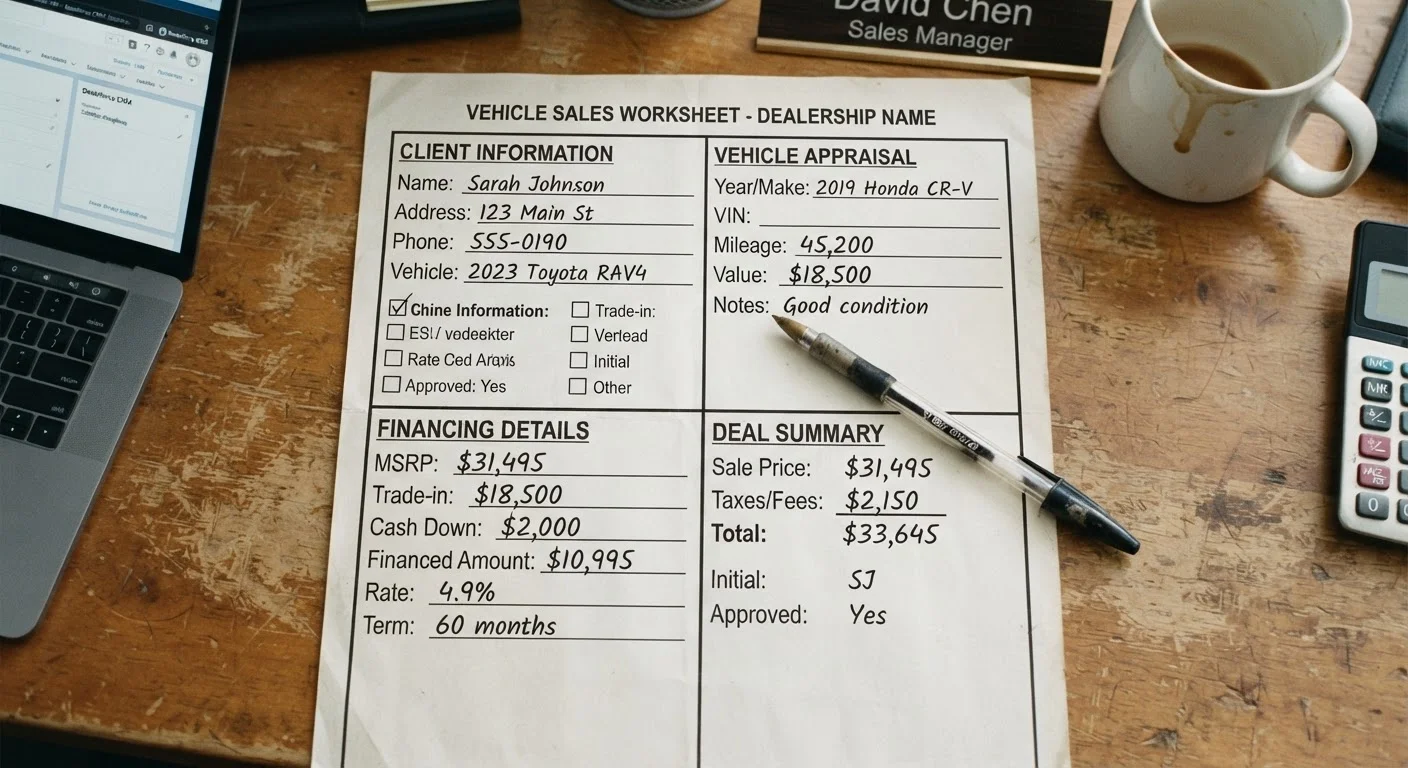
The four-square worksheet is a standard dealership sales tool designed to present a deal's key variables in a single visual format. On the surface it looks like a helpful summary - but its structure is intentional. By displaying vehicle price, trade-in value, down payment, and monthly payment simultaneously, it allows a salesperson to adjust any one variable while the others remain visually stable. That fluidity is the point.
Understanding this dynamic is foundational to reading the sheet clearly. As the anatomy of a dealership negotiation explains, each stage of the process has a distinct logic - and the four-square is the visual anchor for much of it.
Monthly Payment Focus Is a Distraction
When a dealer asks 'what can you afford per month?' they are redirecting attention from total cost to a single figure they can manipulate with loan term length. A payment-first conversation almost always works against the buyer. For a deeper look at this dynamic, see why dealers structure deals around monthly payments.
Before you sit down with any worksheet, you need independent reference points for all four variables. Without them, you're reacting to the dealer's numbers rather than measuring against your own.
What you will need
How to Read and Respond to Each Box
The steps below walk through each quadrant in the order that best protects your position. The sequence matters: locking in vehicle price before trade-in, and trade-in before financing, prevents a concession in one box from being absorbed invisibly by another.
Negotiate one box at a time
Dealers benefit when all four variables stay in motion simultaneously - it becomes harder to track what you're actually conceding. Ask to resolve the vehicle price completely before discussing trade-in, down payment, or financing terms. This sequential approach keeps the math transparent and your position clearer throughout.
Vehicle Valuation Reference
Provides an independent estimate of the vehicle's market value and your trade-in's worth before you enter negotiation.
Loan Amortization Calculator
Lets you verify what a given price, rate, and term actually produce as a monthly payment, exposing inflated figures.
Notepad or Spreadsheet
Lets you track each quadrant's figures as they change across counter-offers without losing your reference point.
Recognize the worksheet's structure
When a salesperson slides a piece of paper across the desk divided into four boxes, you're looking at the four-square worksheet. The four boxes represent: Vehicle Price (top-left), Trade-In Value (top-right), Down Payment (bottom-left), and Monthly Payment (bottom-right). Each box is a lever - moving one affects the others.
Identify the monthly payment anchor
Dealers typically open by writing a monthly payment figure in the bottom-right box. This number often reflects a long loan term (72 or 84 months) at an unstated interest rate. A low monthly figure can mask a high total cost. Do not accept or reject this number until you know the interest rate and term behind it.
Pin down the vehicle price first
Before discussing any other box, ask for the out-the-door price in the vehicle price quadrant. This figure should include all dealer fees, documentation charges, and applicable taxes. Once you have a concrete number, you can cross-check it against your independent research. The pre-offer checklist is useful preparation for this step.
Address the trade-in separately
The trade-in quadrant is where values most commonly get obscured. A dealer may offer a seemingly strong trade-in number while quietly increasing the vehicle price to compensate. Treat your trade-in as a separate transaction with its own floor - the independent market value you researched beforehand. If the dealer insists on bundling both, note each figure individually before responding.
Evaluate the down payment box
The down payment quadrant affects your loan principal and therefore your monthly payment. Dealers sometimes inflate this box to reduce a monthly figure that was artificially high to begin with. Before agreeing to a down payment, recalculate the monthly payment yourself using a loan amortization calculator with the vehicle price you've already confirmed.
Reconcile all four boxes before signing
Once individual figures are agreed, verify that they are mathematically consistent. Plug the vehicle price minus your down payment into your amortization calculator at the stated interest rate and term. The result should match the monthly payment in the fourth box. Any discrepancy signals an undisclosed fee or rate change. Do not proceed to the finance office until all four figures reconcile.
Once you've worked through all six steps, you'll have a complete, internally consistent deal on paper - which is the only foundation worth taking into the finance office. For broader context on how to evaluate the listing that brought you to this vehicle in the first place, the pre-offer checklist covers the groundwork.
Your Research Numbers Must Come First
Walking in without independent price and trade-in data means the dealer controls every reference point on the worksheet. Before visiting any dealership, establish your own figures for all four boxes. The pre-negotiation checklist walks through exactly what to prepare.
This article provides general educational information about dealership negotiation practices and is not financial or legal advice. Consult a qualified financial professional for guidance specific to your situation.