Why Niche Vehicles Demand a Higher Documentation Standard
A mainstream collector car - a popular muscle car or a widely produced European sports model - benefits from decades of accumulated registry data, published production figures, and a large community of knowledgeable buyers who can cross-reference claims instinctively. A niche vehicle has none of those built-in checks. Whether the subject is a limited-production kit car, a coach-built one-off, a low-volume imported marque, or a purpose-built competition vehicle, the burden of proof falls almost entirely on the owner.
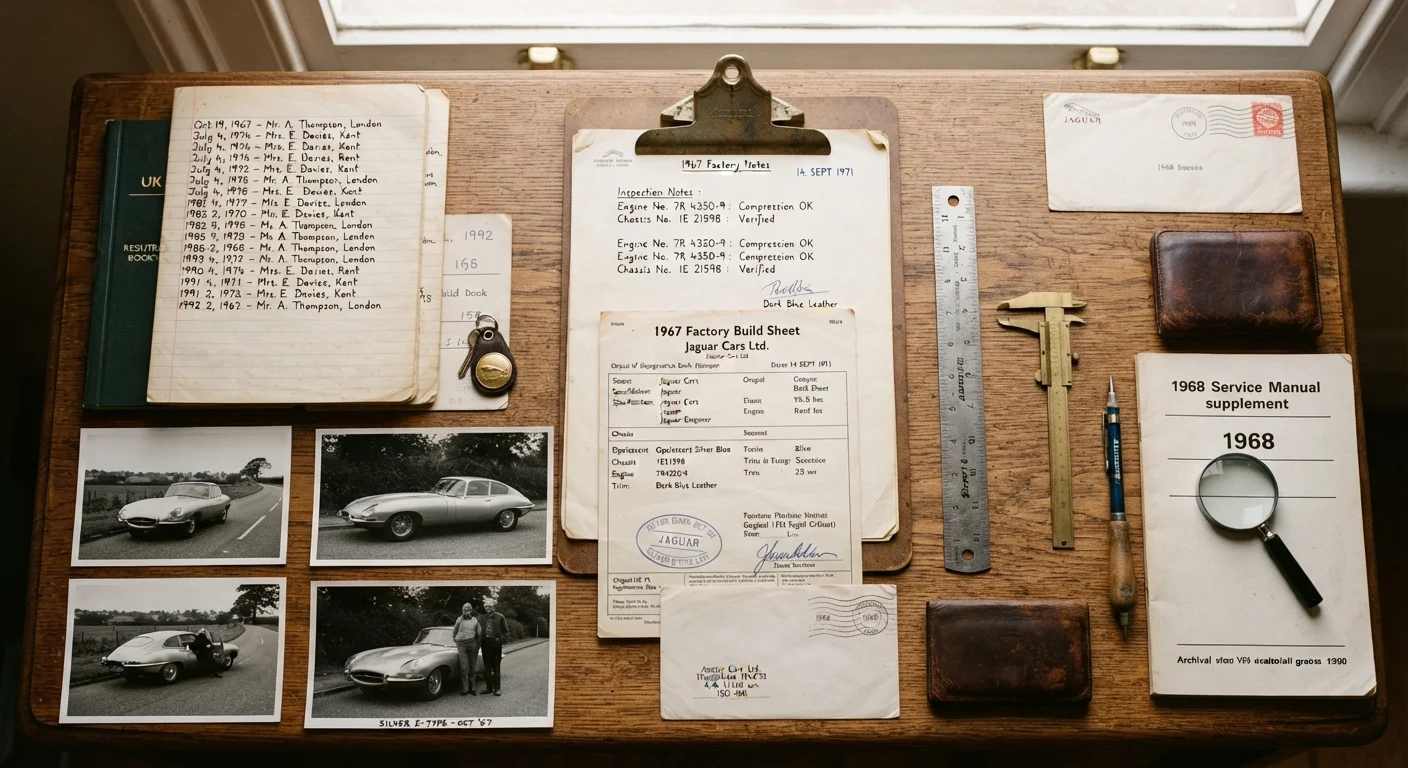
Appraisers working the specialty segment operate under greater uncertainty, and auction houses that serve discerning collector buyers have responded by raising their documentation expectations accordingly. A file that might satisfy a standard insurer - a clean title and a handful of photographs - will not survive the scrutiny of a serious pre-auction review. What serious reviewers actually need is a layered evidentiary record that corroborates the vehicle's identity, specification, condition, and history from multiple independent sources.
What you will need
The steps that follow describe how to build that file methodically. The tools and time required are modest; the discipline required is not.
Preparing Your Documentation File: Tools and Materials
High-Resolution Camera or Smartphone
Captures detailed photographic evidence of bodywork, stampings, tags, and mechanical components.
UV or Blacklight Flashlight
Reveals hidden repairs, repainted panels, or altered stampings that are invisible under normal lighting.
Acid-Free Document Sleeves and Archival Binder
Protects original paper documents - titles, build sheets, receipts - from moisture and degradation.
Cloud or Encrypted External Storage
Creates a digital backup of all photographs and scanned documents in case originals are lost or damaged.
Vehicle-Specific Decoding Reference
Allows verification that VIN, trim tags, and option codes are internally consistent with the claimed specification.
Agreed-Value Policies Require a Qualified Appraisal
Most standard auto insurers use market-value formulas that are inadequate for rare or niche vehicles. Agreed-value coverage - which pays a fixed, pre-negotiated amount in the event of a total loss - typically requires a written appraisal from a credentialed specialist. Confirm with your insurer which appraiser credentials they recognize before commissioning the work. This content is general information, not personalized insurance or financial advice; consult a licensed insurance professional for guidance specific to your situation.
Before moving through the step-by-step process, assemble the physical and digital tools you will need. The investment in proper archival storage is small relative to the value it protects - original documents, once damaged, cannot be reconstructed. Equally important is a reliable backup strategy: a cloud-stored digital copy of every scanned document and photograph ensures that a fire, flood, or theft does not destroy the record you have spent time building.
Common Pitfalls and Final Submission Advice
The most common reason a documentation file fails appraisal review is not fraud - it is incompleteness. Owners assume that what they know about their vehicle is self-evident, and they submit files that omit context an outside reviewer cannot supply independently. Every claim in a file should be supported by at least one piece of independent evidence.
Gaps in Ownership History Raise Red Flags
Auction houses and sophisticated buyers treat unexplained ownership gaps - often called 'dark periods' - as a significant risk factor. A vehicle that disappears from recorded history for a decade or more invites questions about undisclosed damage, title issues, or odometer irregularities. Address any known gaps proactively in writing, with whatever supporting context is available, rather than leaving reviewers to draw their own conclusions.
When submitting to an auction house, contact the specialist responsible for your vehicle category before sending materials. Many major auction houses assign marque or segment specialists who can tell you precisely what their review committee will prioritize. Arriving with a well-organized, indexed file rather than a box of unsorted paperwork signals professionalism and makes a tangible difference in how your consignment is received.
This article is for general informational purposes only and does not constitute legal, financial, or insurance advice. Consult qualified professionals - including a licensed insurance adviser and a credentialed appraiser - for guidance specific to your vehicle and circumstances.