Why Helmet Myths Persist - And Why They Matter
Cycling helmets sit at the intersection of comfort preferences, cost sensitivity, and genuine safety engineering. That combination creates fertile ground for misconceptions. Some myths circulate because they contain a kernel of outdated truth; others thrive because the marketing language around helmets is rarely precise. Whatever the origin, acting on flawed assumptions about helmet performance is a real-world risk - not just a theoretical one.
The myth-versus-fact pairs below draw on how helmet certification standards work, what materials science tells us about foam behavior, and the documented relationship between fit and protection. If you've accepted any of these beliefs without scrutiny, the corrections are worth reading carefully.
For a broader look at how misconceptions shape purchasing decisions across vehicle categories, see our piece on myths in the specialty vehicle market.
Myth
More ventilation vents mean less protection because there's less material covering your head.
Fact
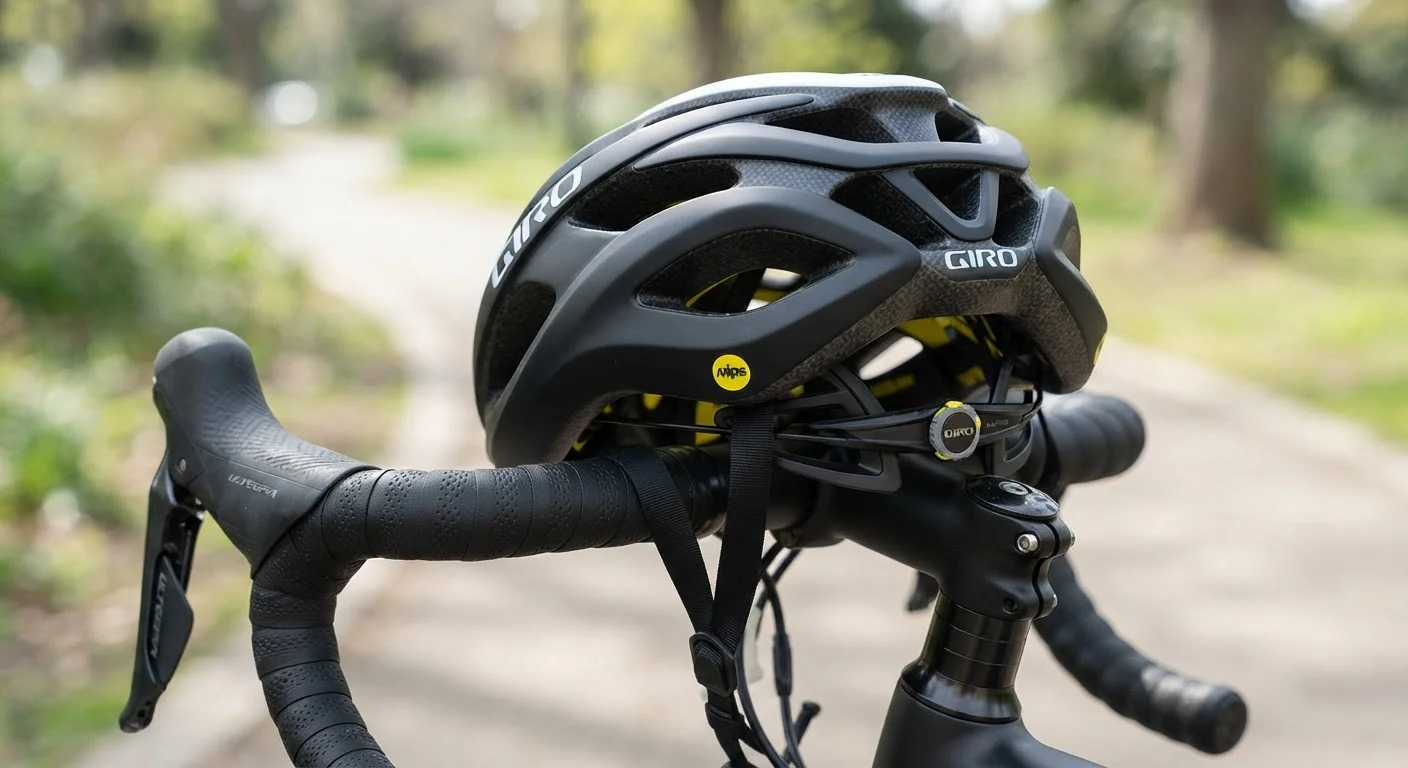
Certified helmets with extensive venting must still pass the same impact standards as less-vented models - structural ribs and liner geometry compensate for open channels.
Ventilation design is an engineering challenge, not a safety shortcut. Helmet manufacturers use finite-element modeling and physical testing to ensure that structural ribs between vents maintain sufficient stiffness and that the EPS liner retains adequate coverage. A helmet with 20 vents that holds a CPSC or equivalent certification has demonstrated the same minimum impact-attenuation performance as a low-vent model. The trade-off in highly vented helmets is more likely to involve liner thickness in specific zones - something addressed in advanced rating systems - rather than vent count per se.
Myth
If a helmet looks undamaged after a crash, it's fine to keep using it.
Fact
EPS foam can be permanently compressed by a single significant impact without any visible crack or deformation on the outer shell.
The outer polycarbonate or ABS shell of a helmet is designed to distribute force and resist penetration, but it does not absorb energy - the foam liner does that. EPS foam works through a one-time crush mechanism: microscopic air pockets collapse to dissipate kinetic energy, and they do not re-expand. A helmet that has absorbed a meaningful impact may look cosmetically intact while offering substantially reduced protection in a subsequent event. Most helmet manufacturers and safety organizations recommend retiring a helmet after any crash where the head contacted a surface, regardless of apparent shell condition.
Myth
Helmets are essentially one-size-fits-all - the adjustable straps handle any head shape.
Fact
Helmet fit depends on head circumference, head shape (round vs. oval), and correct retention-system adjustment - straps alone cannot compensate for a poorly matched shell size.
Helmets are typically sized by head circumference (measured in centimeters) and are available in multiple shell sizes. The retention dial at the rear adjusts the fit within a range, but it cannot transform a size-small shell into a secure fit for a large head, or vice versa. Beyond circumference, head shape matters: some helmets are designed for rounder profiles, others for more oval ones. A helmet that wobbles forward under light pressure, or that sits too high above the forehead, is not correctly fitted - and an ill-fitted helmet will not perform as tested in an impact scenario.
Myth
A certified helmet eliminates the risk of concussion.
Fact
Current helmet standards test for skull fracture and severe traumatic brain injury prevention; they do not certify protection against concussion, which involves different biomechanical forces.
Concussion results primarily from rotational acceleration of the brain inside the skull - a mechanism that differs from the linear impact forces that most certification standards measure. Standard CPSC testing drops a helmeted headform onto an anvil to measure peak linear deceleration; it does not assess rotational kinematics. Some helmets incorporate additional technologies - such as slip-plane liners or multi-density foam - specifically aimed at reducing rotational forces, and independent rating programs assess these properties. However, no currently available consumer helmet can guarantee concussion prevention. Helmets meaningfully reduce the severity of head injury risk; they do not eliminate it.
Myth
Helmets last indefinitely if stored properly and never crashed.
Fact
Most manufacturers and safety organizations recommend replacing helmets every three to five years due to material degradation, regardless of crash history.
EPS foam and the adhesives bonding retention components degrade over time through exposure to UV light, sweat, skin oils, and temperature cycling - even in storage. The outer shell can also become more brittle with age. While there is no universally mandated replacement interval backed by a single regulatory standard, the three-to-five-year guideline is widely cited by manufacturers and organizations including the Snell Memorial Foundation. A helmet purchased years ago and used regularly may have absorbed both environmental degradation and minor sub-threshold impacts that cumulatively reduce performance below its original certification level.
What the Evidence Actually Supports
Helmet safety research has advanced significantly over the past two decades. Standards bodies in the U.S. - including the Consumer Product Safety Commission (CPSC) - require helmets to pass impact-attenuation tests before reaching consumers. More recently, independent rating systems have introduced additional rotational-force assessments that go beyond minimum certification requirements.
Several points from this research bear directly on the myths above:
- Foam density and liner thickness are the primary variables in energy absorption - not the presence or absence of vents, provided the structural ribs between vents maintain integrity.
- EPS (expanded polystyrene) foam, the most common liner material, is a single-use energy absorber. Once compressed by impact, it does not recover. Visual inspection alone cannot confirm whether a liner is compromised.
- Retention systems - the dial- or strap-based adjustment mechanism at the rear - are not cosmetic. A helmet that shifts more than about an inch in any direction under moderate hand pressure is not fitted correctly and will not perform as tested.
After Any Head-Contact Crash, Replace Your Helmet
Do not rely on visual inspection to assess whether a helmet is still serviceable after an impact. EPS foam damage is typically invisible to the naked eye. If your head contacted a hard surface during a fall - even at low speed - retire the helmet before your next ride. Continuing to use a post-crash helmet assumes a level of protection that may no longer exist.
The pattern of evidence-versus-folklore in cycling safety echoes what we find in mechanical maintenance contexts too. Our article on persistent maintenance myths covers similar ground for vehicle upkeep.
3-5 yrs
Recommended helmet replacement interval
Most manufacturers and safety organizations cite a 3-5 year service life for cycling helmets, accounting for material degradation from UV, sweat, and temperature cycling.
~1 inch
Maximum acceptable helmet movement when properly fitted
Fit guidance from cycling safety resources generally holds that a correctly adjusted helmet should not shift more than roughly one inch in any direction under moderate hand pressure.
Ultimately, a helmet is a passive safety device - it works only as well as its fit, condition, and appropriate use allow. Treating certification as a binary pass/fail rather than a foundation for correct usage is its own form of misconception.