What a Roadside Kit Is Actually For
A roadside breakdown puts you in a vulnerable position: stranded on a shoulder, potentially in low light or bad weather, waiting for help that may be 30 minutes or more away. A roadside kit doesn't fix every problem - it manages the situation until a qualified mechanic or tow service arrives.
Think of the kit in terms of four functional jobs: making your vehicle visible to other drivers, restarting or stabilizing the vehicle if possible, managing a flat tire, and handling minor injuries. Every item in a well-built kit maps to one of those functions. Anything that doesn't serve a clear purpose is just weight.
For solo drivers especially, self-sufficiency in those first critical minutes matters significantly. If you're building out your general road-trip gear, solo road trip safety fundamentals covers the broader preparation picture beyond just the emergency kit.
Core Contents and Why Each Item Earns Its Place
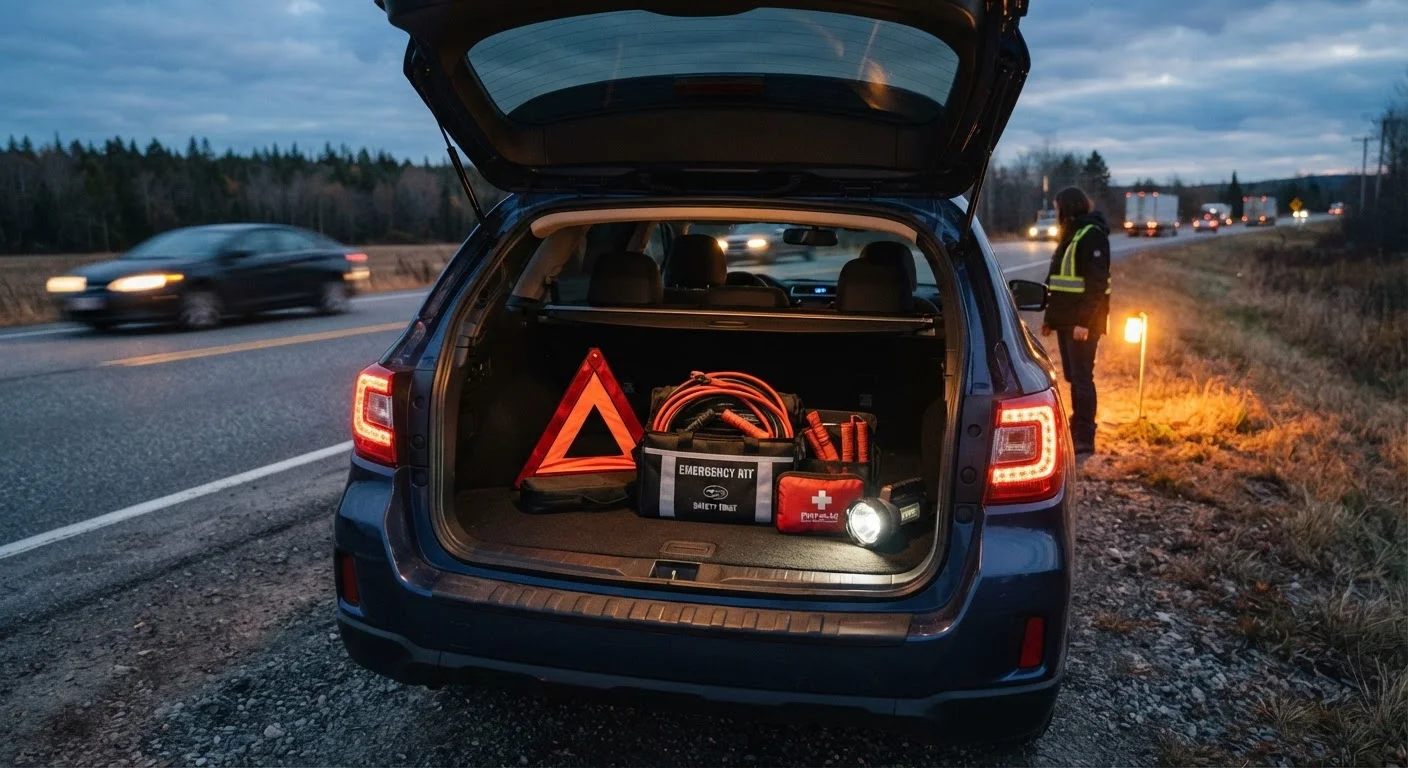
Visibility and signaling: Reflective warning triangles or LED flares should be placed behind the vehicle to alert oncoming traffic well before they reach your position. The goal is reaction time - at highway speeds, 300 feet of advance warning is the minimum considered safe. A high-visibility vest serves the same principle if you need to be outside the vehicle.
Jump-starting power: Jumper cables require a second vehicle; a portable jump starter pack works independently. The latter has become more compact and affordable and eliminates the dependency on a passing motorist. Either option addresses dead batteries, one of the most common breakdown causes.
Tire management: A compact inflator (12V air compressor) and a can of tire sealant handle slow leaks and minor punctures without a full tire change. If your vehicle still carries a spare, ensure you also have a serviceable jack and lug wrench - and that you know how to use them safely before you need to.
Basic first aid: Adhesive bandages, gauze, antiseptic wipes, medical tape, and nitrile gloves cover minor cuts and abrasions that occur during roadside work. This isn't a substitute for emergency medical care, but it handles the ordinary injuries that come with changing a tire on a gravel shoulder.
Utility items: A flashlight (or headlamp, which keeps hands free), emergency mylar blanket, work gloves, and a multi-tool round out the practical side of the kit. In winter driving regions, an ice scraper and a small bag of sand or kitty litter for traction are worth adding.
~1 in 3
Drivers who experience a roadside breakdown annually
AAA estimates it responds to tens of millions of calls per year, suggesting breakdowns are a routine rather than rare occurrence for American drivers.
30-45 min
Typical wait time for roadside assistance
Average response times vary by region and provider, but industry estimates commonly fall in the 30-45 minute range - the window your kit needs to cover.
~50%
Breakdowns attributed to battery failure or flat tires
Industry data consistently points to battery issues and tire problems as the leading causes of roadside calls, making those the core scenarios any kit should address.
Tailoring Your Kit to Your Driving Context
A one-size-fits-all approach undersells some drivers and overloads others. Consider three variables: distance from populated areas, climate and season, and vehicle type.
Urban and suburban drivers on familiar routes can carry a minimal kit because professional help is rarely far away. Highway and long-distance drivers - particularly those crossing stretches of rural interstate - should expand their kit to include more water, a phone charger or power bank, and extra food or snacks. Remote route drivers face the most risk and need the most comprehensive kit, including items like a tow strap, a fire extinguisher, and additional warm layers if travel extends into mountainous or desert terrain.
RV owners have specific needs that go beyond a standard passenger-car kit. The RV living and setup hub offers context on how full-time and trip-based RV use changes the gear calculus.
Build Around Scenarios, Not Checklists
Rather than buying a pre-packaged kit sight-unseen, walk through the two or three most likely breakdown scenarios for your actual driving routes and verify the kit covers each one. Pre-assembled kits often include low-quality items in some categories while omitting things specific to your vehicle type or geography. Supplementing a basic kit with a few high-quality additions tailored to your context typically outperforms a generic off-the-shelf solution.
For a wider view of what genuinely belongs in the vehicle on any long drive, road trip packing guidance provides a practical framework that covers gear well beyond the emergency kit itself.
Keeping Your Kit Ready to Use
A roadside kit that hasn't been checked in three years is a false sense of security. Batteries discharge, sealant canisters expire, and first aid supplies degrade. Two inspections per year - at the start of winter and again in spring - is a workable rhythm for most drivers.
During each check: test the flashlight and replace batteries if needed, verify the jump starter pack holds a charge and recharge it if not, check expiry dates on sealant canisters and any medication in the first aid kit, and confirm reflective triangles aren't cracked or broken. Five minutes of inspection now prevents discovering a failed item at the worst possible moment.
It's also worth knowing the limits of your kit relative to your roadside assistance plan. Physical gear covers the immediate scene; a plan handles the tow and service call. Understanding how those two layers interact - and where each falls short - is part of being genuinely prepared on any route.