What Engine Mounts Actually Do
Engine mounts serve two functions simultaneously: they secure the engine and transmission to the vehicle's subframe or chassis, and they absorb the vibration generated by combustion so that energy is not transmitted directly into the cabin. A typical passenger vehicle uses three or four mounts - a combination of solid metal hardware and rubber isolators - to accomplish this.
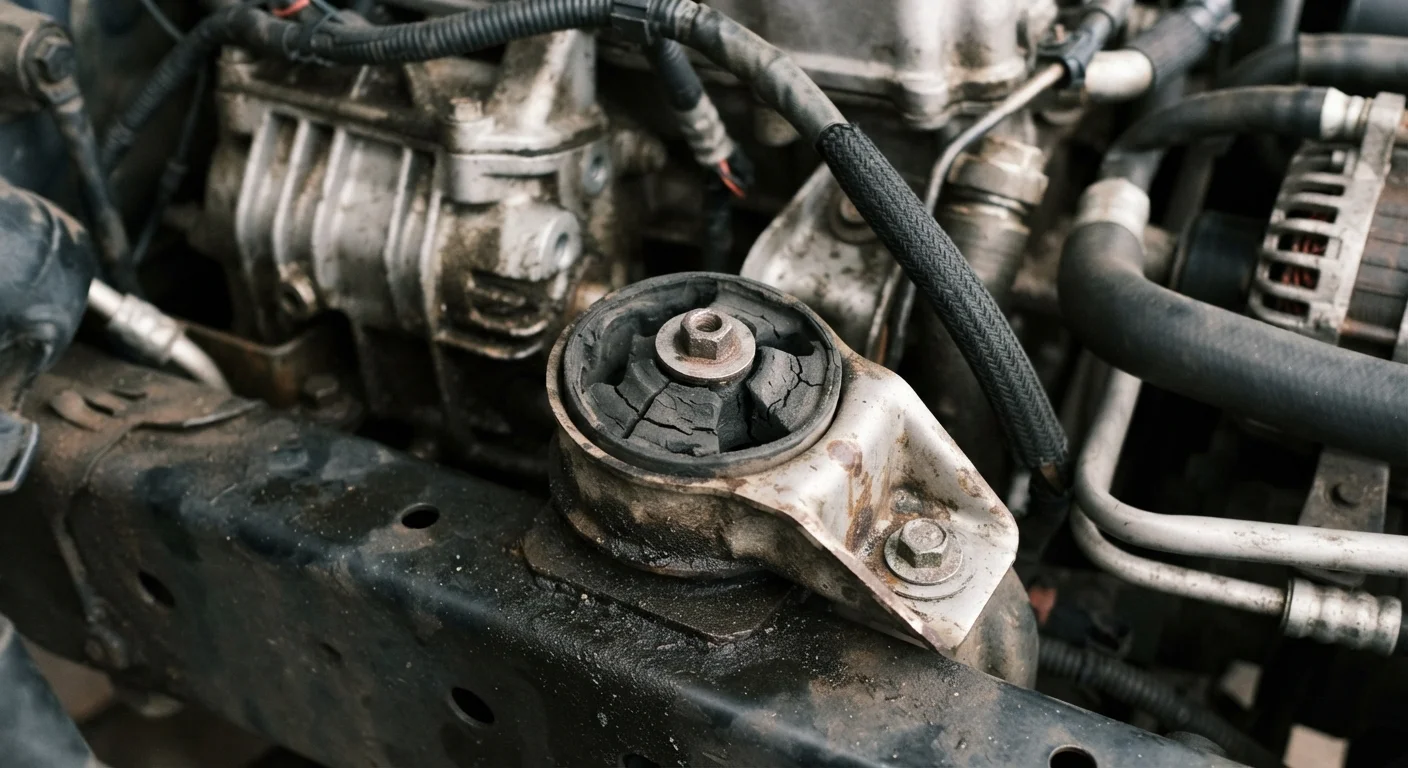
The rubber component is the key variable. Over time, heat cycling, oil contamination, and mechanical stress cause the rubber to harden, crack, or separate from its metal bonding. When that happens, the cushioning effect diminishes and the engine is no longer held in a controlled position during acceleration, braking, or gear changes. Understanding this degradation mechanism is the foundation for recognising symptoms correctly - and for avoiding the diagnostic mistakes that delay necessary repairs.
Common Mistakes When Diagnosing Worn Mounts
Because mount symptoms overlap with several other drivetrain issues, misdiagnosis is common. The following mistakes slow down an accurate diagnosis and, in some cases, lead to unnecessary parts spending.
Attributing clunking sounds to suspension or exhaust components without checking mounts first.
Why it happens: The low-frequency clunk produced when a broken mount allows the engine to shift under load sounds similar to a worn sway bar link or loose exhaust hanger, so mounts are frequently overlooked early in diagnosis.
Assuming cabin vibration at idle is always an engine tune issue rather than a mount problem.
Why it happens: Vibration at idle is classically associated with misfires, rough idle, or fuel delivery issues, so mounts are not the first suspect - even though a collapsed rubber isolator transmits engine vibration directly into the firewall and seats.
Replacing only the most visibly damaged mount without inspecting the remaining units.
Why it happens: Mounts are often replaced reactively - once one clearly fails, that single unit gets swapped and the job is considered complete. The remaining mounts, which are the same age, may be close to failure.
Using makeshift support methods when replacing a mount, creating a safety hazard.
Why it happens: DIYers underestimate the weight of the powertrain or use a floor jack without blocking it properly, relying on other engine components to bear the load temporarily.
Delaying replacement after diagnosis, treating the mount as a low-priority item.
Why it happens: Because the vehicle remains driveable with a worn mount, many owners defer the repair. The gradual nature of rubber degradation makes the urgency feel low.
Secondary Damage Can Escalate Repair Costs
A fully collapsed or separated engine mount allows the powertrain to shift position under hard acceleration or sudden braking. This movement can stress CV axle boots, crack exhaust manifold gaskets, and strain coolant hoses that are not designed to accommodate that range of motion. Addressing worn mounts promptly limits the risk of these cascading failures.
How to Inspect Engine Mounts Yourself
A basic visual inspection requires only a flashlight and a pry bar. With the engine off, locate each mount and examine the rubber isolator for obvious cracking, tearing, or signs that the rubber has separated from its metal bracket. Any visible gap between the rubber and the bonded metal surface is a reliable indicator of failure.
A simple load test adds confidence to your diagnosis. With an assistant in the vehicle, shift from Park to Drive and back while you watch the engine from a safe distance outside. A healthy mount set allows only minimal engine movement - roughly a few millimetres. If the engine visibly lurches or rocks substantially, the mounts are no longer doing their job. For mounts that are difficult to reach without lifting the vehicle, a qualified shop can inspect them during a routine service.
60,000-100,000 mi
Typical engine mount service life
Many OEM mount specifications list rubber isolator service life in the 60,000-100,000 mile range, though heat exposure and oil contamination can accelerate degradation significantly.
3-4
Mounts on a typical passenger vehicle
Most front-wheel-drive passenger cars use three to four engine and transmission mounts, each requiring individual inspection when symptoms are present.
When to Handle It Yourself vs. When to See a Shop
Many top-side engine mounts on front-wheel-drive vehicles are accessible without special equipment and are considered a straightforward intermediate-level DIY job. The critical safety requirement is proper engine support: a suitable engine support bar or floor jack with a wooden block between the jack pad and the oil pan must be in place before any mount hardware is removed. Never rely on the engine resting on other components while a mount is detached.
Transmission mounts and rear engine mounts on rear-wheel-drive vehicles often require the vehicle to be raised safely on jack stands or a lift, and some require partial drivetrain disassembly. If access is limited or the job involves working beneath a loaded powertrain, a professional repair is the safer choice. The cost of professional labour for a standard mount replacement is generally modest relative to the secondary damage a fully failed mount can cause to exhaust flanges, coolant hoses, and CV axles.
This article provides general educational information about engine mounts and is not a substitute for vehicle-specific service documentation or advice from a qualified mechanic. Always consult your vehicle's service manual and follow appropriate safety procedures before performing any repair.