How the RV Fresh Water System Works
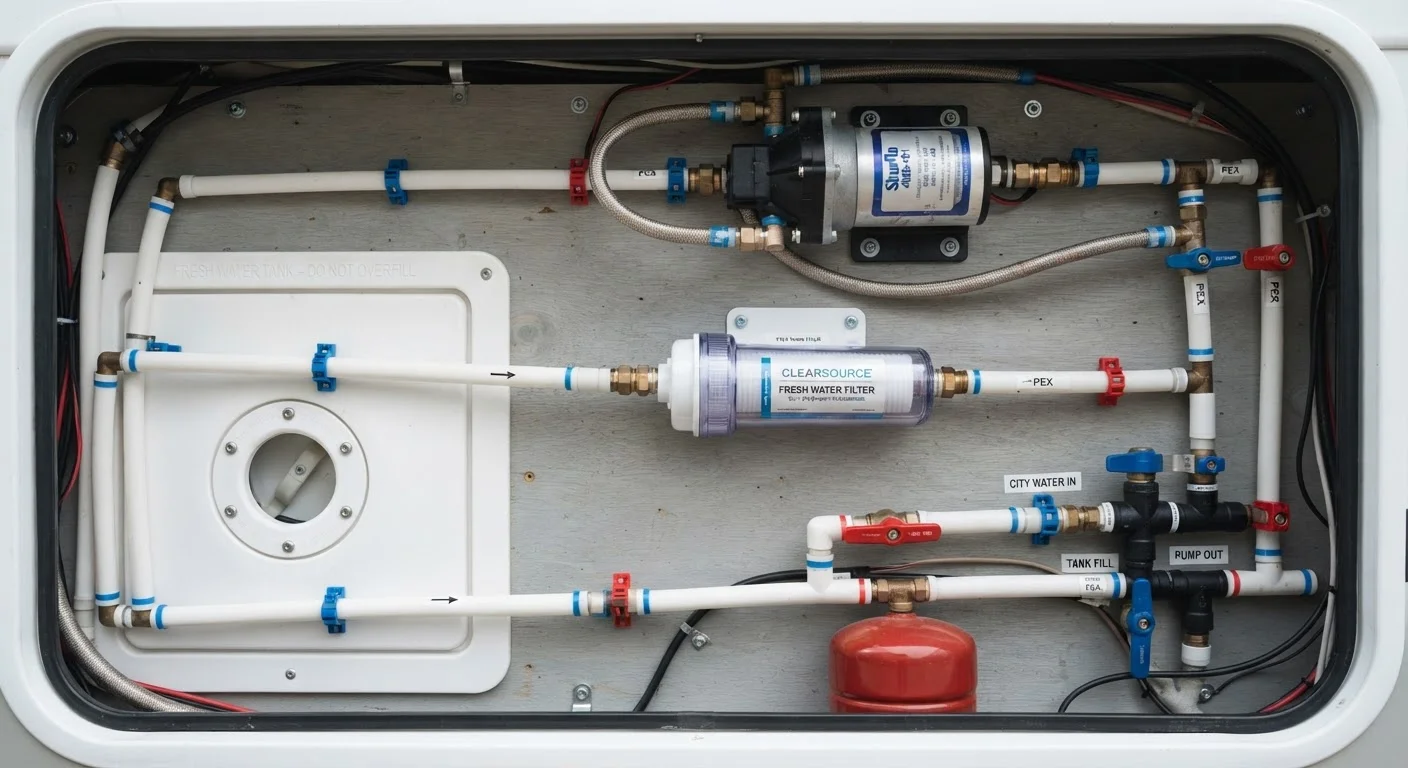
Every RV fresh water system shares the same basic architecture: a holding tank stores potable water, a 12-volt pump pressurises the lines when you're off-grid, and a city water inlet lets you draw directly from a campground hookup. Inline filters sit at one or both entry points to reduce sediment and contaminants. Understanding this layout is the first step toward maintaining it confidently.
Most Class A and Class C motorhomes carry fresh water tanks ranging from 30 to 100 gallons. Towable campers and Class B vans typically hold 20 to 40 gallons. Capacity matters for trip planning, but tank condition matters more - an oversized tank that hasn't been sanitised is a liability. See how new RVers commonly mismanage their water systems for context on where things go wrong early.
Sanitising the Fresh Water Tank
Sanitising your fresh water tank should happen at least twice a year - typically at spring dewinterisation and again mid-season if you use the system heavily. The standard method uses unscented household bleach (sodium hypochlorite) diluted to a safe concentration.
- Calculate your dose. Use approximately ¼ cup of bleach per 15 gallons of tank capacity.
- Dilute before adding. Mix the bleach into a gallon of water first, then pour the solution into the tank through the fresh water fill port.
- Fill the tank completely and run each faucet - hot and cold - until you smell bleach at every outlet. This ensures lines are treated too.
- Let it sit for 4-12 hours, then drain completely and refill with fresh water. Flush until the chlorine smell is gone.
Always wear gloves and eye protection when handling bleach. If your RV has an inline carbon filter, remove or bypass it before sanitising - chlorine will exhaust the filter media prematurely. Reinstall it after flushing is complete.
PEX tubing
Cross-linked polyethylene pipe widely used in RV plumbing for its flexibility and freeze resistance. It connects tanks, pumps, and fixtures throughout the fresh water system.
Inline filter
A filter cartridge installed directly within a water supply line. It intercepts sediment, chlorine, or other contaminants before water reaches faucets or appliances.
City water inlet
A pressurised hookup port on the exterior of an RV that allows direct connection to a campground water supply, bypassing the onboard tank and pump.
Water pump (12V)
A 12-volt demand pump that draws water from the fresh tank and pressurises the lines when the RV is not connected to a city water source.
Micron rating
A measure of the smallest particle size a filter can capture. Lower micron numbers indicate finer filtration - a 1-micron filter removes smaller particles than a 20-micron filter.
Inspecting and Flushing Supply Lines
Fresh water lines in most RVs are cross-linked polyethylene (PEX) tubing, which resists freezing better than rigid pipe but can still develop pinhole leaks at fittings over time. Inspect visible runs of line annually for discolouration, kinking, or mineral buildup at connection points.
If you notice reduced flow at faucets or the shower, sediment buildup inside lines is a common cause - particularly in areas with hard water. Running a citric acid flush (follow your manufacturer's concentration guidelines) through the system can dissolve mineral scale without damaging PEX or fittings. Rinse thoroughly afterward.
For a structured annual inspection schedule that ties fresh water checks into broader RV upkeep, see the full-year RV maintenance calendar.
Hard Water and Your RV Lines
If you camp frequently in regions with high mineral content in the water supply, scale buildup inside PEX lines and at fittings can accelerate. Consider using an external softening pre-filter at the hose bib connection. If you notice white residue at faucet aerators or reduced pressure, a citric acid flush - following your RV manufacturer's recommended concentration - can help clear mineral deposits without damaging fittings or tank liners.
Filter Types and Replacement Intervals
RV water filtration typically operates at two points: an external pre-filter connected to the campground hose bib, and one or more inline filters built into the rig. Understanding which filter type you have determines how often to replace it.
2×/year
Minimum fresh tank sanitising frequency
Industry guidance generally recommends sanitising at dewinterisation and again mid-season for active users.
500 gal
Typical carbon filter capacity limit
Most carbon block filter manufacturers rate their cartridges for roughly 500 gallons before effectiveness declines.
4-12 hrs
Bleach soak time for effective sanitisation
Allowing the diluted bleach solution to dwell in lines and tank for this window helps neutralise bacteria and biofilm.
- Sediment filters (5-20 micron)
- Remove particulate matter. Replace every 3-6 months under regular use, or sooner if flow rate noticeably drops.
- Carbon block filters
- Reduce chlorine taste, odours, and some chemical contaminants. Typical service life is 3-6 months or roughly 500 gallons, whichever comes first.
- Ceramic filters
- Offer finer filtration and can sometimes be cleaned and reused. Follow the manufacturer's guidance on cleaning cycles and replacement frequency.
- Whole-house inline systems
- Some Class A motorhomes have multi-stage under-sink or whole-coach systems. Filter stages have individual replacement intervals - track them separately.
Always confirm your replacement filter matches the housing thread size and micron rating of the original. A filter that doesn't seat correctly can allow unfiltered water to bypass entirely.
For first-time owners building out their maintenance routine, RV maintenance basics for new owners covers how water system upkeep fits into the broader first-year learning curve.