Why a Year-Round Calendar Beats Reactive Repairs
Most RV problems that sideline owners mid-trip - a blown tire, a leaking slide seal, a dead house battery - have a paper trail of ignored warning signs. A structured annual maintenance calendar converts those reactive emergencies into scheduled tasks you can plan around. The financial case is straightforward: a $15 roof-lap sealant touch-up performed in spring routinely prevents hundreds or thousands of dollars in water-damage repairs later.
Scheduled maintenance also aligns with how RV systems actually age. Rubber components degrade seasonally; batteries cycle through charge and discharge patterns tied to temperature; plumbing vulnerabilities are almost always seasonal. For a deeper look at whether your service triggers should be mileage- or time-based, see our guide on mileage vs. time maintenance intervals.
70%
RV breakdowns attributed to deferred maintenance
Industry service data consistently identifies neglected preventive maintenance as the leading cause of roadside failures for recreational vehicles.
$3,000+
Average cost of water-intrusion repair
Water damage from failed roof seals or slideout gaskets is among the most expensive RV repairs, often requiring structural work and delamination correction.
100-150 hrs
Typical generator oil-change interval
Most RV generator manufacturers recommend an oil and filter change at this runtime threshold, though always verify your specific unit's manual.
Spring: Dewinterisation and Pre-Season Inspection
Spring dewinterisation is the most critical maintenance window of the year. Begin by flushing all antifreeze from the fresh-water system - run water through every faucet, the toilet, the outside shower, and the water heater bypass until lines run clear. Sanitise the fresh-water tank with a diluted bleach solution, flush thoroughly, then refill with potable water.
Next, inspect the roof and all exterior seals. Check lap sealant around vents, skylights, antennas, and slideout edges for cracking or separation. Any breach here is a moisture entry point. Examine slide toppers and awning fabric for winter wear. Inspect tires for sidewall cracking, check inflation against the placard rating, and look for flat-spotting from months of static storage.
- Test all propane appliances: furnace, range, water heater, and refrigerator
- Reconnect and load-test house batteries; replace if capacity has dropped significantly
- Inspect brake lines, wheel bearings (on towables), and hitch hardware
- Check all interior smoke, CO, and LP gas detectors - replace batteries
Use a Photo Log During Dewinterisation
Take dated photos of every seal, roof penetration, and undercarriage component during spring inspection. These images give you a clear baseline to compare against at mid-season and fall checks. A 10-minute photo walkthrough can make the difference between catching gradual sealant breakdown and missing it entirely until water damage appears inside.
Full-time RVers planning routes around weather patterns will find spring dewinterisation timing closely tied to their destination calendar - see how full-timers plan routes around the seasons for route-planning context.
Summer: Mid-Season Systems Checks
Summer places the highest cumulative stress on an RV. Heat degrades sealants faster, air conditioning systems run continuously, and high mileage accelerates chassis wear. Schedule a mid-season inspection in July or August even if nothing seems wrong.
During summer inspections, run your air conditioner on maximum cool for 15 minutes and measure the temperature differential between supply and return air. A spread below 16-18°F often signals a dirty filter, low refrigerant, or a failing capacitor - catch it before a breakdown in peak heat.
Air conditioning failures spike in July and August precisely because stress builds undetected through spring and early summer use. Early measurement catches degradation before full failure.
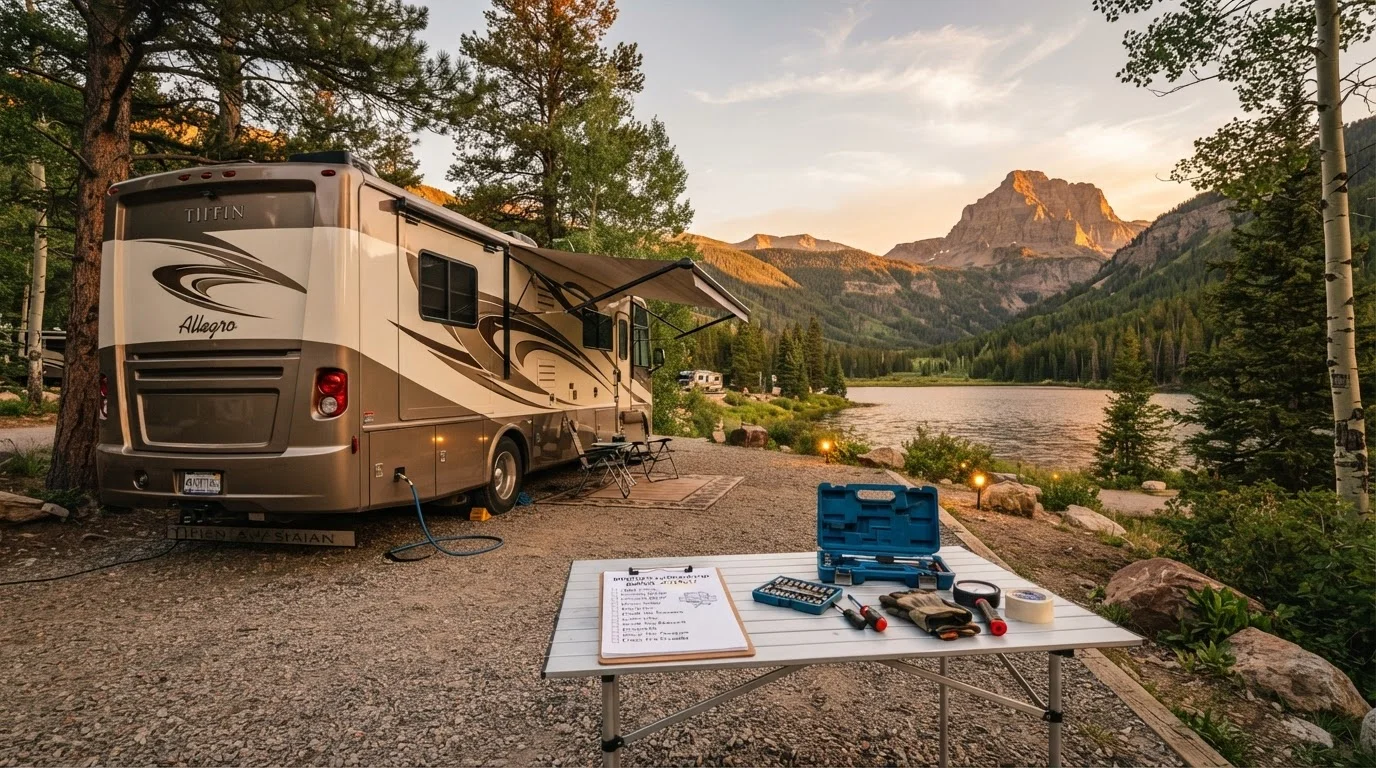
Keep a dedicated maintenance log - either a notebook in the rig or a simple spreadsheet - and record every service date, product used, and any anomaly observed. This record is invaluable for diagnosing recurring issues and demonstrating care history if you ever sell the vehicle.
Documented maintenance history is one of the most tangible factors prospective buyers evaluate, and it helps you spot patterns in recurring faults before they escalate.
Focus on the cooling and electrical load. Clean or replace the air conditioner filter monthly during peak use. Inspect the generator's air filter and oil level; most manufacturers recommend an oil change every 100-150 hours of runtime. Check all 12V and 120V outlets for intermittent faults - heat expansion can loosen connections that perform fine in cooler months.
- Re-torque lug nuts after the first 50-100 miles of the season and again at mid-summer
- Inspect fresh- and gray-water tank vents for wasp or insect nests
- Check roof-mounted air conditioner gasket for shrinkage or leaks
- Examine slideout seals and lubricate per manufacturer spec
For a structured checklist format that maps well to summer tasks, the seasonal vehicle maintenance checklist offers a complementary framework.
Fall: Pre-Storage Preparation
Fall is the RV owner's second major opportunity window. Whether you're storing the rig for winter or transitioning to cold-weather travel, this is the right moment to address any deferred summer repairs before they compound. Inspect the roof again - summer UV exposure accelerates sealant breakdown, and cracking found in October is far easier to address than in January.
Address Roof Defects Before Storage
Any unrepaired roof seal crack entering a wet or snowy season is a serious risk. Standing water and freeze-thaw cycles expand small breaches rapidly, driving moisture into the substrate and causing delamination that can render a sidewall or ceiling panel structurally unsound. Never defer roof sealant repairs past the fall maintenance window if storage is planned.
Drain and flush the water heater, clean the burner assembly, and inspect the anode rod if your unit uses one. Service the generator and engine (if a motorhome) with fresh oil and filters rated for winter viscosity ranges. Lubricate all door hinges, locks, slideout mechanisms, and the hitch coupler.
- Inspect and clean the refrigerator coils and door seals
- Test and exercise all slideouts through full travel range
- Inspect LP lines and regulator for corrosion or cracking
- Document any deferred items in a written log for spring reference
Winter: Winterisation and Off-Season Vigilance
Winterisation protects your single largest vulnerable system - plumbing - from freeze damage. The standard approach uses compressed air to blow out lines followed by non-toxic RV antifreeze (propylene glycol-based) introduced through a bypass pump into every drain trap, the toilet, and low-point drains. Never use automotive antifreeze in an RV water system.
Never Use Automotive Antifreeze in RV Plumbing
Ethylene glycol-based automotive antifreeze is toxic and must never be introduced into an RV's fresh-water or drain system. Always use propylene glycol antifreeze rated explicitly for RV and marine potable-water plumbing. Even after using the correct product, flush the system thoroughly before consuming water from it.
If storing the RV outdoors, cover roof vents to prevent moisture and rodent entry, but ensure adequate ventilation to limit condensation buildup inside. Disconnect and remove house batteries to a temperature-stable location, keeping them on a maintenance trickle charger. For owners who continue traveling in winter, run a heated water hose and use tank heater pads; inspect them before each freeze event.
Staying connected to your RV's overall living and setup systems through the winter is equally important. The RV Living & Setup hub covers interior organization and full-time living considerations relevant even in off-season planning.
Monthly and Ongoing Tasks
Beyond the seasonal phases, a handful of tasks deserve monthly attention regardless of how actively you're using the RV. These form the connective tissue of your maintenance calendar.
- Roof and exterior seals
- Walk the roof monthly during the travel season. Any new crack or bubbling in lap sealant should be addressed within the same month it's spotted.
- Battery state of charge
- Check resting voltage or state-of-charge on house batteries monthly. A bank that sits below 50% charge for extended periods sulfates and loses capacity permanently.
- Tire pressure
- Check cold inflation before every trip and at least monthly during storage. Tires lose approximately 1-2 PSI per month even without a puncture.
- Fresh-water system
- If the rig sits unused for more than two weeks with water in the tank, drain and re-sanitise before use.
For an integrated view of how all routine maintenance intervals fit together across vehicle types, the Routine Maintenance hub provides broader context alongside this RV-specific calendar.
This article is for general informational and educational purposes only. Always consult your RV's owner manual and, where tasks involve gas lines, electrical systems, or structural repairs, engage a qualified RV technician. Maintenance outcomes vary by rig type, age, climate, and usage patterns.