What a Test Drive Actually Measures - and What It Doesn't
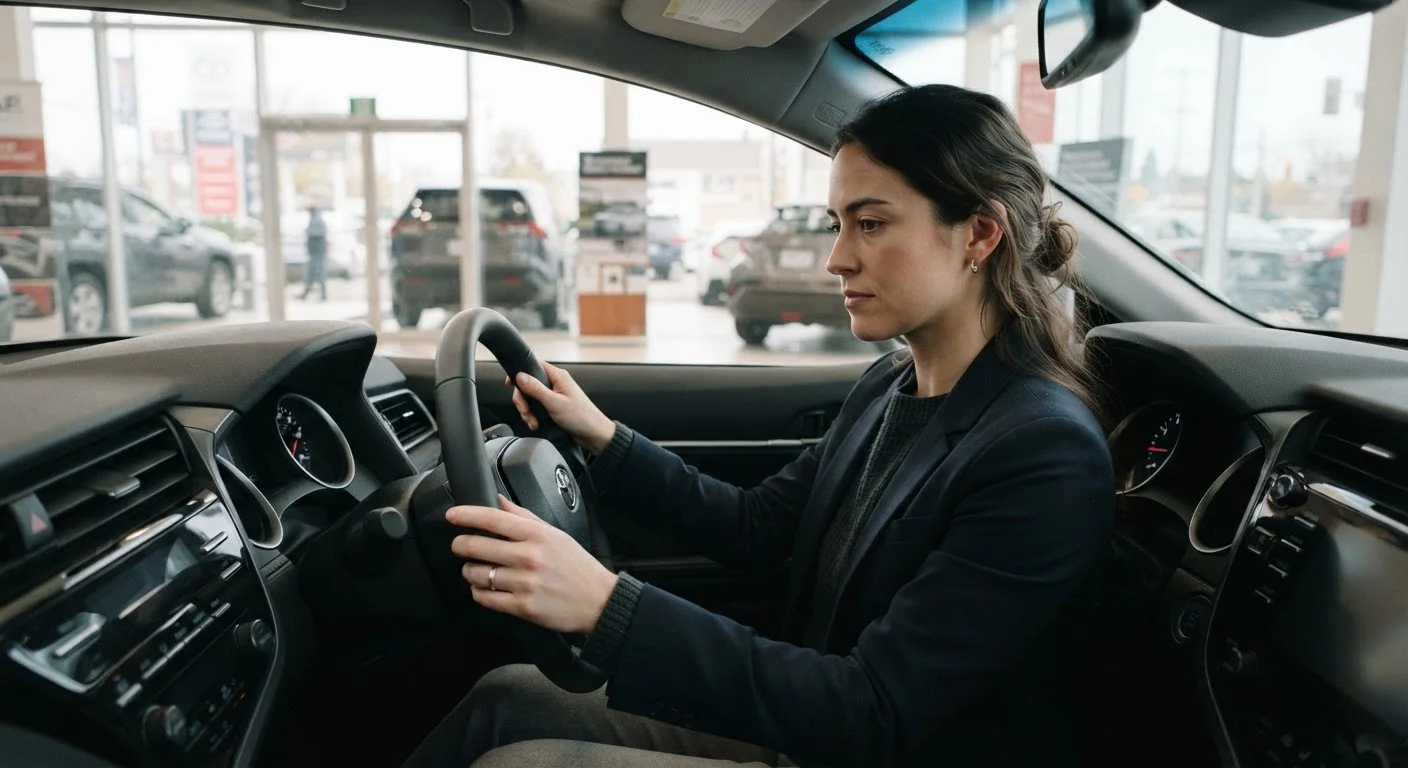
A test drive is a sensory snapshot, not a mechanical audit. It confirms whether the seating position works for your frame, whether the steering feel matches your preference, and whether the powertrain delivers enough response at low speed. That's genuinely useful information - but it covers a narrow slice of what determines long-term satisfaction.
What a test drive cannot tell you: how the transmission behaves after 80,000 miles, whether a previous owner deferred oil changes, or whether that smooth ride conceals worn control-arm bushings that will need replacement within a year. Those answers come from service records, a vehicle history report, and an independent inspection - not from a dealer-chaperoned loop around the block.
The test drive is one input among several. Treating it as the decisive evaluation is one of the most common - and costly - mistakes sedan shoppers make.
Keeping the test drive under 15 minutes on a smooth, low-speed loop.
Why it happens: Buyers feel pressure not to take too much of the salesperson's time, or assume a brief impression is sufficient to gauge comfort and performance.
Ignoring NVH (noise, vibration, and harshness) because the cabin seems quiet at first.
Why it happens: Short, low-speed drives don't generate the road and wind noise that sustained highway speeds produce. Buyers confuse initial silence with long-term refinement.
Skipping the vehicle history report before - or instead of - the test drive.
Why it happens: Buyers treat the test drive as the primary due-diligence tool, not realizing it can't reveal prior accidents, title issues, or odometer discrepancies.
Testing features that are impressive in a showroom but irrelevant to daily use.
Why it happens: Panoramic sunroofs, ambient lighting modes, and large infotainment screens draw attention during test drives, displacing evaluation of seats, sightlines, and cargo access.
Failing to test the sedan under real load and cargo conditions.
Why it happens: Test drives almost always involve one or two people in an otherwise empty car, which masks how the suspension and powertrain behave when fully loaded.
Not asking about service intervals, recent repairs, or upcoming maintenance costs.
Why it happens: Buyers focus on the sensory experience of the drive rather than the ownership costs waiting just beyond the sale.
Building a More Complete Evaluation Strategy
Closing the gap between a test drive impression and a complete vehicle assessment requires preparation before you arrive at the lot.
Dealer-Controlled Routes Hide Real Conditions
Many dealerships suggest a fixed loop that avoids highway entry ramps, rough pavement, and sustained high-speed cruising. These are precisely the conditions that expose suspension wear, transmission hesitation, and wind noise. Insist on a route that reflects how you actually drive - including a highway segment if that matches your use case.
Start with the spec sheet. Understanding figures like suspension geometry, wheelbase, and curb weight before driving gives you context for what you're feeling. Decoding a sedan spec sheet before your appointment helps separate genuine engineering differences from trim-level marketing.
Cross-reference any used vehicle's history report with what you observe physically during the drive. Inconsistencies - a recently replaced panel, mismatched paint, uneven door gaps - deserve direct follow-up questions. If the seller can't produce service documentation, factor that uncertainty into your offer or walk away.
Pre-Purchase Inspection Is Non-Negotiable
No test drive substitutes for an independent mechanical inspection by a qualified technician. A pre-purchase inspection can uncover hidden structural damage, deferred maintenance, and wear items that would cost thousands to repair. Always arrange this before signing anything on a used vehicle.
Finally, consider whether the sedan you're evaluating actually fits how you drive. A sport-tuned suspension that feels dynamic on a dealer's smooth parking lot can become fatiguing on a daily 45-minute highway commute. Starting your sedan search with clear use-case criteria is the single most effective way to avoid a mismatch that no test drive would have revealed.
~20 min
Typical US dealership test drive length
Industry surveys consistently report the average dealership test drive lasts 20 minutes or less, covering only a few miles.
1 in 3
Used vehicles with undisclosed prior damage
Carfax data has historically indicated roughly one-third of used vehicles on the market carry accident history not disclosed by sellers.