
How Each Drivetrain Actually Works
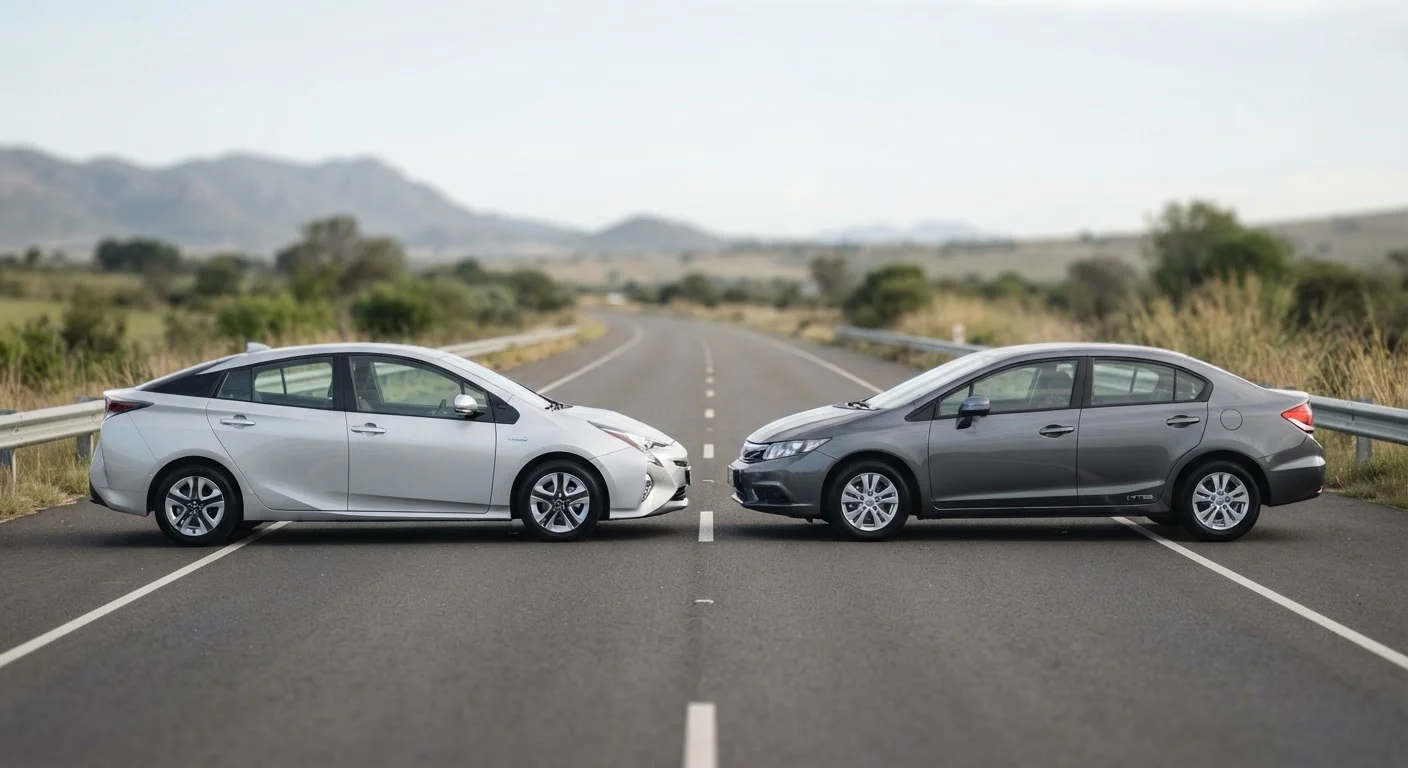
Front-wheel drive sends engine power exclusively to the front axle. The same wheels that steer also drive the car, which allows engineers to package the engine, transmission, and differential into a compact, weight-efficient unit at the front. The result is a lighter car with inherently better weight distribution over the driven wheels - an advantage for traction on dry pavement.
All-wheel drive routes power to all four wheels simultaneously, either full-time or through an electronically controlled coupling that engages the rear axle when slip is detected. Modern sedan AWD systems are nearly always the latter - often called e-AWD - and operate invisibly in the background. When sensors detect wheel spin, torque is redistributed within milliseconds. Understanding how these systems function helps decode spec sheets; see our guide to reading sedan spec sheets for context on how manufacturers present drivetrain data.
| Criterion | Front-Wheel Drive | All-Wheel Drive |
|---|---|---|
| Typical price premium | Base pricing | $1,500-$3,000 more |
| Fuel economy impact | Higher (no AWD penalty) | 1-3 MPG reduction |
| Traction on snow/ice | Adequate with winter tires | Noticeably better |
| Braking on ice | Same as AWD | Same as FWD |
| Drivetrain complexity | Simpler, fewer components | More components, higher repair cost |
| Weight | Lighter | Heavier (50-150 lbs typically) |
| Dry-road handling | Comparable at legal speeds | Comparable at legal speeds |
| Best climate fit | Mild to moderate | Variable, including harsh winters |
Where the Real-World Difference Shows Up
In dry conditions at legal speeds, most drivers cannot distinguish an FWD sedan from its AWD sibling. The difference emerges in three specific scenarios: accelerating on low-traction surfaces, climbing slippery grades, and maintaining stability on unsalted winter roads. AWD's advantage in all three is genuine, not marketing fiction.
However, a critical and frequently misunderstood point: AWD does not shorten stopping distances. Braking is governed by all four tires regardless of drivetrain. A driver in an AWD sedan on icy roads who brakes too late will slide just as far as an FWD driver. This is why tire choice - particularly dedicated winter tires - matters more than drivetrain for overall winter safety. AWD paired with all-season tires often performs worse than FWD paired with proper winter tires. For a parallel look at how drivetrain choices play out in larger vehicles, our SUV drivetrain comparison breaks down the same logic at a different scale.
1-3 MPG
Typical AWD fuel economy penalty
EPA data across comparable sedan trims consistently shows AWD variants returning lower combined fuel economy than their FWD counterparts.
~70%
U.S. days with no precipitation
NOAA climate data suggests most U.S. regions experience predominantly dry road conditions, limiting how often AWD's traction advantage is actively relevant.
$1,500-$3,000
Common AWD upfront premium
Across major sedan nameplates, AWD configurations command this range above equivalent FWD trims, based on widely published manufacturer pricing structures.
Cost of Ownership: The Numbers That Matter
AWD's traction benefits come with a clear financial trade-off. On most sedan nameplates, opting for AWD adds roughly $1,500 to $3,000 to the sticker price. Fuel economy typically drops by 1-3 MPG across the EPA combined cycle, as the additional drivetrain components add weight and rotational resistance. Over five years of average driving, that gap compounds into hundreds of dollars in added fuel cost depending on gas prices and mileage.
Maintenance exposure is also higher with AWD. More drivetrain components - rear differentials, transfer cases, coupling units - mean more potential failure points. Most modern systems are reliable, but repairs when they do occur are more expensive than anything in a simple FWD driveline. If powertrain complexity concerns you, our hybrid vs. conventional petrol sedan comparison addresses a similar cost-versus-complexity trade-off in a different context.
This article provides general educational information about vehicle drivetrains and is not a substitute for personalized advice from a qualified automotive professional. Pricing, fuel economy, and maintenance costs vary by model, region, and driving conditions.