
Why the Lab Number and Your Pump Receipt Never Quite Agree
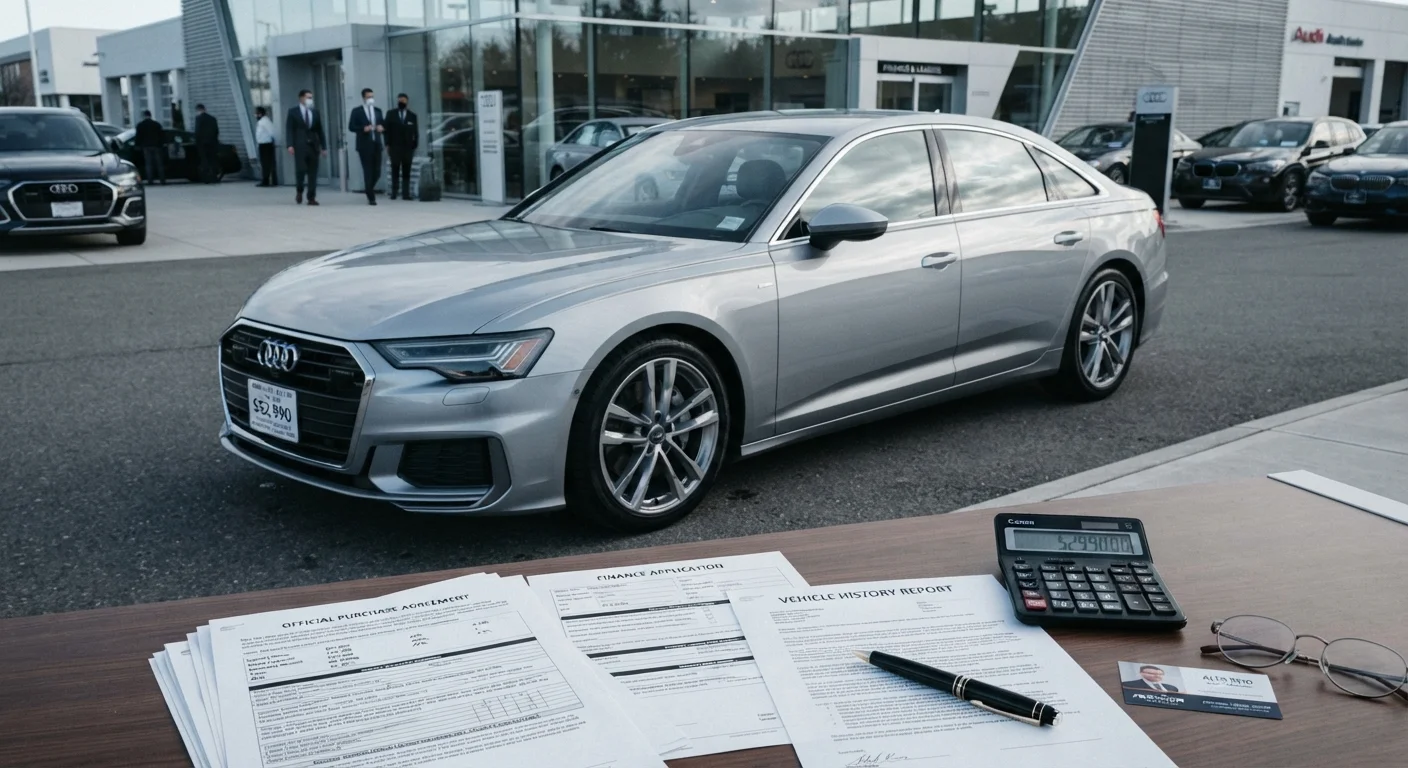
The EPA's fuel economy testing protocol - used to generate the figures printed on every new vehicle's Monroney sticker - is conducted on a dynamometer, not a road. Engineers run standardized drive cycles in a climate-controlled facility, which eliminates variables like wind resistance, road surface texture, ambient temperature, and traffic-related stop-and-go behavior. The result is a reproducible, comparable number - but not necessarily a predictive one.
According to EPA methodology documentation, the agency applies correction factors to bring lab results closer to real-world conditions, but the underlying test cycles still don't fully capture aggressive acceleration, sustained high-speed highway cruising above 60 mph, or extreme cold-weather operation. For a deeper look at how to interpret the figures printed on the sticker itself, see what window sticker numbers actually mean for running costs.
The practical upshot: treat the EPA combined figure as a standardized benchmark for comparing sedans against each other - not as a personal fuel budget forecast.
Myth
The EPA-rated MPG is what I should expect to average over my daily driving.
Fact
The EPA combined figure is a standardized comparison tool, not a personal fuel economy forecast - most drivers achieve 10-20% less in everyday use.
EPA testing uses fixed drive cycles run in controlled laboratory conditions. Real-world variables - traffic congestion, elevation change, temperature, driving aggression, and accessory use - all reduce efficiency relative to the test. The combined figure enables apples-to-apples comparison between models, but it should be adjusted downward when projecting actual fuel costs.
Myth
Highway driving always yields better fuel economy than city driving for any sedan.
Fact
For conventional gasoline sedans this is generally true, but at very high speeds (75+ mph) highway efficiency can fall below the EPA highway rating and sometimes approach city-cycle numbers.
The EPA highway test cycle averages approximately 48 mph. Sustained driving at 75-80 mph - typical on US interstates - significantly increases aerodynamic drag, which rises with the square of speed. A sedan that achieves 38 mpg at 60 mph may only achieve 30-32 mpg at 75 mph, narrowing or erasing its advantage over urban stop-and-go driving in some cases.
Myth
A hybrid sedan will always deliver better real-world fuel economy than a non-hybrid version of the same model.
Fact
Hybrids deliver their largest efficiency advantage in city and mixed driving; on sustained high-speed highway routes, the gap over non-hybrid alternatives narrows considerably.
Hybrid systems recover energy through regenerative braking and deploy electric assist most effectively at lower speeds. Above roughly 65-70 mph, the combustion engine carries the primary load, and the hybrid system contributes less. Buyers who drive primarily at highway speeds may find the real-world efficiency gap between hybrid and non-hybrid trims smaller than the window sticker suggests.
Myth
Newer sedans always achieve better real-world fuel economy than older models with the same EPA rating.
Fact
EPA ratings have been revised multiple times; a 30 mpg combined figure from a 2010 model year was calculated under different test assumptions than the same figure from a 2022 model.
The EPA updated its fuel economy testing methodology in 2008 to better reflect real-world driving, which caused many vehicles' official ratings to decrease. A model rated 30 mpg combined before the revision was not necessarily more efficient than a 30 mpg model rated after - the underlying measurement changed. When comparing across model years, confirm which test cycle applies before drawing efficiency conclusions.
Myth
Premium fuel improves real-world MPG enough in regular-grade engines to justify the extra cost.
Fact
In engines designed and calibrated for regular-grade fuel, premium gasoline typically produces no measurable fuel economy improvement and does not offset its higher per-gallon price.
Premium fuel's higher octane rating benefits engines with higher compression ratios or direct-injection turbocharged systems that are specifically tuned to take advantage of it. In engines where the manufacturer specifies regular fuel, the engine management system is not calibrated to extract additional efficiency from premium octane, and the added cost per gallon is not recovered through better MPG.
Variables That Erode Real-World Efficiency
Several factors consistently push real-world MPG below the rated figure, and understanding them helps buyers make more accurate cost projections.
~15%
Typical real-world MPG shortfall vs EPA combined
Analysis of aggregated self-reported driving data on fueleconomy.gov consistently shows most drivers fall 10-20% below the EPA combined figure across sedan segments.
5-25%
Fuel economy reduction from running A/C
The U.S. Department of Energy estimates air conditioning can reduce fuel economy by 5-25% depending on vehicle size, outside temperature, and driving conditions.
48 mph
Average speed in EPA highway test cycle
The EPA's highway fuel economy test cycle averages approximately 48 mph - well below typical US interstate cruising speeds of 70-75 mph.
- Speed: Aerodynamic drag increases with the square of velocity. Cruising at 75 mph rather than 55 mph can reduce highway efficiency by 15-20% on most sedans.
- Cold starts: Engine and transmission fluids are thicker at low temperatures, and catalytic converters operate less efficiently until they reach operating temperature. Short trips in cold climates are disproportionately expensive on fuel.
- Air conditioning: Running the A/C at maximum in stop-and-go traffic can reduce fuel economy by roughly 5-25% depending on engine size and ambient temperature, per EPA estimates.
- Tire pressure: Under-inflated tires increase rolling resistance. The EPA estimates that each 1 PSI drop across all four tires reduces fuel economy by approximately 0.2%.
- Payload and roof loads: Extra weight forces the engine to work harder under acceleration. Roof-mounted cargo adds aerodynamic drag even when the carrier itself is empty.
Sedans with turbocharged four-cylinder engines - now the dominant powertrain in the segment - are particularly sensitive to driving style. Turbo boost engages under hard acceleration, pulling fuel consumption well above the rated figure. The EPA's test cycles use relatively moderate throttle inputs; many drivers do not. For guidance on how your specific driving patterns should influence which sedan attributes you prioritize, see matching a sedan to your actual driving patterns.
Turbocharged Engines Are More Sensitive to Driver Behavior
Many current-generation sedans use small-displacement turbocharged engines that are calibrated to return strong EPA ratings under moderate throttle inputs. Consistent hard acceleration - common in merging, passing, or spirited driving - engages full boost and can push actual fuel consumption substantially above the rated figure. If you drive assertively, budget for a larger real-world MPG gap when comparing turbocharged trims to naturally aspirated alternatives.
Hybrids, Conventional Engines, and Where the Gap Is Widest
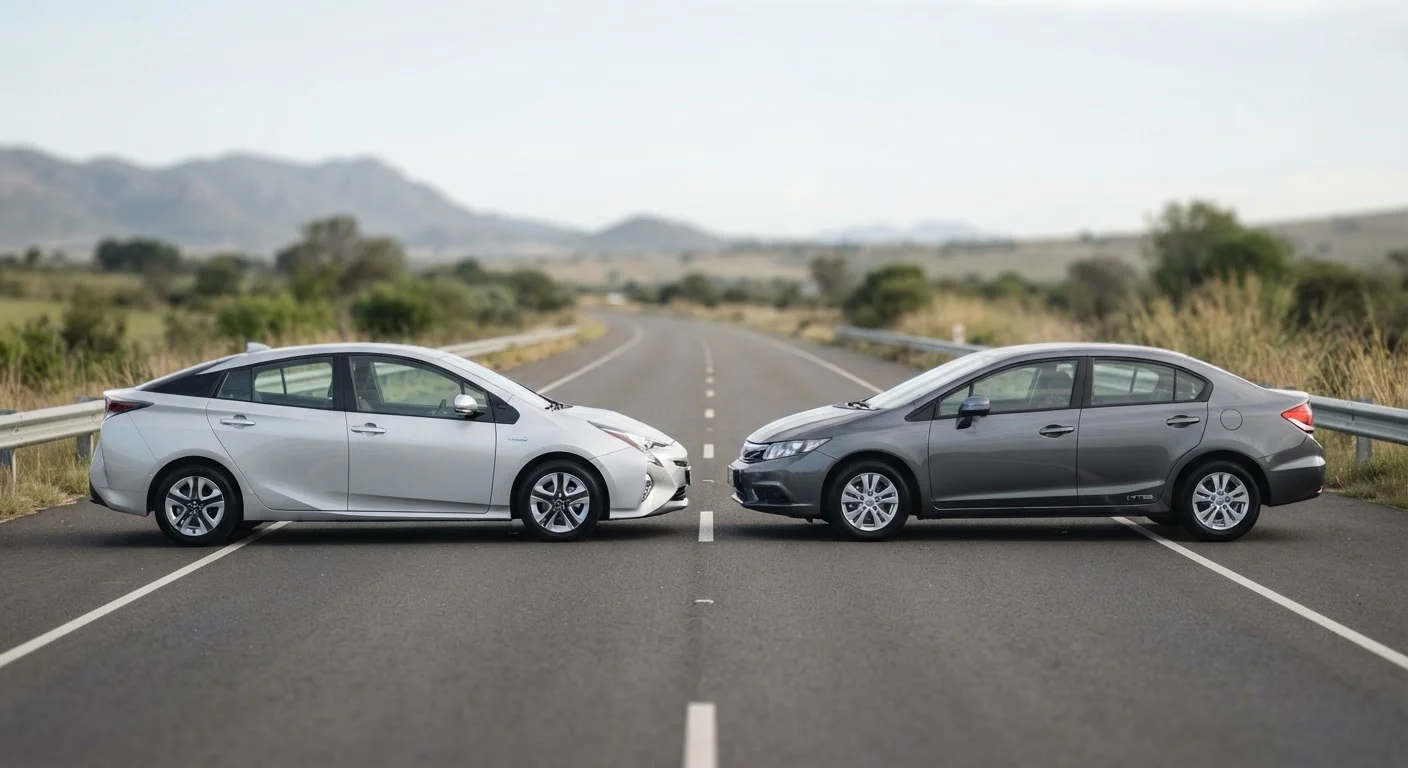
Hybrid sedans behave differently from conventional gasoline models in the context of the lab-vs-reality gap. Because hybrids recover energy during braking and supplement the combustion engine with electric assist at low speeds, they perform disproportionately well on the EPA's city cycle - which features frequent stops and lower average speeds. In real city driving, a hybrid's efficiency advantage over a comparable conventional sedan tends to hold up reasonably well.
The dynamic reverses on sustained high-speed highway driving. At speeds above 65 mph, the electric motor contributes less, and the gasoline engine carries most of the load. Some hybrid sedans post real-world highway numbers that are only marginally better than their non-hybrid equivalents when driven at freeway speeds. A direct comparison of hybrid and conventional sedan drivetrains explores this trade-off in more detail.
EV range figures face a structurally similar measurement challenge - for context on how that gap is calculated and why it matters, how EV range is measured and why real-world numbers differ covers the parallels. Understanding the gap across powertrain types helps buyers compare total ownership costs more honestly.
Window Sticker MPG Is a Comparison Tool, Not a Promise
No automaker, dealership, or regulatory body guarantees that any buyer will achieve the rated fuel economy figure in their specific driving conditions. The number exists to allow standardized comparison between vehicles - not to predict your personal fuel costs. Use aggregated real-world owner data alongside the official rating to build a more realistic running-cost estimate before purchase.
How to Estimate What You'll Actually Get
Rather than relying solely on the window sticker, buyers have several practical tools for building a realistic fuel cost estimate.
- Aggregated owner data: Sites like fueleconomy.gov collect self-reported MPG from thousands of real drivers. Filtering results by model year and trim gives a statistically grounded real-world median that typically runs 5-15% below the EPA combined figure.
- Spec sheet context: Engine displacement, transmission type, and curb weight all correlate with real-world efficiency. A heavier sedan with a larger displacement engine will generally show a wider gap between rated and achieved MPG. Reading a sedan spec sheet without getting lost in the numbers explains which figures carry the most predictive weight.
- Drive cycle matching: If your commute is predominantly stop-and-go urban driving, weight the EPA city figure more heavily than the combined number. If you log long interstate miles, the highway figure is your more relevant baseline - but apply a 10% reduction for speeds above 70 mph.
No single number tells the full story. Combining official ratings with aggregated owner data and an honest assessment of your own driving habits produces a far more accurate real-world efficiency projection than the sticker alone.