Purchase Price and the Hybrid Premium
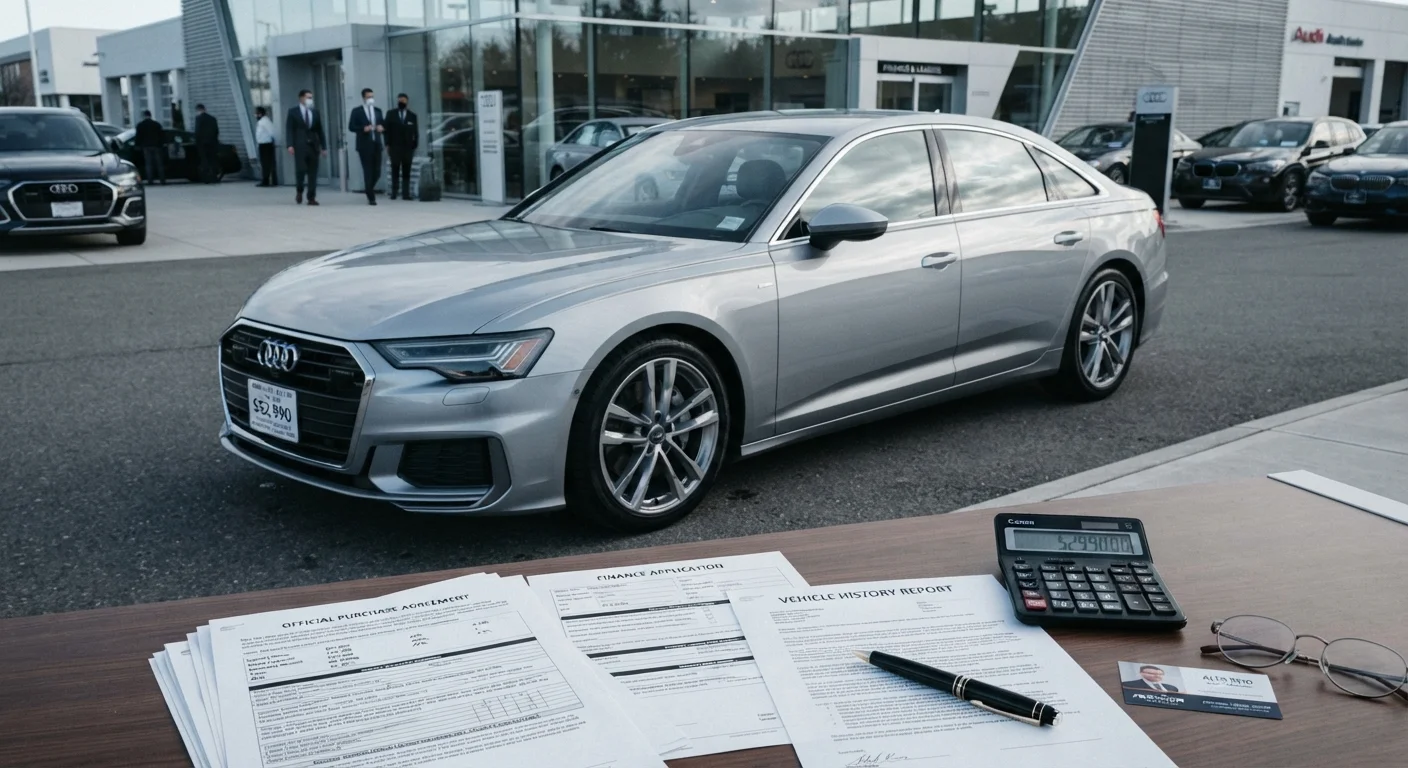
The sticker price gap between hybrid and conventional petrol sedans in the same model line typically runs between $2,000 and $5,000, depending on trim level and manufacturer. That premium reflects the additional engineering cost of a dual powertrain - combustion engine, electric motor, power-split device, and high-voltage battery pack all in a package engineered to the same footprint as a petrol-only vehicle.
For buyers operating within a strict budget ceiling, that difference is immediate and concrete. A petrol sedan can also offer more flexibility across trim levels, since manufacturers don't need to absorb hybrid component costs at every configuration. However, the purchase price is only one input into the full ownership equation. Understanding the broader trade-offs compact sedan buyers face before focusing on drivetrain alone helps frame the decision properly.
| Hybrid Sedan | Conventional Petrol Sedan | |
|---|---|---|
| Typical price premium | $2,000-$5,000 above petrol equivalent | Baseline - no additional premium |
| City fuel economy (est.) | 40-50 mpg combined | 28-36 mpg combined |
| Highway fuel economy (est.) | 38-45 mpg - gains narrow | 30-40 mpg - most efficient scenario |
| Drivetrain complexity | Higher - dual powertrain, HV battery | Lower - single combustion system |
| Mechanic availability | Requires hybrid-trained technicians | Any qualified mechanic |
| Low-speed acceleration | Strong - instant electric torque | Adequate - depends on displacement |
| Battery replacement risk | Present after 150,000+ miles | Not applicable |
| Best driving context | Urban, stop-and-go commutes | Highway and mixed rural routes |
Fuel Efficiency: Where the Numbers Actually Play Out
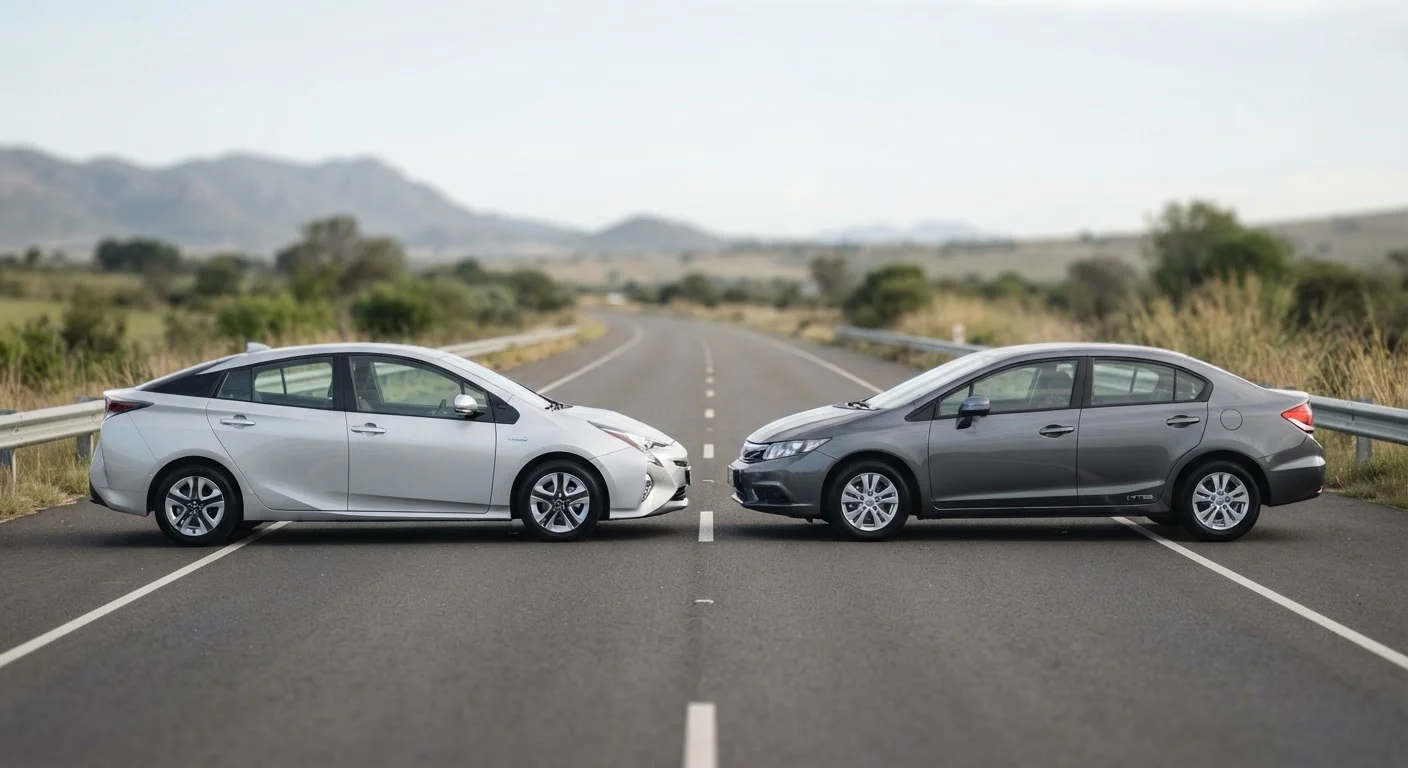
Hybrid drivetrains recover energy through regenerative braking and can switch off the combustion engine entirely at low speeds - advantages that translate directly into meaningful efficiency gains in city driving. In stop-and-go traffic, a hybrid sedan can realistically achieve 40-50 mpg combined, compared to 28-36 mpg for an equivalent petrol model. That gap narrows substantially on sustained highway runs, where the combustion engine operates continuously and regenerative braking opportunities are limited.
Official EPA ratings provide a useful baseline, but real-world results vary with driving style, climate, and load. Official fuel economy ratings rarely match what drivers see in practice - understanding that gap is essential before projecting savings. Drivers in dense urban environments or with lengthy daily commutes stand to recover the hybrid premium faster than those covering mostly open-road miles.
~42%
Hybrid fuel economy advantage in city driving
EPA data consistently shows hybrid sedans achieving roughly 40-45% better city fuel economy than petrol equivalents in the same model line.
~8%
Hybrid fuel economy advantage on highways
The efficiency gap between hybrid and petrol sedans narrows sharply at sustained highway speeds, where regenerative braking opportunities are limited.
$1,000-$3,500
Estimated annual fuel savings for high-mileage urban drivers
Savings vary significantly based on local fuel prices, annual mileage, and actual driving mix; individual results will differ.
Maintenance, Complexity, and Long-Term Reliability
Conventional petrol sedans have a well-understood service profile: oil changes, spark plugs, timing belts or chains, and exhaust components are the recurring costs most owners expect. Any qualified mechanic can work on them, and parts availability is broad. Choosing the right oil for a petrol engine is one of the more impactful routine decisions an owner can make.
Hybrid systems add layers: the high-voltage battery pack, inverter, electric motor, and regenerative braking hardware all require specialized diagnostic equipment. Modern hybrid designs have proven generally reliable, and the combustion engine in a hybrid often experiences less wear because it runs fewer total hours. However, when something does fail in the hybrid-specific hardware, repair costs can be significant. Battery pack replacement, while uncommon within the first 150,000 miles on well-maintained vehicles, represents a cost that petrol sedan owners never encounter.
Request a Pre-Purchase Hybrid Battery Inspection
When buying a used hybrid sedan, ask for a battery state-of-health report from a hybrid-certified technician before completing the purchase. Many dealerships and independent shops with hybrid diagnostic equipment can run this check. A battery showing below 70-75% of original capacity may face replacement sooner than expected, which should factor into your offer price.
Performance Characteristics and Driving Feel
Hybrid sedans often deliver stronger low-speed acceleration than their petrol counterparts because electric motors produce maximum torque instantly from a standstill. This makes them feel responsive and capable in urban environments. At highway speeds, the advantage largely disappears, and petrol sedans - particularly those with turbocharged engines - can offer a more linear, engagement-focused driving experience. How turbocharged and naturally aspirated engines compare in family sedans is worth reviewing if powertrain character matters as much as efficiency to you.
Handling dynamics are also relevant: hybrid battery packs add weight, typically 100-200 lbs, which affects how the vehicle corners and brakes. Engineers work to place battery mass low in the chassis, but the weight differential is real. For buyers who prioritize driver engagement and spirited handling, this is a measurable trade-off rather than an abstract concern.
Which Drivetrain Fits Your Ownership Profile
The most honest way to evaluate hybrid versus petrol is to model total cost of ownership across your expected holding period - purchase price delta, estimated annual fuel savings at your actual mileage and local fuel prices, and any differential maintenance costs. A structured framework for comparing efficiency and cost across powertrain options provides a useful methodology for this exercise.
Drivers covering 15,000+ miles annually in urban or mixed conditions will generally find the hybrid premium recoverable within three to five years. Lower-mileage drivers or those primarily on highways may never reach breakeven. Buyers who are also evaluating whether to step up to a plug-in hybrid should review the key differences between PHEVs and conventional hybrids before finalizing their choice.
This article provides general vehicle information for educational purposes. Fuel economy estimates, pricing, and maintenance costs vary by model, region, and individual driving conditions. Consult a qualified automotive professional for advice specific to your situation.