Why These Three Variables Carry So Much Weight
Used-vehicle pricing can feel like a black box, but most of the variation between listings comes down to three measurable inputs: how far the vehicle has been driven, how old it is, and what shape it is in today. Understanding what each variable actually signals - and how they interact - gives you a concrete framework for evaluating whether any asking price is reasonable.
Valuation tools used by dealers, lenders, and independent researchers all begin with this same triad. The key insight for buyers is that these factors are not equally weighted in every situation. Their relative importance shifts depending on vehicle age, segment, and intended use. A practical pricing evaluation requires knowing which lever to lean on hardest for the specific type of vehicle you are considering.
For a deeper look at how true long-term ownership costs fit into the broader picture, it is worth working through those numbers alongside any purchase price assessment.
Mileage: The Most Direct Proxy for Wear
Odometer readings serve as a rough proxy for total mechanical stress on an engine, transmission, suspension components, and drivetrain. For late-model vehicles - generally those under ten years old - mileage is typically the single strongest price driver in standard valuation models.
The conventional benchmark of roughly 12,000-15,000 miles per year is widely used as a reference point for "average" accumulation in the United States. Vehicles well below that annual average often carry a premium; those significantly above it typically face a discount. However, the relationship is not perfectly linear. The steepest price drops tend to occur at psychologically significant thresholds - 50,000, 100,000, and 150,000 miles - because many buyers apply blanket caution at those numbers regardless of the vehicle's actual condition.
12,000-15,000
Average annual miles driven in the U.S.
This range is the commonly used benchmark in vehicle valuation models for determining whether a vehicle's mileage accumulation is above or below average for its age.
100,000 mi
Key mileage threshold affecting buyer behavior
Many buyers apply heightened scrutiny or pass entirely at this threshold, creating a measurable price discontinuity in late-model used vehicle markets regardless of actual mechanical condition.
4-5 grades
Condition tiers used by major valuation guides
Standard guides define distinct criteria for each grade, and the price adjustment between adjacent grades can range from several hundred to several thousand dollars depending on the vehicle's base value.
A more nuanced approach is to combine mileage with available maintenance documentation. A 95,000-mile vehicle with a complete service history presents a meaningfully different risk profile than an 80,000-mile vehicle with no records. Price analysis that ignores that distinction leaves value on the table in both directions.
Age: A Weaker Signal Than Most Buyers Assume
Model year is the easiest variable to observe, which is why many buyers treat it as a primary filter. In practice, age is a surprisingly weak standalone predictor of value. A four-year-old vehicle with 80,000 miles and deferred maintenance may be worth less than a six-year-old example with 45,000 miles and documented care. Age becomes meaningful mainly when it correlates with accumulated wear, outdated technology, or the expiration of manufacturer warranty coverage.
The picture shifts considerably for classic and collectible vehicles. Once a vehicle crosses into collector territory - typically 25 or more years old for federal purposes, though market recognition often comes earlier - age can actually support or even increase value when paired with originality and documented history. This is why the valuation frameworks that apply to late-model used cars do not translate directly to the classic segment. See this primer on classic vehicle valuation for a more detailed breakdown of how those rules differ.
Use Age to Flag Warranty and Safety Gaps
Rather than using model year as a primary price filter, use it as a checklist trigger. Identify whether the vehicle is still within any remaining manufacturer or extended warranty window, confirm that its safety technology meets your minimum requirements, and check whether any open recalls remain unaddressed. These age-related factors have direct implications for your ownership costs and risk exposure - treat them as due-diligence items rather than pricing inputs.
For buyers focused on modern used vehicles, the practical use of age is narrower: flag vehicles approaching the end of powertrain warranty windows, check whether safety technology meets current standards, and watch for model years with known reliability concerns documented in third-party data sources.
Condition: Where Price Adjustments Get Concrete
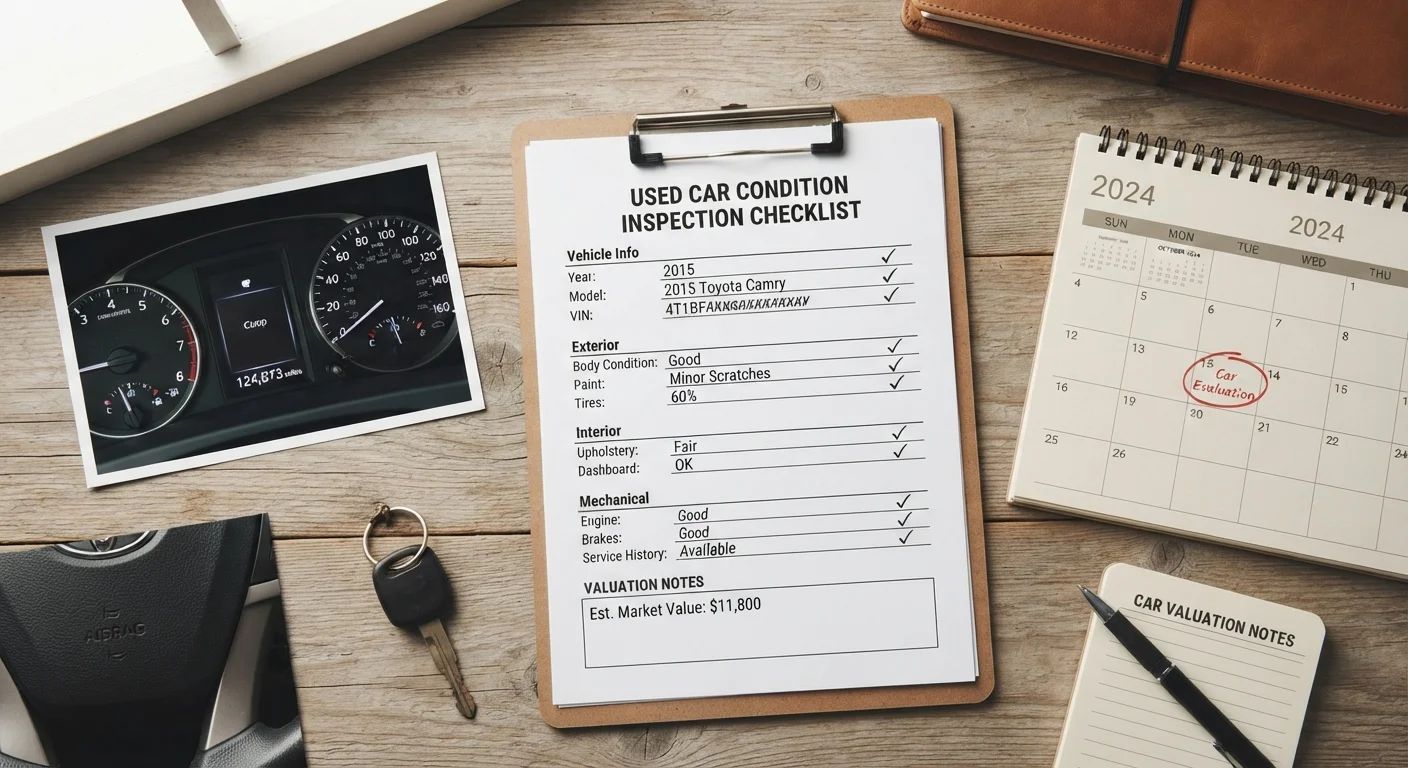
Condition grades translate subjective observations into specific dollar adjustments. Valuation guides typically define four to five grades - ranging from excellent or outstanding down through good, fair, and poor - each with explicit criteria covering mechanical function, exterior cosmetics, interior wear, and glass or trim integrity.
Moving one full condition grade up or down can shift a vehicle's listed value by several hundred to several thousand dollars depending on the model's base price. That means a vehicle listed in "good" condition that is actually in "fair" shape is overpriced relative to its true market position, and a vehicle modestly priced in "fair" condition that is mechanically sound may represent genuine value.
The compounding effect is where condition becomes especially powerful. High mileage combined with poor condition creates a steeper discount than either factor alone, because the combination signals both accumulated wear and deferred maintenance. Conversely, above-average condition on a high-mileage vehicle can partially offset the mileage penalty by demonstrating that wear has been actively managed.
For buyers evaluating collector vehicles, condition grading takes on a more structured character. The industry-standard condition classifications used in classic car pricing carry formal definitions that differ meaningfully from the general-use descriptions applied to late-model vehicles.
Putting the Three Factors Together
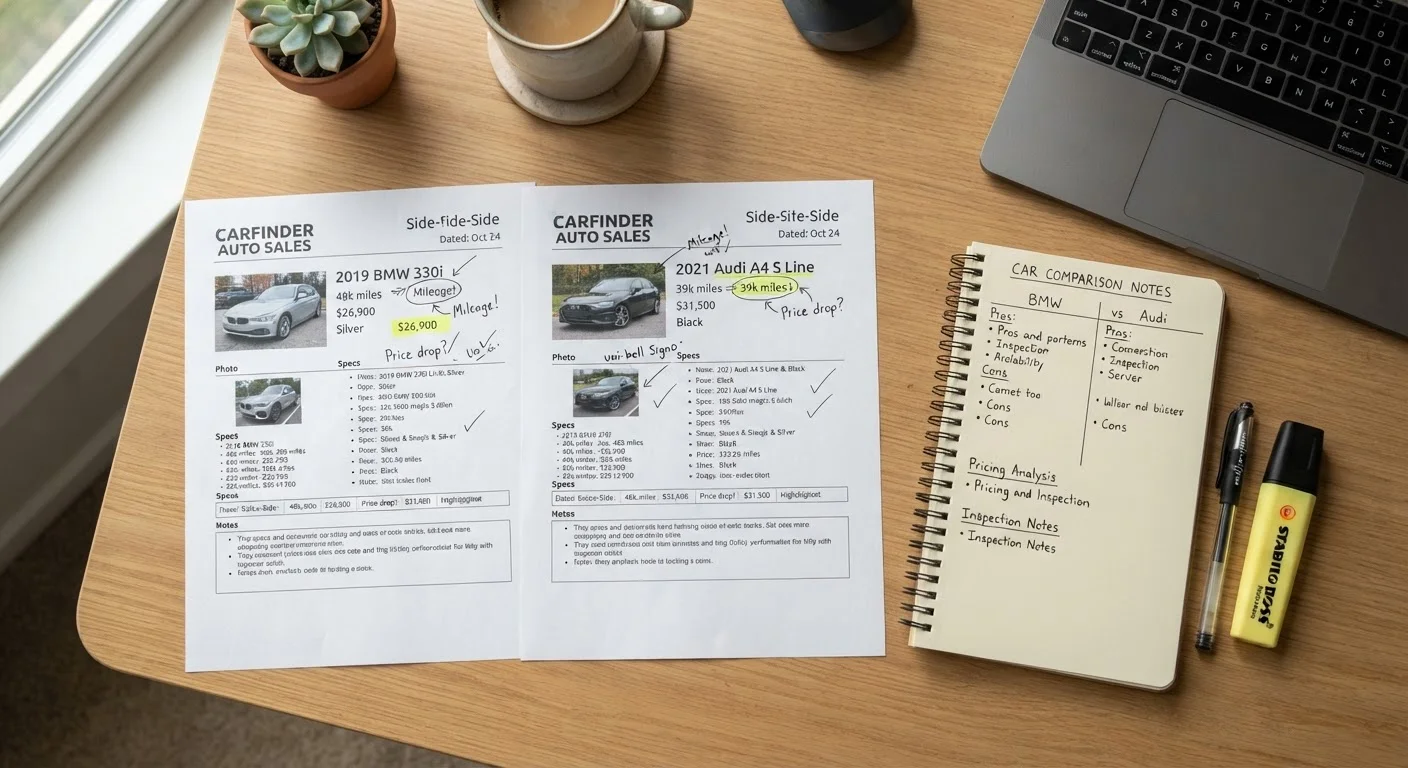
A practical pricing evaluation treats these variables as a system rather than a checklist. Start by anchoring on mileage relative to age - is the annual accumulation above, below, or near average for the market? Then layer in condition, using whatever inspection data is available: a pre-purchase inspection by an independent mechanic is the most reliable way to move condition assessment beyond visual impressions. Finally, cross-reference against live comparables - similar year, trim, mileage band, and condition - to see where the asking price sits within the actual market range.
That process gives you a grounded position before entering any negotiation. If you are also weighing financing, note that the vehicle's assessed value directly affects what lenders will underwrite - a vehicle priced above its realistic market value creates loan-to-value exposure that can affect your financing terms. The factors that shape loan versus lease decisions are worth reviewing alongside any pricing analysis. For a structured walkthrough of the full evaluation process, this guide for first-time buyers provides a step-by-step framework.
This article provides general educational information about vehicle valuation concepts and is not a substitute for professional appraisal, inspection, or individualized financial advice. Consult a qualified mechanic or appraiser for assessments specific to your situation.