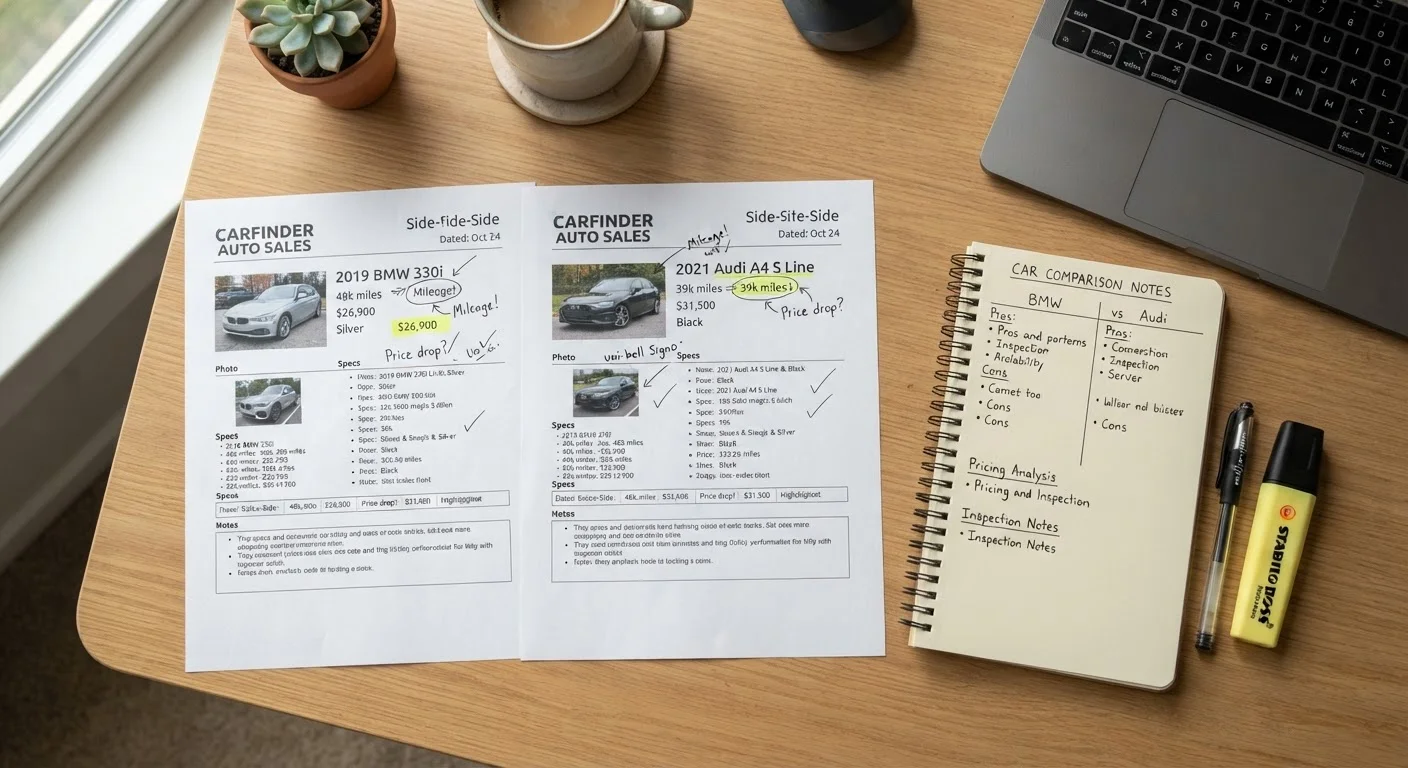

Why Market Value Is a Range, Not a Price Tag
When a dealer says a car is priced "at market value," they're invoking a term that sounds precise but is inherently flexible. Market value is the consensus price emerging from real transactions - what comparable vehicles have actually sold for, not what sellers hoped to get. Because every sale involves different buyers, different conditions, and different timing, market value always exists as a range.
That range has a floor and a ceiling. A vehicle in below-average condition, in a market with high inventory, will settle toward the lower end. The same model in clean condition, in a supply-constrained region, may command the upper end. Understanding this structure is the first step toward reading any price with confidence.
See our plain-language breakdown of listed price components to understand how MSRP, invoice price, and market adjustments each relate to this range.
±15%
Typical regional price variation for the same vehicle
Industry valuation analysts have observed that identical vehicles can differ by roughly 10-15% in transaction price between high-demand and low-demand regional markets.
3-5
Condition grade tiers used by major pricing guides
Most established vehicle valuation services use between three and five standardized condition grades, each associated with a distinct price band for the same vehicle.
The Variables That Move a Vehicle's Position in the Range
Three primary factors determine where a specific vehicle lands within the market value range for its category:
- Mileage: Higher mileage compresses value. The rate of decline isn't linear - high mileage matters more on older vehicles and less on newer ones with documented service histories.
- Condition: Pricing guides use standardized condition grades (excellent, good, fair, poor) that carry meaningful price differences between tiers. A realistic, honest condition assessment is essential before benchmarking a price.
- Trim and options: The base model and the fully loaded version of the same vehicle are not interchangeable data points. Confirm you're comparing like-for-like trim levels when pulling comparable values.
For a deeper look at how these variables interact, see how mileage, age, and condition each move a vehicle's price.
Always Confirm You're Comparing the Right Trim
Market value data is only as useful as the accuracy of your comparison. A base-trim value applied to a fully optioned vehicle - or vice versa - can mislead your benchmark by thousands of dollars. Before pulling any pricing guide figure, verify the exact trim designation and confirm which factory options were included.
Regional Markets and Why the Same Car Has Different Values
A pickup truck commanding a premium in a rural market may sit on a lot for weeks in a dense urban area. A convertible priced at the top of its range in a Sun Belt city might fall to mid-range in the upper Midwest. Market value is local before it's national.
When evaluating a price, pull comparable listings from your own metro area rather than relying solely on national guide averages. Local inventory levels, regional buyer preferences, and even seasonal timing all create legitimate price variation. A vehicle priced above a national guide average isn't automatically overpriced - it may simply reflect accurate regional demand.
How to Build Your Own Market Value Benchmark
A reliable benchmark uses multiple data inputs, not just one pricing guide. Here's a practical framework:
- Pull from two or three established pricing services. Note where the figures agree and where they diverge - the overlap zone is your most defensible range.
- Search active local listings for the same year, trim, mileage bracket, and condition. These are your direct competitors in the same market.
- Check recent sold data where available. Asking prices show supply; sold prices show what buyers actually paid.
- Adjust for condition honestly. Use the guide's condition definitions, not your emotional attachment to the vehicle.
For vehicles at specialty or classic auctions, transaction data requires additional interpretation. Learn how auction results function as a valuation benchmark - including how buyer's premiums affect the real price paid.
Once you have a defensible range, comparing it against a listing price becomes straightforward. See how invoice price, MSRP, and market value interact during negotiation to apply this in a dealership context.
“The price a car sells for is the only real data point. Everything else - guide values, sticker prices, appraisals - is an estimate of what that transaction price might be under specific conditions.”
— Consumer Automotive Research Practitioner, Vehicle pricing analyst and consumer advocacy educator