What Each Pricing Figure Actually Represents
Walk onto any dealership lot and you'll encounter a cluster of figures - on the window sticker, in the sales system, and sometimes in third-party listings. Each number has a distinct origin and purpose. Understanding the difference is the foundation of evaluating whether a price is genuinely competitive.
| MSRP Definition | Manufacturer's suggested retail price - the automaker's recommended selling price (Required on U.S. new-car window stickers under the Automobile Information Disclosure Act) |
| Invoice Price | Amount the manufacturer charges the dealer - not necessarily the dealer's true cost |
| Typical Dealer Holdback | 1-3% of MSRP, rebated to dealer by manufacturer after sale |
| Market Adjustment | Dealer-added markup above MSRP based on local supply and demand |
| Best Negotiating Benchmark | Regional average transaction price for the same trim and configuration |
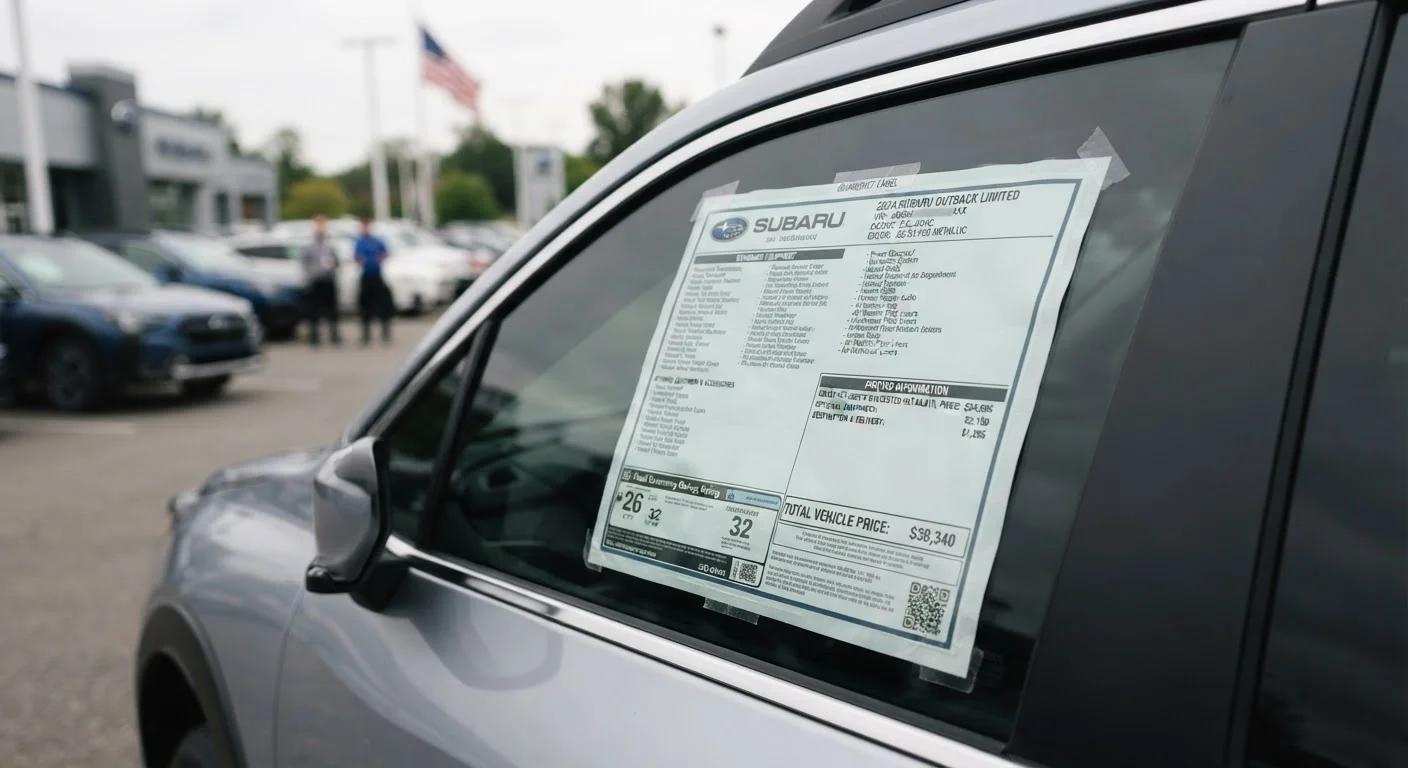
The Manufacturer's Suggested Retail Price (MSRP), sometimes called the sticker price, is the price the automaker recommends the vehicle sell for. It's printed on the Monroney label (the federal window sticker required on new cars sold in the U.S.) and includes the base vehicle price plus any factory-installed options. MSRP is a starting reference point, not a ceiling or a floor.
The invoice price is the amount the manufacturer charges the dealership for the vehicle. It's often treated as a proxy for dealer cost, but that framing is incomplete. Dealer incentives, holdback payments, and manufacturer-to-dealer bonuses can all reduce what the dealer actually paid below the invoice figure. For a deeper look at how these figures interact during negotiation, see invoice price, MSRP, and market value explained.
Dealer holdback is a percentage of MSRP - typically 1-3% - that manufacturers rebate back to dealers after a vehicle sells. Because this amount is paid after the sale, dealers can effectively sell a vehicle at invoice and still retain a margin. Buyers rarely see this figure disclosed on any paperwork.
A market adjustment (also called an addendum) is a dealer-added markup above MSRP, often printed on a supplemental sticker. Market adjustments reflect local supply-and-demand conditions rather than factory pricing. They are negotiable in most circumstances, though their size tends to shrink as a model's initial popularity fades.
How to Use These Numbers When Evaluating a Deal
Knowing each definition is useful; knowing how to apply them together is what gives you leverage. The spread between invoice price and MSRP is sometimes called the gross margin window - the negotiating room visible on paper. In reality, that window is narrower than it looks once you account for advertising fees and regional dealer costs, but it still signals where movement is possible.
MSRP (Monroney Price)
The price a manufacturer recommends a vehicle sell for at retail. Printed on the required federal window sticker, it includes the base price and factory options but excludes dealer fees and taxes.
Invoice Price
The price a dealer pays the manufacturer for a vehicle before incentives and holdback. Often used as a negotiation anchor, but it overstates the dealer's true cost because rebates reduce the net figure after the sale.
Dealer Holdback
A periodic payment from the manufacturer to the dealer representing a percentage of MSRP, typically paid quarterly. It allows dealers to sell at or near invoice while retaining a profit margin not visible in the sticker price.
Market Adjustment / Addendum
A supplemental sticker added by the dealer that raises the vehicle's price above MSRP. It reflects local demand conditions and is generally negotiable, especially as model availability increases.
Transaction Price
The amount a buyer actually paid for a specific vehicle, net of discounts and before financing costs. Aggregated transaction prices for a given model and region are the most reliable indicator of true market value.
Gross Margin Window
The visible gap between invoice price and MSRP that represents potential negotiating room. In practice, this window is partially offset by dealer advertising fees and regional operating costs.
A few practical principles follow from this structure:
- Compare transaction prices, not sticker prices. Resources such as government vehicle databases and independent automotive pricing services publish average transaction prices - what buyers in your region actually paid. This is a more reliable benchmark than MSRP alone.
- Ask about addenda separately. If a supplemental sticker adds accessories or protection packages, price those items individually. Some may duplicate coverage you already have; others may be available elsewhere at lower cost. Dealer add-ons can significantly affect your total outlay, and knowing which are negotiable is key.
- A low asking price is not automatically a good deal. Fees, financing rate markups, and trade-in undervaluation can offset a favorable sticker price. A low asking price can sometimes be the most expensive number on the page.
- Sticker price is only the beginning of total cost. Taxes, registration, financing charges, and ongoing ownership expenses all compound the initial figure. The true cost of car ownership goes well beyond the purchase price.
Incentives Can Shift the Effective Price
Manufacturer-to-consumer rebates and low-APR financing offers can reduce your effective purchase price independently of what you negotiate on the sticker. These incentives are typically disclosed on the automaker's website and change on a monthly or quarterly basis. Factoring them in gives you a clearer picture of the real spread between asking price and actual cost. Check current rate and term conditions when comparing financing options.
Market value - what comparable vehicles are actually selling for in your area right now - is the most actionable benchmark of all. It incorporates regional supply, seasonal demand, and trim-level availability in ways that MSRP cannot. For a practical guide to interpreting that figure, see what market value actually means when buying a car.
This article is for general informational and educational purposes only. It does not constitute financial, legal, or purchasing advice tailored to your individual situation. Consult a qualified professional for guidance specific to your circumstances.