Why Bundling Trade-In and Purchase Hurts Your Position
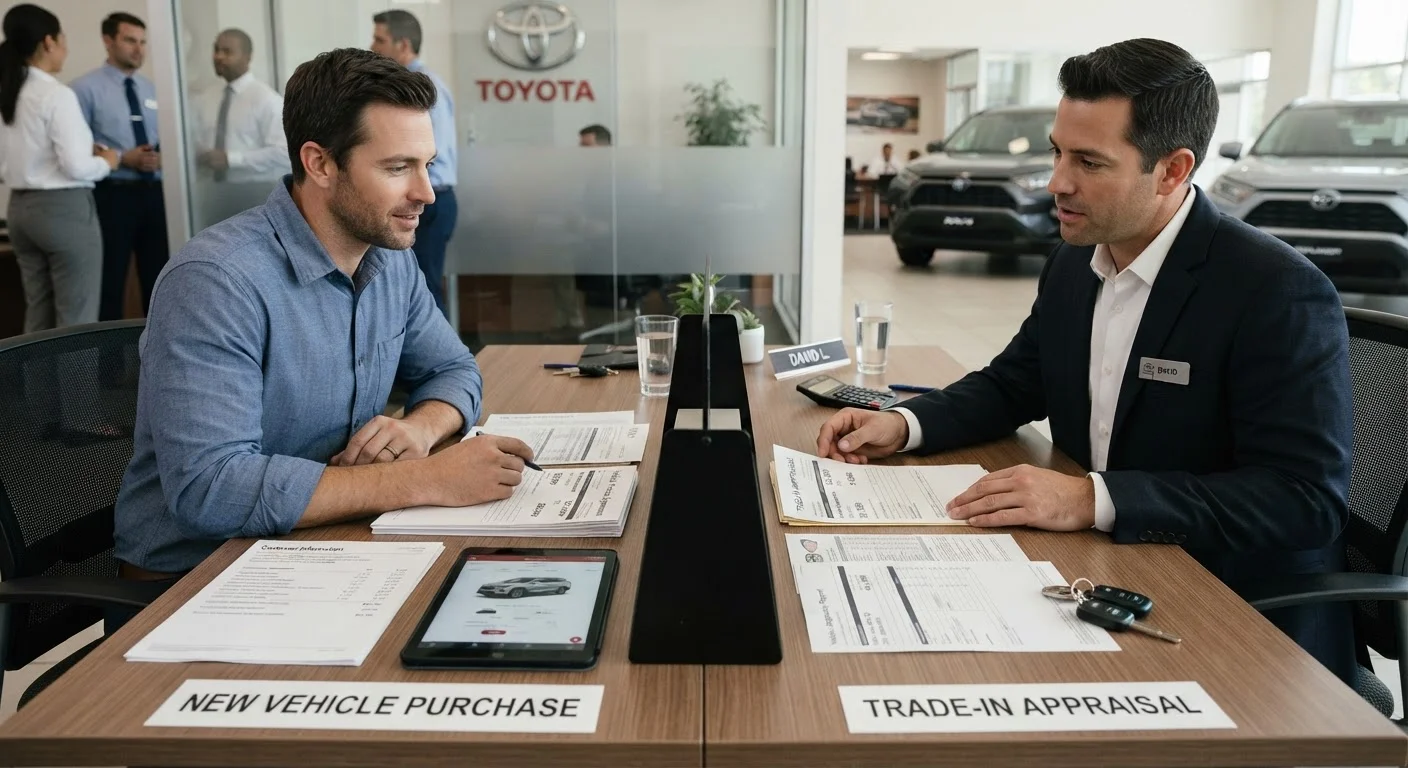
Most buyers walk into a dealership prepared to do everything at once: negotiate the new car price, discuss financing, and hand over the keys to their old vehicle in one sitting. That bundled approach feels efficient, but it hands the dealer a significant structural advantage.
When all three variables - purchase price, financing terms, and trade-in credit - are negotiated together, the salesperson can shift value between buckets invisibly. A generous trade-in offer might be offset by a higher selling price on the new vehicle, or a rate bump on the loan. You may leave feeling like you won on trade-in while actually losing ground overall.
This is sometimes called the "four-square" method - a worksheet that presents monthly payment, down payment, trade-in value, and vehicle price as a single negotiable block. When numbers move together, isolating what you actually paid for each piece becomes nearly impossible. The negotiation pitfalls that erode your deal are most dangerous precisely when the total looks favorable but the components don't.
Trade-In vs. Selling Privately: Know the Tradeoff
Trading in your vehicle at a dealership is convenient but typically yields less than a private sale. The dealer needs room to recondition and resell the car at a profit. That doesn't make a trade-in a bad choice - it means you should make the choice with accurate numbers in front of you, not assumptions. Factor in your time, the complexity of a private transaction, and any sales tax offset your state may allow on trade-in credit.
Get an Independent Appraisal Before You Arrive
Before you set foot on any lot, obtain at least two or three trade-in estimates from sources independent of the dealership you plan to buy from. Online appraisal tools, competing dealerships, and wholesale auction services all offer reference points. These estimates won't be identical - conditions, mileage interpretation, and regional demand create variation - but they give you a defensible floor.
Document everything: the estimate amount, the date, the platform or dealership, and any conditions noted. Bring those printouts with you. A written offer transforms an abstract claim into a negotiating position the dealer must engage with directly.
~$1,000-$3,000
Typical gap between trade-in and private-sale value
Industry observers generally note that dealer trade-in offers run meaningfully below private-party market values, though the actual spread varies by vehicle type, condition, and local demand.
3 in 5
Buyers who negotiate trade-in and purchase price together
Consumer research from automotive industry surveys consistently finds most buyers bundle trade-in discussions with purchase negotiations, limiting their ability to evaluate either independently.
This groundwork is part of a broader pre-visit discipline. Our pre-negotiation checklist covers the full range of research steps worth completing before any dealership visit.
The Sequencing Strategy: New Car Price First
The most reliable way to separate these transactions is to sequence them deliberately. Negotiate the out-of-door price of the new vehicle - including any dealer fees - to a point you're satisfied with before mentioning you have a trade-in. Once the new car price is agreed upon in writing, introduce the trade-in as a separate transaction.
This matters because once the purchase price is locked, the dealer's ability to compensate with trade-in adjustments is limited. Any trade-in offer they make now stands on its own. If the number is below your independent appraisals, you have a documented basis for pushing back - or for selling privately instead.
This sequencing approach mirrors the logic behind negotiating the vehicle price rather than the monthly payment - in both cases, you're trying to reduce the number of moving parts visible to the dealer at any one time.
When Separating Isn't Fully Possible - and How to Adapt
Some dealers will resist full separation, particularly if a manufacturer incentive or financing promotion is tied to a package deal. In those cases, the goal shifts from full separation to maximum transparency. Ask the finance manager to itemize each component on paper: what is the agreed vehicle selling price, what is the trade-in credit, and what are the financing terms - each as a standalone figure.
If you're buying a used vehicle, the dynamic shifts slightly; used car negotiations involve different leverage points, including greater price variability and less manufacturer pricing structure to anchor against.
Patience is a genuine tool throughout this process. Feeling rushed into combining transactions is itself a signal worth noting. As our piece on silence and timing in negotiation explains, slowing the pace often shifts leverage back to the buyer.
Ask the Dealer to Beat Your Best Appraisal
If you have a written trade-in offer from an independent source, present it directly and ask the selling dealer if they can match or beat it. This reframes the conversation: instead of accepting whatever number they volunteer, you're setting the floor. Dealers with strong used-car inventory needs may be motivated to compete.
Finally, if your trade-in appraisals consistently exceed what any dealer will offer, private sale may be worth the added effort. The spread between dealer trade-in value and private-party sale price can be meaningful, particularly for vehicles in strong consumer demand. For a broader framework on evaluating the full deal - not just the trade-in - see our deal-spotting resources.
This article is for general informational and educational purposes only. It does not constitute personalized financial, legal, or purchasing advice. Consult a qualified professional for guidance specific to your situation.