Defining the Two Categories
Before comparing collector value, it helps to understand exactly what separates these two types of competition vehicles at a structural level.
A one-make cup car - sometimes called a monomarca or spec-series racer - is built to compete within a tightly regulated championship where every entrant uses the same base vehicle and adheres to strict technical parity rules. The Porsche Carrera Cup, Ferrari Challenge, and Lamborghini Super Trofeo series are familiar examples. Manufacturers produce these cars in controlled batches, often derived from a production road car but stripped, caged, and tuned exclusively for racing. The defining characteristic is intentional parity: the series minimizes technical differentiation so that driver skill, not engineering budgets, determines race outcomes.
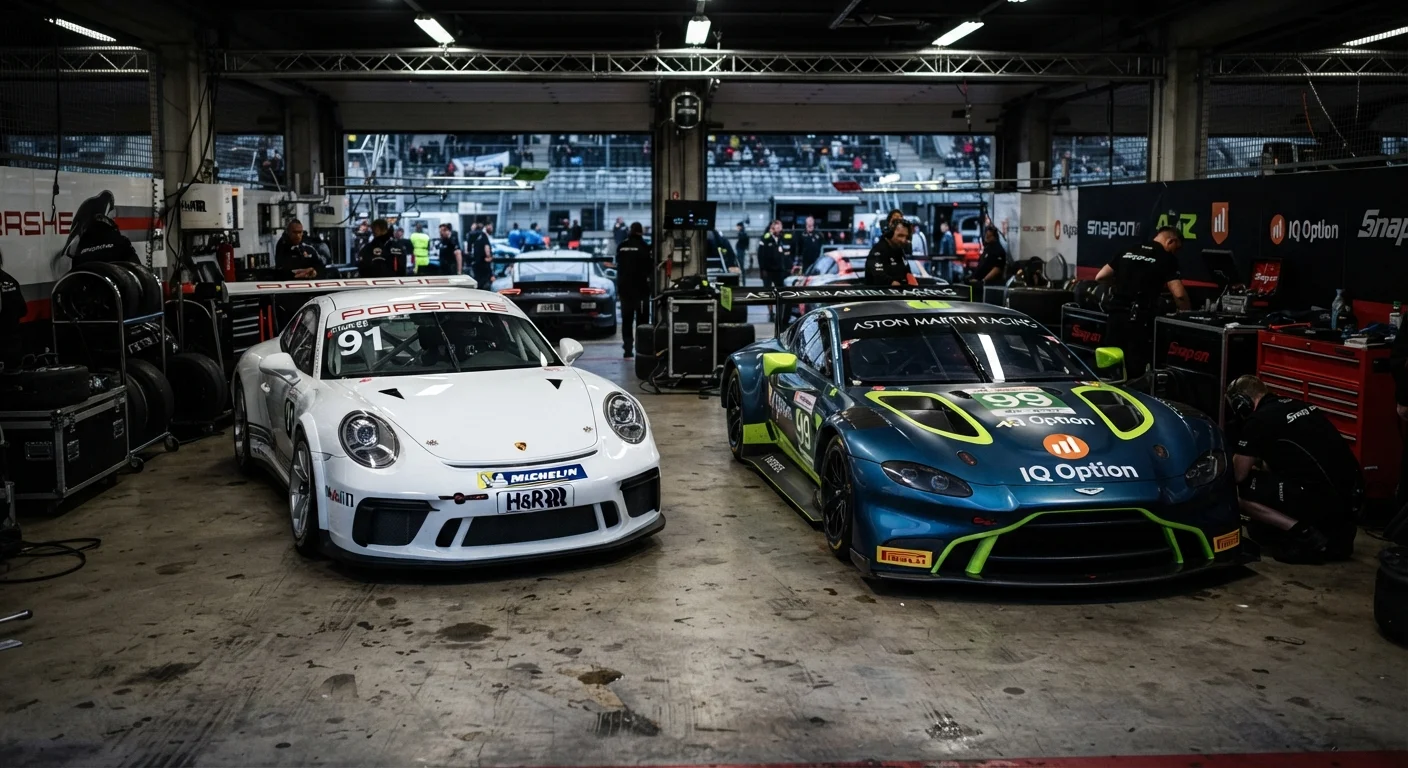
A GT-class race car operates under an entirely different philosophy. These are purpose-engineered machines designed to compete across GT categories - GT3, GT4, GTE, and their predecessors - in open, multi-class endurance events. Unlike cup cars, GT machinery allows significant variation between manufacturers, with each constructor optimizing power, aerodynamics, and chassis dynamics within defined performance windows. Cars competing at Sebring, the Nürburgring 24 Hours, or Petit Le Mans represent a wide spectrum of technical approaches unified only by class regulations.
Understanding this distinction matters for collectors because it shapes everything downstream: parts availability, documentation norms, eligible historic events, and - critically - how value is appraised. For broader context on how the collector community assigns meaning to competition vehicles, see our discussion on what actually makes a car 'classic'.
| Criterion | One-Make Cup Cars | GT-Class Race Cars |
|---|---|---|
| Production intent | Spec series parity racing | Open-class endurance competition |
| Technical variation | Minimal - near-identical spec | Significant - manufacturer-specific builds |
| Typical acquisition cost | Lower entry point | Higher, often substantially so |
| Parts availability | Generally accessible via manufacturer | Varies; some parts require fabrication |
| Provenance documentation | Factory-batch records common | Layered; varies by ownership history |
| Prestige ceiling | Moderate; tied to series reputation | High; major event history commands premium |
| Vintage event eligibility | Often eligible for spec runoffs | Eligible at sanctioned endurance historics |
Provenance, Documentation, and What Drives Value
In both niches, documented history is the foundation of collector value - but the standards and expectations are meaningfully different.
Cup cars benefit from manufacturer-maintained build records. Because each chassis is produced in a controlled batch for a specific series season, factory documentation is often thorough and accessible. Series organizers frequently maintain archived race results tied to individual chassis numbers. This makes verification relatively straightforward for buyers, assuming the car hasn't passed through many hands without proper record-keeping.
GT-class cars carry a more layered provenance challenge. A car that competed at a major endurance event may have multiple documented ownership periods, mid-season technical updates, engine rebuilds, or class transitions across different regulatory eras. The upside is that a GT car with a clean chain of title and race-entry documentation for a prestigious event carries a rarity premium that few cup cars can match.
GT3
Most widely supported GT class globally
GT3 regulations, developed by the FIA-aligned SRO Motorsports Group, have become the dominant framework for GT-class racing across multiple continents.
300+
Estimated active one-make series worldwide
Industry observers have noted that manufacturer-backed one-make series now number in the hundreds globally, reflecting the commercial success of the cup car model.
Collectors evaluating either category should request FIA or series-issued technical passports, scrutineering records, and - where available - contemporaneous race footage or press coverage. Gaps in the record are not automatically disqualifying, but they require honest pricing adjustment. The Classic Car Culture hub offers additional context on evaluating competition vehicle pedigree.
Practical Ownership: Costs, Maintenance, and Use
Owning a purpose-built race car of either type demands resources well beyond the initial acquisition price. Both categories require trailer transport, specialized storage, and track-day logistics. Neither is road-legal in the United States without extensive modification that would typically compromise their collector integrity.
Cup cars tend to offer a more predictable ownership experience. Because entire grids of identical machinery ran the same components simultaneously, replacement parts are generally available through the original manufacturer's motorsport division or specialized suppliers. Many cup car models also have active owner communities - registries, Facebook groups, and club events - that facilitate parts sharing and technical knowledge exchange.
GT-class cars, particularly older GTE or GTLM examples, can present significant sourcing challenges. Specialized gearboxes, bespoke aerodynamic components, and proprietary engine management systems may require factory support or fabrication. This complexity is part of what makes them compelling to serious collectors, but it also means that a poorly maintained example can quickly become a money-consuming project rather than a showcase piece.
Road Legality and Insurance Considerations
Neither cup cars nor GT-class race cars are federally compliant for US road use in their competition configuration. Owners typically insure them under specialized motorsport or agreed-value collector policies rather than standard auto coverage. Before acquiring either type, consult with an insurer experienced in competition vehicle coverage to understand what events and storage arrangements are covered. This is general information only - individual policy terms vary significantly.
Both niches intersect with broader collector vehicle philosophy in ways worth exploring. The line between a race car and a purpose-built kit car can occasionally blur in period machinery, and understanding the distinctions helps buyers ask the right questions.