The Role Each Component Plays
Understanding how these three components divide their responsibilities makes it far easier to diagnose what's going wrong when braking feels off.
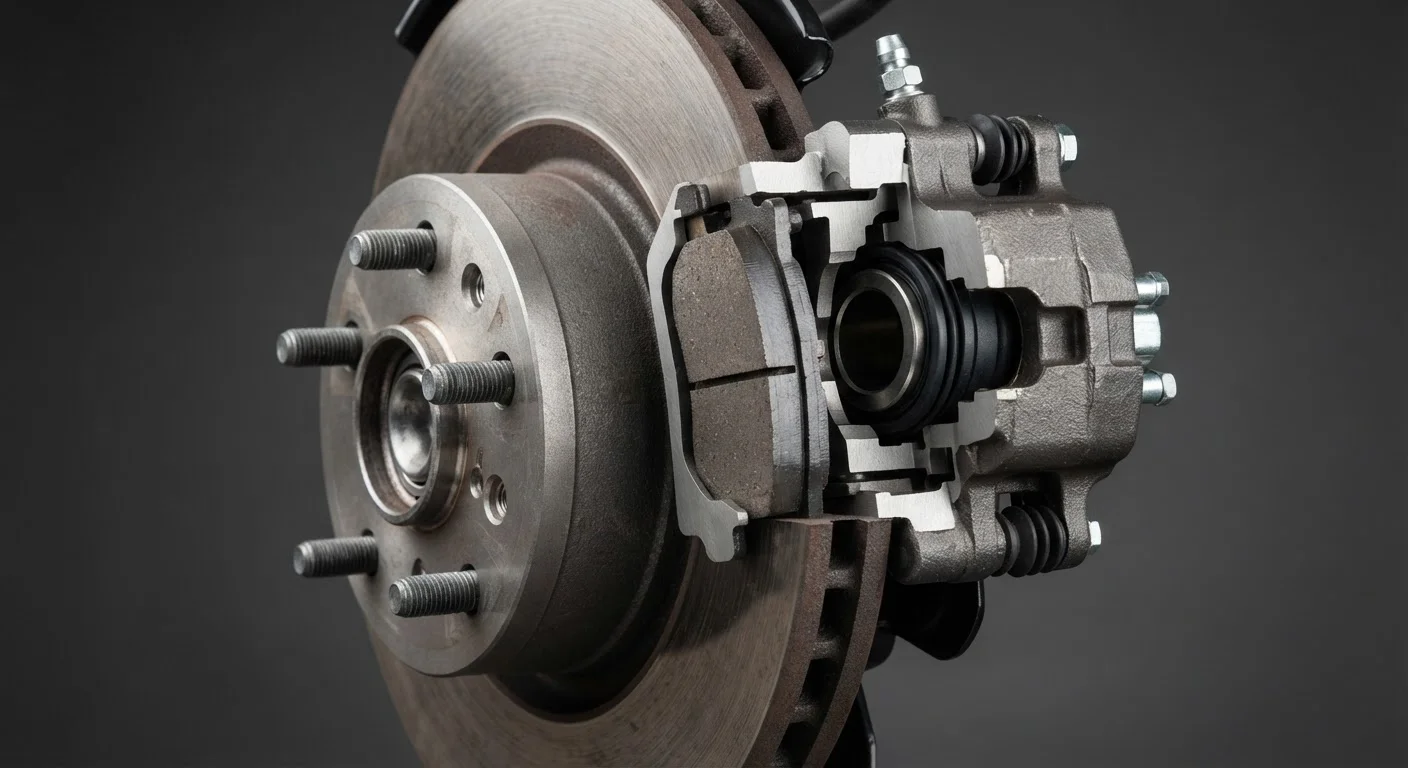
The rotor (also called a disc) is the large metal disc bolted to the wheel hub that spins with the wheel. It provides the surface against which friction is applied. Rotors are engineered to absorb and dissipate enormous amounts of heat - a single hard stop from highway speed can raise rotor temperatures by hundreds of degrees. Vented rotors, the most common design on front axles, use internal fins between two rotor faces to circulate air and shed heat faster.
The brake pad is a friction material bonded to a steel backing plate. Pads sit inside the caliper, positioned on each side of the rotor. When the caliper clamps, the pad's friction surface presses against the rotor face. Pad compounds vary - ceramic formulations tend to run cooler and produce less dust, while semi-metallic compounds handle higher heat loads more aggressively. The right compound depends on the vehicle's weight, intended use, and manufacturer guidance.
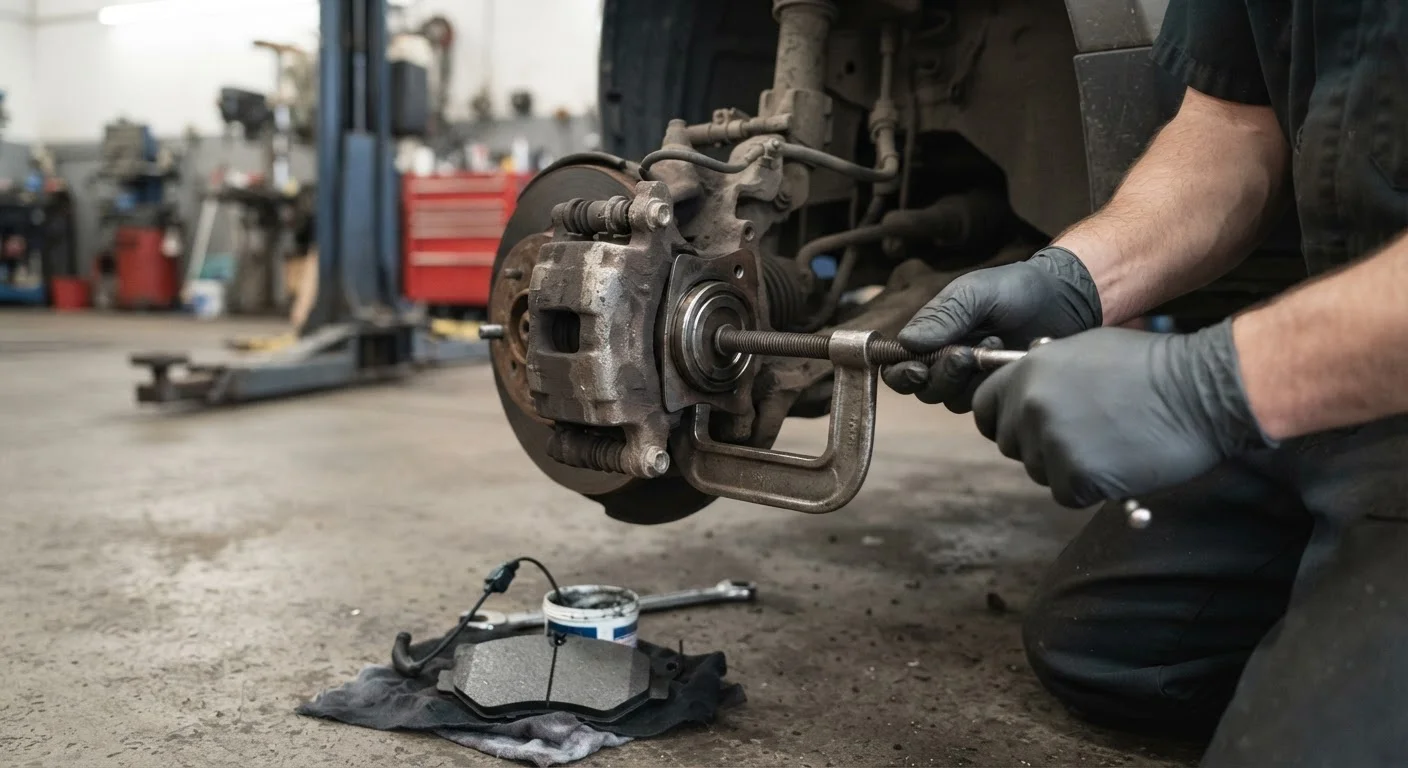
The caliper is the hydraulic clamp that brings the pads into contact with the rotor. A fixed caliper uses pistons on both sides of the rotor; a floating (sliding) caliper uses one or two pistons on the inboard side and relies on the caliper body sliding on guide pins to press the outboard pad. Slider pins must be lubricated and free-moving - a seized pin is one of the most common causes of uneven pad wear.
“The brake system is only as strong as its weakest component. A caliper that won't release, a rotor below minimum thickness, or a glazed pad compound can each defeat an otherwise sound system.”
— Parts & Maintenance Editorial Team, Automotive maintenance education publication
How They Interact Under Braking
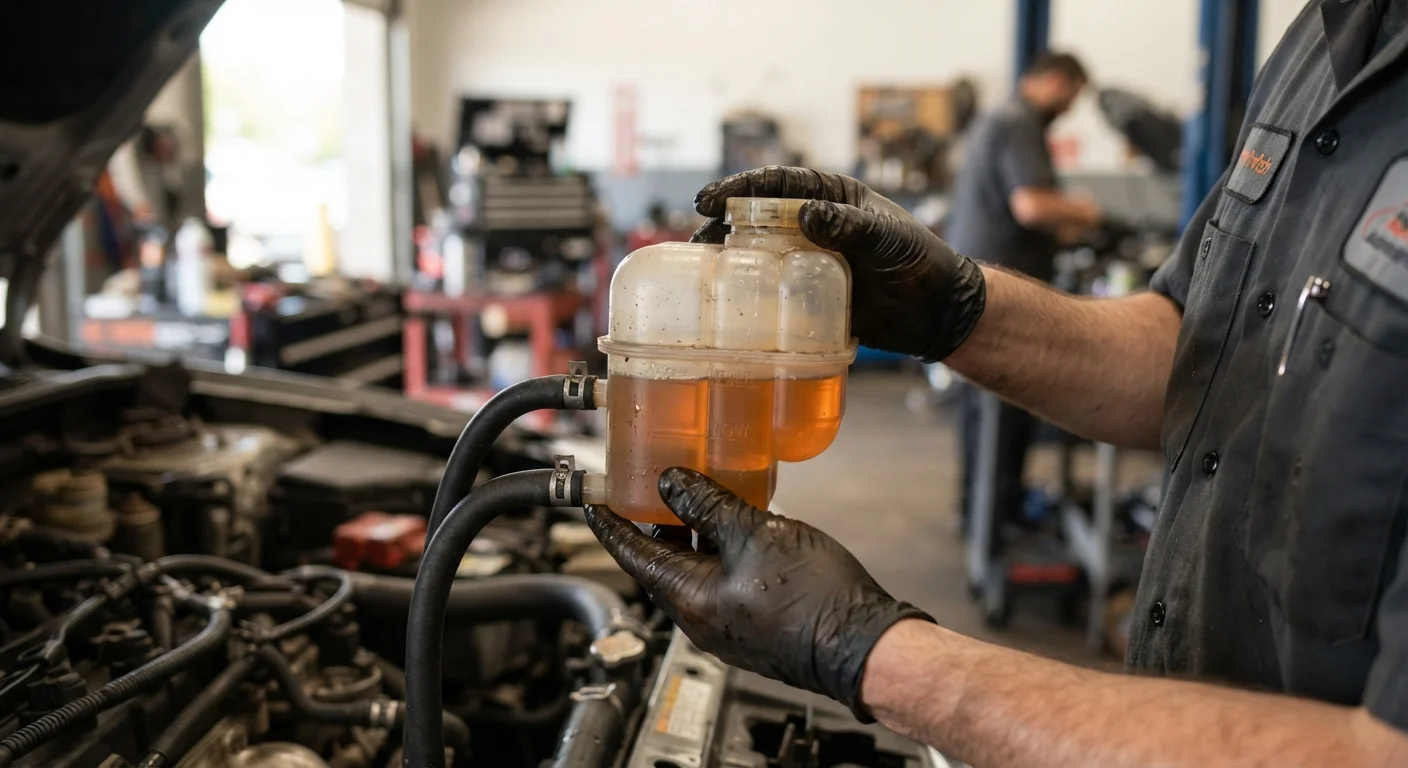
Every brake application is a chain reaction. Pressing the pedal pressurizes brake fluid through the master cylinder and lines. That hydraulic pressure pushes the caliper piston outward, squeezing the inner pad against the rotor. On a floating caliper, the caliper body simultaneously slides inward, drawing the outer pad against the opposite rotor face. Both pads clamp simultaneously, and friction between the pad material and rotor surface decelerates the wheel.
This interaction has direct implications for wear. The inner pad on a floating caliper typically wears slightly faster because the piston bears most of the initial force. Rotor wear is largely self-generated - microscopic material transfers and abrasion from the pad gradually reduce rotor thickness over tens of thousands of miles. That's why rotors have a minimum thickness specification stamped or cast into them; below that number, the rotor cannot safely dissipate heat or maintain structural integrity.
~70%
Braking force handled by front brakes
Due to weight transfer during deceleration, front brakes typically manage the majority of stopping force, which is why front pads and rotors wear faster than rear components on most passenger vehicles.
0.030"
Typical rotor thickness variation limit
Many OEM specifications flag a rotor for replacement or machining when thickness varies by more than approximately 0.030 inches (0.76 mm) across the braking surface, as this causes pedal pulsation.
25,000-65,000 mi
Typical brake pad lifespan range
Pad lifespan varies widely depending on driving style, vehicle weight, pad compound, and terrain - aggressive urban driving can cut pad life significantly compared to steady highway use.
For a broader look at how the entire braking system ages and what maintenance it requires, see our guide to brake system wear and maintenance.
Common Failure Patterns and What They Signal
Because pads, rotors, and calipers are interdependent, a problem in one almost always affects the others.
Squealing during light braking is often the built-in wear indicator - a small metal tab designed to contact the rotor when pads reach minimum thickness. This is a warning, not a crisis, but it should prompt inspection within a few weeks.
Grinding or metal-on-metal sound means the pad friction material is gone and the steel backing plate is cutting into the rotor. At this stage, rotor replacement is very likely unavoidable and safe stopping distances are compromised.
Brake pedal pulsation - a rhythmic push-back through the pedal during stops - points to rotor thickness variation or runout. Rotors can sometimes be machined (turned on a brake lathe) back to specification if enough material remains above the discard thickness, though many technicians now favor replacement given the low cost of rotors relative to machine time.
Vehicle pulling to one side during braking suggests unequal clamping force across an axle, commonly caused by a sticking caliper or seized slider pins on one side.
Inspect Slider Pins During Every Brake Job
When replacing pads, always remove, clean, and re-grease the caliper slider pins with high-temperature brake lubricant - not general-purpose grease. Corroded or dry slider pins are among the most common causes of premature, uneven pad wear and are quick to address while the caliper is already off the vehicle.
Making Sound Replacement Decisions
Brake service is typically done in axle pairs - both front or both rear - to maintain balanced stopping force. Replacing pads on one side only creates uneven braking that can pull the vehicle during hard stops.
When evaluating rotor condition, technicians measure thickness with a micrometer at multiple points around the face to detect both overall wear and thickness variation. A rotor that measures above minimum thickness but shows deep grooves, heat cracks radiating from the center, or significant scoring will still need replacement - surface condition matters alongside raw thickness.
Calipers are often overlooked during brake service. A caliper that shows corrosion around the piston boot, a torn boot allowing moisture intrusion, or stiff slider pins should be rebuilt or replaced rather than left in service with new pads. Installing fresh pads on a seized caliper guarantees premature, uneven wear on those new pads.
Most brake jobs are within reach of experienced DIYers with the right tools and a safe lift setup. However, any work involving the hydraulic system - replacing calipers, bleeding lines, or addressing master cylinder issues - carries higher risk if done incorrectly, and a professional inspection is appropriate when you're uncertain about a diagnosis or a procedure step.