Why Coolant Myths Are Particularly Costly
Overheating is one of the most preventable causes of serious engine damage, yet bad information about coolant systems circulates freely in forums, parking lots, and auto parts stores. Acting on a coolant myth can warp cylinder heads, crack engine blocks, or destroy a water pump - repairs that run into thousands of dollars. Understanding what the evidence actually says about coolant type, mixing, and service intervals is foundational to responsible vehicle ownership.
For a broader look at how misconceptions affect vehicle decisions across categories, see our piece on common maintenance myths that persist despite being wrong.
Myth
All coolants are interchangeable - colour just tells you the brand.
Fact
Coolant colour is a marketing convention, not a chemistry standard. Different formulations use incompatible additive packages.
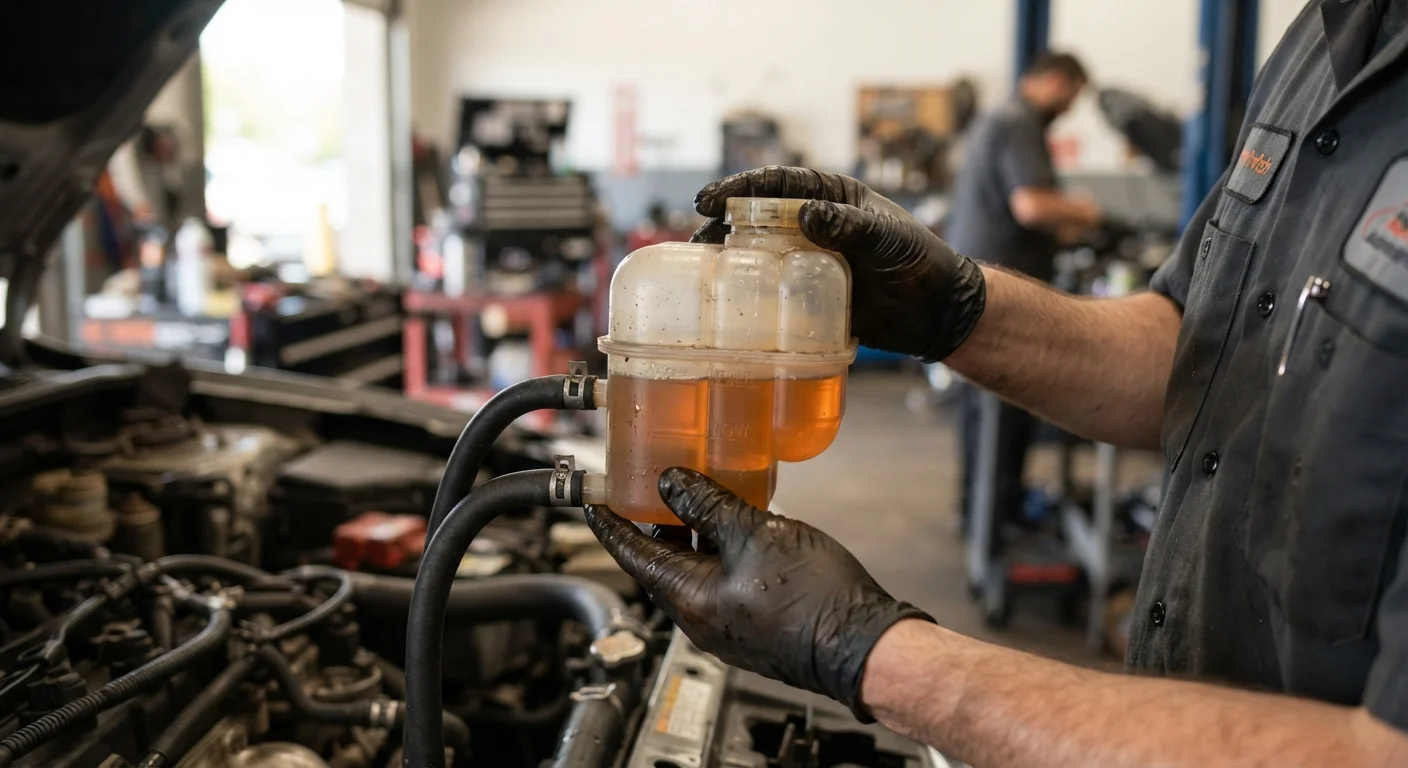
Green, orange, yellow, pink, and blue coolants are not versions of the same product. They reflect fundamentally different inhibitor chemistries: IAT (Inorganic Additive Technology), OAT (Organic Acid Technology), HOAT (Hybrid OAT), and others. Mixing incompatible types can cause the inhibitors to react, forming gel-like deposits that clog narrow coolant passages and reduce heat transfer. Always identify the correct coolant specification for your vehicle - typically found in the owner's manual or on a label near the coolant reservoir - and match the chemistry, not the colour.
Myth
Plain water works fine as a temporary coolant top-up.
Fact
Water alone raises the freeze point, lowers the boiling point, and accelerates internal corrosion - even short-term use has measurable consequences.
A properly mixed 50/50 coolant-and-water solution raises the boiling point to approximately 265°F (129°C) under pressure and lowers the freeze point to around -34°F (-37°C), compared to water's standard 212°F (100°C) boiling point at sea level. Topping up with plain tap water also introduces minerals that deposit on heat-transfer surfaces and can corrode aluminium components. If you must add liquid in an emergency, distilled water is a better interim choice than tap water - but the system should be properly serviced with the correct premixed or concentrated coolant as soon as possible.
Myth
If the coolant reservoir is full, the cooling system is fine.
Fact
The reservoir level only tells you about overflow capacity, not system pressure, flow rate, or the condition of hoses, the thermostat, or the water pump.
A full reservoir with a faulty thermostat, a failing water pump, or a partially collapsed lower radiator hose can still lead to overheating within minutes of normal driving. The reservoir level is one data point among several. A proper cooling system check includes inspecting hose condition for softness or cracking, verifying the radiator cap holds rated pressure, confirming the thermostat opens at the correct temperature, and checking for air pockets that indicate a head gasket leak. Relying solely on reservoir level as a health indicator gives false confidence.
Myth
Coolant should be flushed every 30,000 miles regardless of type.
Fact
Service intervals vary significantly by coolant formulation - some OAT coolants are rated for 150,000 miles or five years under normal conditions.
The 30,000-mile rule originated with older IAT green coolants, which had shorter-lived inhibitor packages. Modern long-life OAT and HOAT formulations use inhibitors that remain effective much longer, and premature flushing wastes money without improving protection. Conversely, extending an IAT coolant well past its service life allows pH to drop and corrosion protection to fail. The correct interval is the one specified by the vehicle manufacturer for the coolant type fitted - not a generic mileage figure. Test strips that measure pH and inhibitor strength can also confirm whether a coolant is still within spec.
Myth
A higher coolant concentration means better protection.
Fact
Concentrations above 70% coolant to 30% water actually reduce both freeze and boil-over protection compared to the standard 50/50 mix.
Ethylene glycol-based coolant relies on water as part of the heat-transfer medium. The optimal freeze protection is typically achieved at a 60/40 or 50/50 coolant-to-water ratio depending on climate - running straight concentrate or a 70/30 mix raises the freeze point and reduces boiling protection. Most manufacturers specify a 50/50 mix as the standard, with a maximum of 70% coolant concentrate for extremely cold climates. Running undiluted concentrate is not just unnecessary; it actively degrades system performance and can thicken the fluid enough to reduce pump efficiency.
Getting Coolant Service Right
Beyond the myths themselves, a few practical points help keep the cooling system in reliable shape. Always consult your owner's manual or a manufacturer service bulletin for the correct coolant specification - not just the colour on the bottle. When in doubt about system condition, a coolant test strip can measure pH and freeze-point protection in minutes. If the system has been compromised by mixing incompatible fluids, a full drain, flush, and refill with the correct formulation is the appropriate remedy.
Never Open a Hot Cooling System
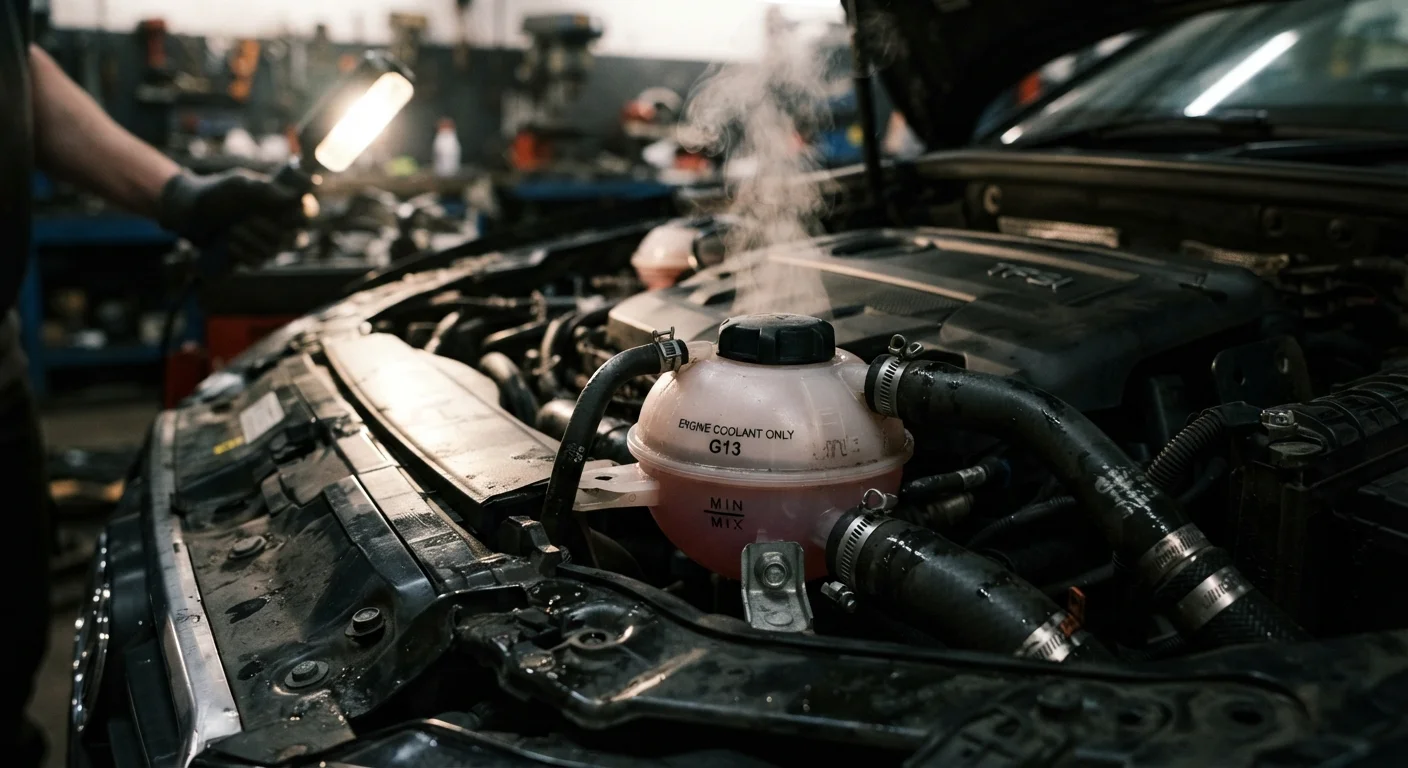
Coolant systems operate under pressure at temperatures well above water's normal boiling point. Removing the radiator cap or reservoir cap on a warm or hot engine can cause scalding coolant to spray with significant force. Always allow the engine to cool completely - typically at least 30 minutes after shutdown - before opening any part of the cooling system. If you're unsure, a qualified technician has the tools and training to work safely on pressurised systems.
For a deeper dive into flush timing and what actually indicates a coolant change is overdue, see coolant flush myths that waste time and money. If you're working on an RV or camper, coolant system logic intersects with other fluid systems - the same evidence-based thinking applies to RV holding tank myths that lead to real plumbing problems.
~40%
Share of roadside breakdowns linked to cooling system failures
Industry service data consistently identifies cooling system failures - including overheating, hose failure, and coolant loss - as one of the leading causes of roadside breakdowns in light vehicles.
265°F
Boiling point of a 50/50 coolant mix under pressure
A properly mixed coolant solution in a pressurised system raises the effective boiling point well above water's standard 212°F, providing a meaningful safety margin during high-load driving.
When a cooling system job feels beyond your skill level or requires pressure-testing equipment you don't have, a qualified mechanic is the right call. Coolant work on pressurised systems carries real burn risk when the engine is warm - never open the radiator cap or reservoir when the engine is at operating temperature.