Why Electrode Material Matters
A spark plug has one essential job: ignite the compressed air-fuel mixture in each cylinder at precisely the right moment. The center and ground electrodes do the work, and the material they're made from determines how efficiently, reliably, and how long they can keep doing it.
Three properties define electrode performance: electrical conductivity, melting point, and wear resistance. Material choices involve trade-offs between all three. Understanding those trade-offs helps explain why manufacturers specify different plug types across different engines - and why swapping to a different material without consulting your service manual isn't always an upgrade.
Always Cross-Reference Your Service Manual
Before purchasing replacement plugs, look up the OEM specification in your vehicle's owner's manual or a factory service manual rather than relying on packaging claims alone. The correct heat range and thread reach are just as important as electrode material. Mismatched plugs can cause misfires, pre-ignition, or premature wear even if the material grade appears superior.
Copper Core Plugs: The Original Standard
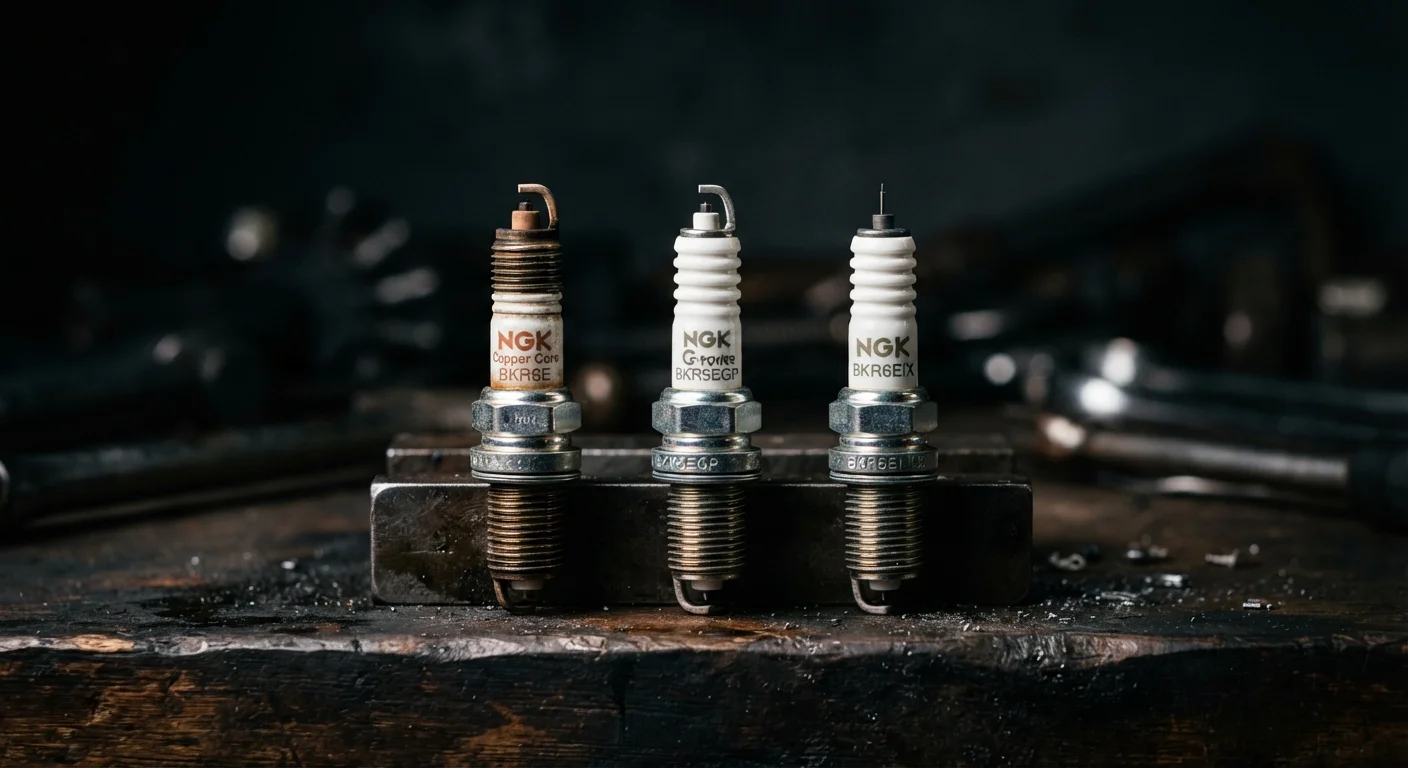
Copper has been the foundational spark plug material since the early automotive era. Despite the name, the electrode isn't solid copper - it features a copper core inside a nickel alloy tip. That copper core conducts heat away from the tip very effectively, making these plugs well-suited for engines that run hot or require precise heat-range management.
The drawback is durability. Nickel alloy is comparatively soft, and the electrode erodes relatively quickly under the heat and electrical stress of combustion. Typical service intervals run 20,000 to 30,000 miles, shorter than platinum or iridium alternatives.
Copper plugs remain the correct choice for many older vehicles designed before extended-interval plugs were common, as well as for certain supercharged or turbocharged engines where a colder heat range is needed and plug changes are part of the maintenance routine. Always verify heat range compatibility with your engine's specifications.
Platinum Plugs: A Step Toward Longevity
Platinum has a significantly higher melting point than nickel alloy - around 3,215°F versus nickel's roughly 2,650°F - which means the electrode tip erodes more slowly. This translates directly into a longer service life, with many platinum plugs rated for approximately 60,000 miles under normal operating conditions.
Single-platinum plugs use a platinum disc welded to the center electrode. Double-platinum designs add platinum to the ground electrode as well, reducing wear further and helping prevent fouling in waste-spark ignition systems common to many late-1990s and 2000s vehicles.
Platinum plugs are a solid match for vehicles that call for them by specification - particularly those with distributor-based or waste-spark ignition. However, fitting platinum plugs into an engine designed for iridium or copper won't necessarily improve performance; ignition system design and compression ratio matter as much as the plug material itself.
~3,215°F
Platinum electrode melting point
Platinum's significantly higher melting point compared to nickel alloy is the primary reason for its extended wear resistance and longer service life.
0.4 mm
Minimum iridium center electrode diameter
Some iridium plugs feature center electrodes as fine as 0.4 mm, requiring less voltage to fire and maintaining consistent spark geometry longer.
Iridium Plugs: Modern Engine Standard
Iridium is one of the hardest metals on earth, with a melting point exceeding 4,400°F. This extreme hardness allows manufacturers to produce a very fine center electrode - sometimes as small as 0.4 mm in diameter - which requires less voltage to fire, supports a more consistent spark kernel, and maintains that fine tip geometry for far longer than copper or platinum.
Most current OEM service intervals for iridium plugs fall in the 60,000 to 100,000-mile range, and some manufacturers push higher under optimal conditions. Modern coil-on-plug ignition systems, common from the mid-2000s onward, are typically engineered around iridium's characteristics.
One important note: iridium plugs are sensitive to improper gapping. The fine electrode can be damaged by aggressive gap adjustment. If your vehicle's iridium plugs arrive pre-gapped to spec, verify the gap with a feeler gauge but avoid forcing the electrode with a gapping tool. Consult your service manual for the correct procedure.
When it's time to inspect or replace plugs, reading plug condition at removal can reveal valuable information about how your engine is running - from oil consumption to air-fuel mixture.
| Copper | Platinum | Iridium | |
|---|---|---|---|
| Electrode tip material | Nickel alloy over copper core | Platinum disc on nickel | Iridium alloy tip |
| Approximate melting point | ~2,650°F (nickel) | ~3,215°F | ~4,400°F |
| Typical service interval | 20,000-30,000 miles | ~60,000 miles | 60,000-100,000 miles |
| Electrode tip diameter | Larger (2.5 mm+) | Medium (~1.1 mm) | Fine (0.4-0.6 mm) |
| Ignition system compatibility | Older/carbureted, some performance | Distributor, waste-spark | Coil-on-plug, modern OEM |
| Relative cost | Lower | Mid-range | Higher |
Choosing the Right Plug for Your Vehicle
The most reliable guide to the correct spark plug is your vehicle's owner's manual or a factory service manual. These documents specify not just the plug material but the precise heat range, thread reach, and gap - all of which must match your engine's design.
A few practical principles apply regardless of vehicle:
- Don't downgrade: If your engine specifies iridium, fitting copper plugs shortens your service interval and may not deliver the voltage characteristics the ignition system expects.
- Heat range is non-negotiable: A plug that runs too hot can cause pre-ignition; one that runs too cold will foul. Material type doesn't override heat range selection.
- Check the gap: Even new plugs benefit from gap verification. Electrode gaps widen with wear and affect combustion efficiency.
- Note service mileage: Match your replacement schedule to the plug type and your actual driving conditions - severe service (lots of short trips, extreme temperatures) warrants more frequent inspection.
Understanding what each material offers lets you make sense of your service manual's recommendation rather than simply following it blindly - and that's exactly the kind of informed confidence worth having when you're working on your own vehicle.
Don't Force-Gap Fine Iridium Electrodes
Iridium center electrodes are extremely hard but also very fine, and they can chip or crack if you use a traditional coin-style gap tool against them. Use only a feeler gauge to verify the gap, and adjust only the ground electrode if adjustment is necessary. Damaged iridium tips can cause misfires and may not be visible to the naked eye.