What a Spark Plug's Appearance Reveals
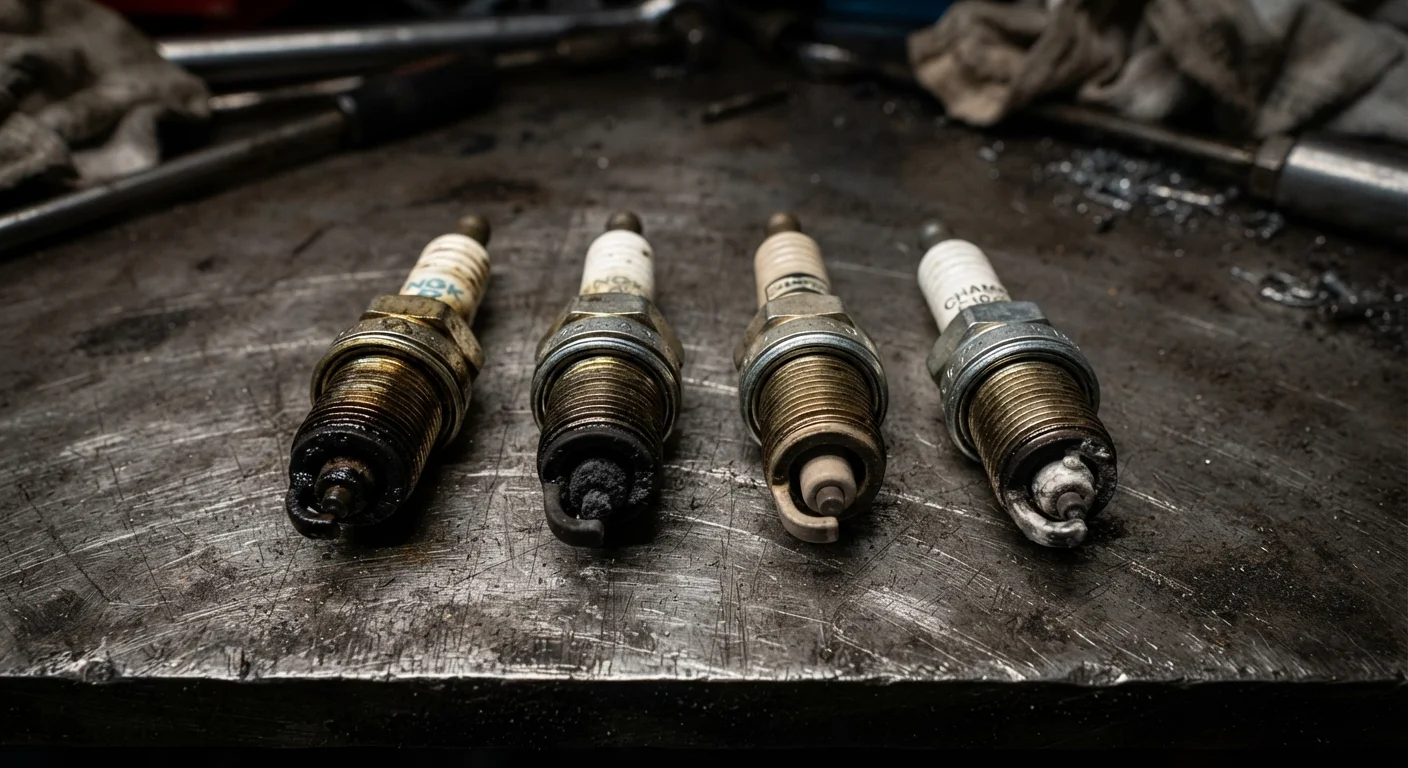
Pulling a spark plug takes about ten minutes with basic tools, but what you find on the electrode and insulator tip can save you hours of guesswork. Each plug has been sitting inside a combustion chamber, exposed to heat, pressure, fuel, oil, and combustion gases - the residue it accumulates is a direct record of engine conditions. Before reinstalling or replacing, take a moment to inspect each one under good light.
The three zones to examine are the insulator nose (the ceramic tip around the center electrode), the electrodes themselves, and the shell or ground strap. Colour, texture, gap width, and deposit type each point to different diagnoses. Because engines have one plug per cylinder, comparing plugs from different cylinders can isolate whether a problem is engine-wide or limited to a single combustion chamber.
For a broader view of what your engine is trying to communicate, dashboard warning lights can work alongside a plug inspection as part of a systematic diagnosis.
| Typical inspection interval | Every 30,000 miles (copper) or per OEM spec (Varies by plug type and engine design) |
| Normal insulator colour | Light tan to grey (Indicates correct air-fuel mixture and heat range) |
| Tool needed for gap check | Wire-type feeler gauge (More accurate than flat gauges on worn electrodes) |
| Cylinders to compare | All cylinders at the same time (Cross-cylinder comparison isolates single-cylinder faults) |
| OEM gap specification location | Emissions label (hood) or owner's manual |
Colour and Deposit Guide
Use this reference to match what you see on the plug to a likely engine condition:
- Light tan or grey insulator
- Normal combustion. The air-fuel mixture, ignition timing, and heat range are all appropriate. Reinstall or replace at the standard service interval.
- Dry, sooty black carbon (carbon fouling)
- Indicates a rich air-fuel mixture - too much fuel relative to air - or prolonged low-speed, low-load driving. Check the air filter, fuel pressure regulator, and oxygen sensor. Leaking or stuck-open fuel injectors are a common culprit.
- Wet, oily black deposits (oil fouling)
- Oil is entering the combustion chamber. Likely causes include worn valve stem seals, worn piston rings, or a leaking PCV (positive crankcase ventilation) system. This warrants a closer mechanical evaluation - a shop visit is often the appropriate next step.
- White or light grey with blistering (overheating)
- The plug is running too hot. Causes include incorrect plug heat range, lean air-fuel mixture, advanced ignition timing, or coolant loss. An overheated plug can cause pre-ignition damage; address this promptly.
- Brownish crusty deposits (coolant fouling)
- Coolant is entering the cylinder, often through a failed head gasket or a cracked cylinder head. This is a serious mechanical fault requiring professional diagnosis.
- Glazed or yellowish insulator
- High-load operation after sustained low-speed running caused deposits to melt and re-solidify, creating a conductive glaze that causes misfires. Replace the plug.
Heat range
A rating that describes how quickly a spark plug transfers heat away from the firing tip into the cylinder head. A plug with the wrong heat range for the engine will run either too hot or too cool, both of which cause problems.
Carbon fouling
A condition where dry black carbon deposits coat the insulator and electrodes, usually caused by a rich air-fuel mixture or sustained low-load driving. Fouled plugs misfire because the deposits conduct electricity and divert the spark.
Pre-ignition
Uncontrolled ignition of the air-fuel mixture before the spark plug fires, often triggered by a hot spot in the combustion chamber. It puts extreme mechanical stress on pistons and bearings.
Electrode gap
The measured distance between the center electrode and the ground electrode. This gap must match OEM specifications; too wide or too narrow affects spark energy and combustion efficiency.
PCV system
The positive crankcase ventilation system routes blow-by gases from the crankcase back into the intake to be burned. A failed PCV valve can push oil mist into the combustion chamber, fouling spark plugs.
Insulator nose
The ceramic portion of the spark plug that surrounds the center electrode inside the combustion chamber. Its colour and texture after use are primary indicators of combustion conditions.
Electrode Wear and Gap Inspection
Colour tells part of the story; physical wear tells the rest. Measure the gap between the center and ground electrode using a wire-type feeler gauge - flat gauges are less accurate for worn electrodes. Compare the measured gap against your vehicle's OEM specification, which is typically found on the emissions label under the hood or in the owner's manual.
- Rounded center electrode: Normal wear over time. Once the electrode loses its sharp edge, ignitability drops and misfires can develop. Replace at or before the manufacturer's recommended interval. For a comparison of how electrode material affects wear rate, see how copper, platinum, and iridium plugs differ.
- Eroded or pitted ground strap: Indicates excessive heat or electrical stress. Verify the plug heat range matches OEM specs.
- Cracked or chipped insulator: Can result from improper installation torque or mechanical knock. A cracked insulator causes current leakage and misfires. Replace immediately.
- Melted or severely eroded electrode: Sign of pre-ignition or detonation. Inspect for the underlying cause - timing, fuel octane, or cooling system issues - before installing new plugs.
If a single cylinder's plug looks dramatically different from the others, that cylinder deserves further investigation. Combining a plug inspection with OBD-II fault code retrieval often pinpoints whether the issue is ignition, fuelling, or mechanical in nature.
When to Stop and See a Mechanic
Oil fouling, coolant fouling, or severely melted electrodes are not problems a plug replacement alone will fix - they indicate underlying mechanical faults. Reinstalling new plugs without addressing the root cause will simply ruin the new plugs and can allow serious engine damage to progress. If you find these conditions, treat them as a prompt for a professional inspection rather than a routine maintenance task.