Why RV Storage Feels Hard (And Why It Doesn't Have To Be)
Most RV owners don't have a space problem - they have a systems problem. The average Class C motorhome offers 30 to 40 cubic feet of interior storage when all compartments are counted, yet clutter accumulates quickly when there's no deliberate organisation strategy behind what goes where. The result is drawers that won't close, passageways that become obstacle courses, and a creeping frustration that overshadows the freedom RV living is supposed to provide.
The principles outlined here apply across RV types and classes, whether you're in a compact Class B van conversion or a full-sized fifth wheel. The specifics change; the logic doesn't. Good small-space storage isn't about owning fewer things - it's about making deliberate decisions about where things belong and why.
Think in Zones, Not Just Compartments
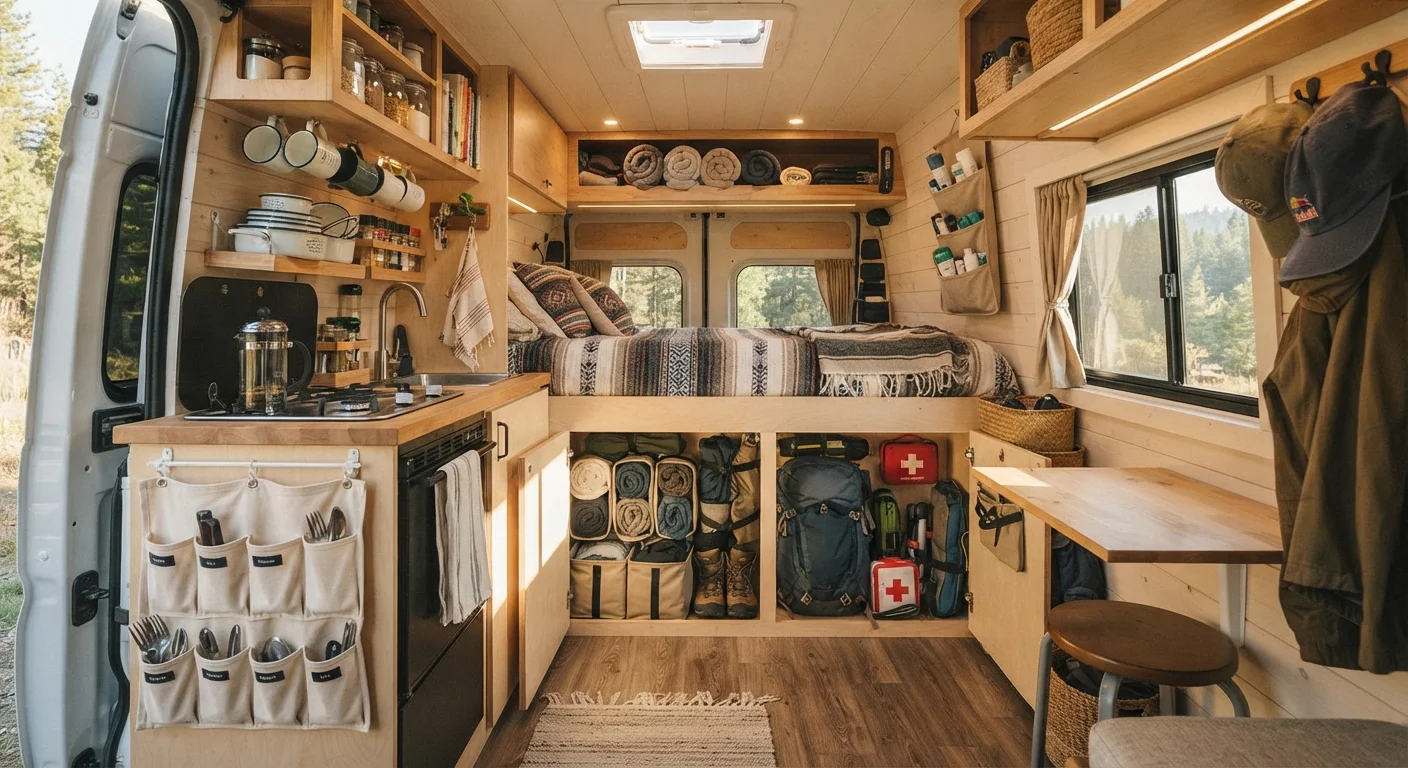
Rather than assigning items to specific drawers or bins at random, define functional zones first: sleep zone, cook zone, work zone, outdoor gear zone. Every item you own should belong to one zone, and its storage location should be as close to where it's used as the floorplan allows. This single mental shift eliminates much of the hunting and reshuffling that drains energy during daily RV life.
Core Principles for Organising an RV Interior
Applying even a few of these principles transforms how livable an RV feels on a long trip or during full-time residence. For a deeper dive into room-by-room solutions, see interior organisation ideas that full-time RVers rely on.
Organise by frequency, not by category alone
Grouping items by how often you use them - daily, weekly, or seasonally - ensures the most-reached items are always accessible without disrupting everything else. Category-only organisation often buries essentials behind rarely used gear, creating unnecessary frustration.
Keep heavy items low and centred over the axle line
Weight distribution affects handling, tyre wear, and safety - not just tidiness. Stowing dense gear (tools, full water containers, canned food) low and near the middle of the rig reduces sway and keeps the vehicle within its designed weight balance. This is especially critical in towable campers.
Exploit vertical space and door backs aggressively
Most RV interiors are taller than they are wide, yet upper wall space and the backs of cabinet doors frequently go unused. Adhesive hooks, over-door organisers, and mounted spice racks convert dead space into functional storage without adding weight in problematic locations.
Enforce a one-in, one-out rule consistently
RV storage doesn't expand, but acquisition creep is constant - a souvenir here, a spare tool there. A strict one-in, one-out policy prevents slow accumulation from turning available space into chaos over months of travel or full-time living.
Use uniform, stackable containers in consistent sizes
Mismatched containers waste the angular dead space created by odd shapes and prevent stable stacking. Uniform bins maximise usable volume in deep compartments and make inventory visible at a glance when labels face outward.
Audit storage contents at the start of each season
Needs change with the seasons, travel style, and number of occupants. A seasonal audit removes items that no longer earn their place and surfaces gear buried since the previous trip, preventing duplicate purchases and reclaiming space.
Quick Actions You Can Take Before Your Next Trip
Small changes deliver disproportionate results in an RV. The storage habits you build before departure reduce friction for every trip that follows. If you're considering long-term storage between trips, it's also worth understanding what protects your RV in long-term storage and what quietly damages it.
~35 cu ft
Typical interior storage in a Class C motorhome
Industry floor plan analyses suggest most mid-size Class C motorhomes offer between 30-40 cubic feet of combined interior storage across all compartments.
80%
Items used less than once a week by full-time RVers
Organisational surveys of full-time RV communities consistently suggest the large majority of items carried are used infrequently, pointing to accumulation as the primary storage challenge.
For travellers who genuinely need more capacity, external options like hitch carriers and cargo boxes can supplement interior storage without sacrificing living space. Just account for the impact on towing capacity and fuel economy before loading them up.
“In a small space, organisation isn't a nice-to-have - it's the difference between a livable home and a rolling storage unit you happen to sleep in.”
— RVs & Campers Editorial Team, Automotive lifestyle editorial team specialising in RV living and setup
This article is for general informational purposes only. Storage modifications that affect vehicle weight, balance, or structural components should be assessed by a qualified RV technician before implementation.