Why Long-Term Storage Deserves More Attention Than It Gets
For many RV owners, storage is an afterthought - a practical necessity between travel seasons. But how and where you store your rig has a direct bearing on what you find when you return to it. Moisture intrusion, UV degradation, pest damage, and battery failure are all largely preventable, yet they account for a disproportionate share of off-season repair costs.
The decision isn't just about finding a parking space. It's about matching your storage environment to your RV's vulnerabilities and your local climate. Understanding the genuine trade-offs - across outdoor lots, covered facilities, and fully enclosed climate-controlled units - helps you make that match deliberately rather than by default.
For a broader framework on containing costs across your ownership lifecycle, see our guide on keeping long-term ownership costs under control.
The Pros of Thoughtful Long-Term Storage
When storage is done right, the benefits extend well beyond simply keeping the rig off your driveway.
Climate-controlled units prevent seal and material degradation
Stable temperature and humidity reduce the expansion-contraction cycles that crack caulk seams, warp interior panels, and stress roof membranes - especially important in climates with wide seasonal temperature swings.
Covered storage reduces UV and precipitation exposure
A roof overhead meaningfully extends the life of exterior finishes, rubber roofing, and any components susceptible to direct sun and rain, at a cost typically well below fully enclosed options.
Dedicated lots offer security and reduced collision risk
Reputable storage facilities generally provide perimeter security, surveillance, and properly spaced bays - reducing the risk of vandalism, theft, and incidental contact damage common in street or driveway storage.
Utility hookups allow battery maintenance during storage
Many facilities offer optional electrical hookups, enabling the use of a battery maintainer that keeps batteries at optimal charge and prevents the sulfation damage that can render them unrecoverable by spring.
Off-site storage frees home space and satisfies HOA rules
Many homeowners' associations prohibit RV storage on residential property; a dedicated facility resolves compliance issues while also keeping the rig in a purpose-built environment.
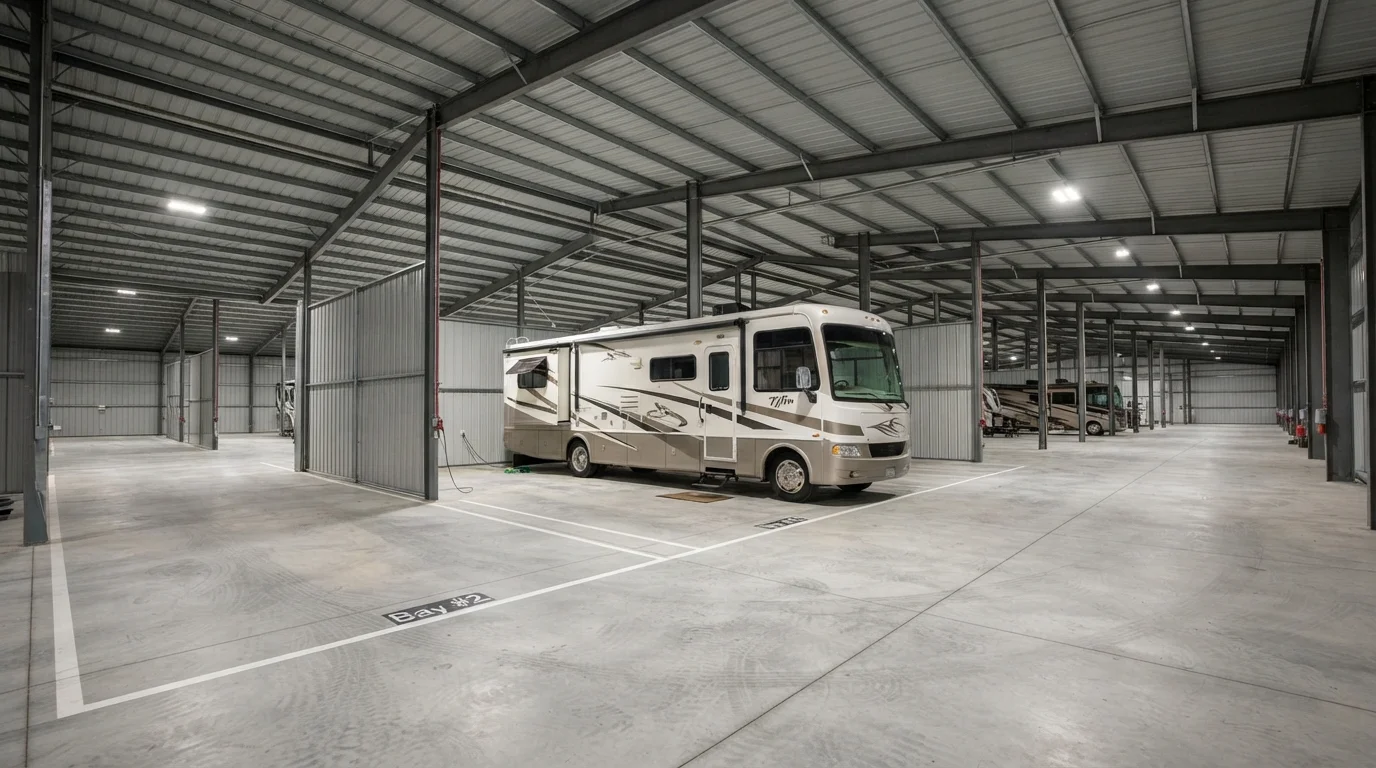
Climate-controlled indoor storage - the gold standard - maintains stable temperature and humidity levels that prevent the expansion and contraction cycles that crack seals, warp cabinetry, and degrade roof membranes. If your RV has a rubber or TPO roof, that stability is particularly valuable; different roof materials age at different rates, and thermal stress accelerates that aging.
Covered storage - a roof without full enclosure - meaningfully reduces UV exposure and direct precipitation without the premium price tag of a climate-controlled unit. For owners in moderate climates, it frequently represents the most practical middle ground.
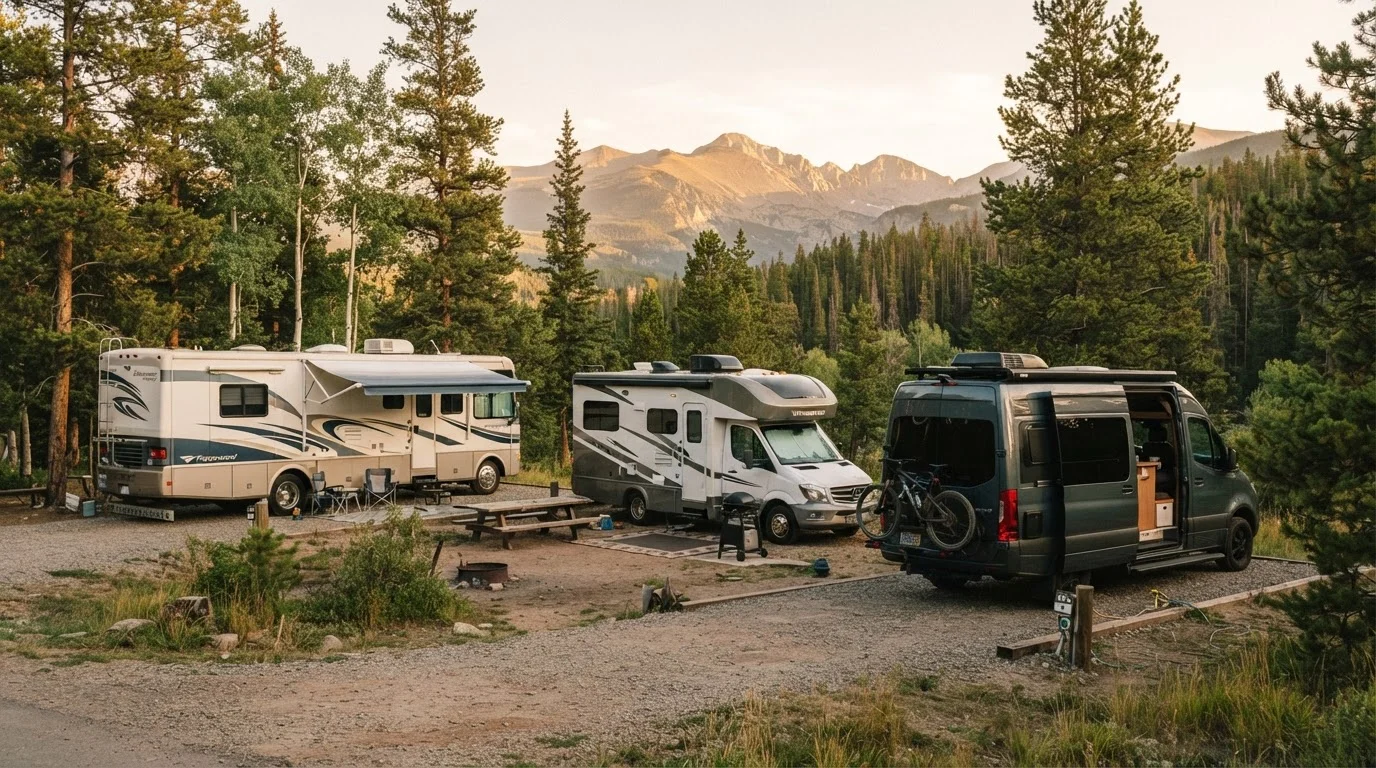
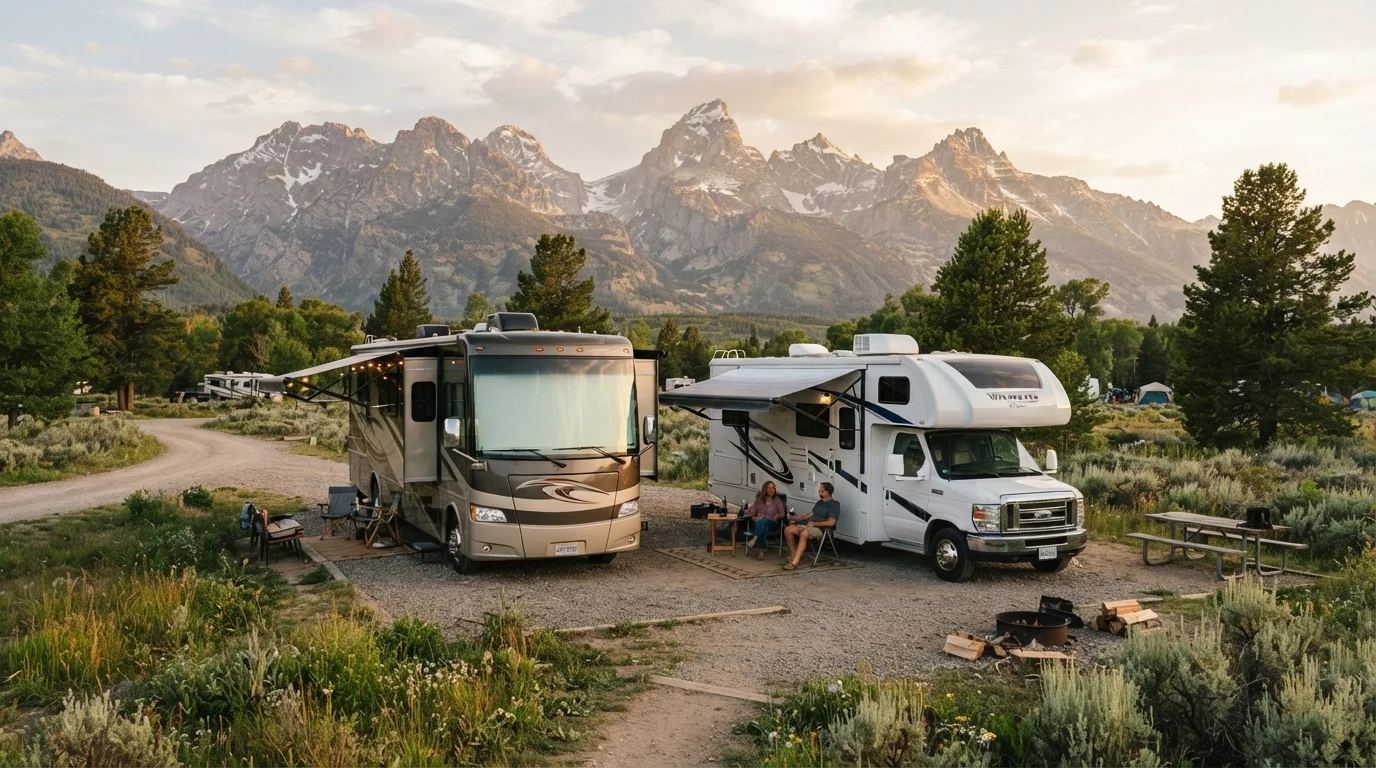
Even an outdoor lot provides genuine benefits over street or driveway parking: dedicated RV lots typically offer perimeter security, designated spaces that reduce impact and friction damage, and sometimes utility hookups that allow trickle charging of batteries.
The Cons: What Quietly Damages Your RV in Storage
Storage risk is often invisible until it isn't. The damage accumulates slowly, then announces itself as a significant repair bill.
Outdoor lot storage leaves RV exposed to elements
Without a roof overhead, UV radiation degrades seals, paint, and roofing materials year-round. Prolonged precipitation exposure increases the risk of water infiltration at any compromised seam or vent.
Tire flat-spotting and sidewall cracking accumulate silently
An RV sitting stationary for months under load develops flat spots and sidewall stress that may not be visible until a tire fails. UV exposure worsens this even in covered environments without full enclosure.
Rodent intrusion is a serious risk in most storage environments
Mice and rats can enter through gaps as small as a quarter-inch, nesting in insulation, chewing wiring harnesses, and contaminating interiors - with repair costs that can far exceed a full season of premium storage fees.
Climate-controlled storage carries a significant cost premium
Fully enclosed, climate-controlled units are the most effective option but can cost two to four times more than an open outdoor lot, making the cost-benefit calculation dependent on the RV's value and local climate severity.
Battery discharge and sulfation occur without active management
Without a maintainer connected, most RV batteries will discharge and sulfate over a storage period, potentially requiring replacement - an avoidable cost that owners frequently discover too late in the spring.
Plumbing freeze damage can occur even in covered storage
A covered lot does not protect against freezing temperatures. Any water remaining in lines, tanks, or traps can freeze and crack components, making proper winterization essential regardless of storage type.
Tires are among the most quietly affected components. Extended static loading causes flat-spotting, and UV exposure - even in a covered facility without full side enclosure - accelerates sidewall cracking. Our detailed guide on extending RV tire life covers inflation strategies and positioning practices that mitigate this during storage.
Rodents are a persistent threat in any storage environment that isn't fully sealed. They enter through surprisingly small gaps, nest in insulation and wiring, and can cause damage that dwarfs a season's storage fees. Steel wool, expandable foam, and rodent deterrents placed before storage - not after you find evidence - are the appropriate countermeasure.
Roof integrity is another area where storage conditions matter enormously. Standing water, debris accumulation, and freeze-thaw cycles can accelerate seal degradation. Routine roof inspections before and after storage are not optional maintenance - they're essential protection against water intrusion that can compromise an entire interior.
Insurance Coverage During Storage Periods
Many RV insurance policies offer reduced-rate 'storage' or 'lay-up' coverage when a rig is not in active use - but the specifics vary considerably by insurer. Some policies exclude certain perils (such as rodent damage or gradual water intrusion) during storage periods. Review your policy terms before your rig goes into storage, and ask your insurer explicitly what is and isn't covered. This is general information; consult your insurance provider for guidance specific to your policy.
Preparing Your RV Before Storage: The Step That Determines Everything
The storage facility provides the environment; preparation determines whether your RV actually benefits from it. A well-prepared RV in an outdoor lot will often fare better than an unprepared one in a climate-controlled unit.
~$50-$500/mo
Typical US RV storage cost range
Industry estimates suggest monthly storage costs span from roughly $50 for uncovered outdoor lots to $500 or more for climate-controlled indoor units, depending on region and RV size.
5-7 years
Average RV tire replacement interval
Tire manufacturers and RV safety organizations generally recommend replacing RV tires every five to seven years regardless of tread depth, with storage conditions significantly affecting aging rate.
Plumbing winterization - fully purging water lines and adding RV-safe antifreeze to traps - is non-negotiable in climates where temperatures drop below freezing. A single freeze event can crack pipes, damage the water pump, and compromise tank fittings. Our season-end winterizing walkthrough covers each system in sequence.
Battery management during storage is frequently underestimated. A discharged battery left over winter will often sulfate beyond recovery. A battery maintainer (not a standard charger left unattended) keeps charge levels stable without overcharging. Disconnect shore power if no maintainer is used.
Interior preparation matters too: remove all food, treat fabric surfaces against mildew, crack roof vents slightly for airflow (with vent covers installed), and document the interior condition photographically before you leave. That documentation is useful both for your own awareness and for any insurance claim that might arise.
Choosing the Right Storage Setup for Your Situation
There is no universal answer. The right storage setup depends on your climate, your RV type, your budget, and how long the rig will sit unused.
Owners in the Sun Belt who use their RVs year-round may need only minimal seasonal storage and can weigh cost savings more heavily. Owners storing a large Class A motorhome through a northern winter have a different calculus - the cost of a climate-controlled space may be justified by a single avoided repair. For an overview of how different RV types present different storage challenges, our RV types and classes hub provides useful context.
When evaluating facilities, prioritize: verifiable security measures, drainage to prevent standing water, accessibility for your specific rig dimensions, and whether electrical hookups are available for battery maintenance. Get written confirmation of what the facility's insurance covers - and verify separately what your own RV insurance policy covers during storage periods, as coverage can differ meaningfully from active-use terms.
This article provides general educational information about RV storage practices. It is not a substitute for professional advice tailored to your specific vehicle, location, or insurance situation. Consult qualified professionals for decisions involving significant financial or safety implications.