Why Generator Maintenance Is Non-Negotiable
An RV generator sits unused for months at a time, then gets called on to power air conditioning, microwaves, and battery chargers without complaint. That stop-start cycle is hard on small engines, and neglect compounds quickly. Varnished carburetors, degraded oil, and fouled spark plugs are the most common culprits when a generator refuses to start - and every one of them is preventable.
For a complete picture of how generator care fits into your overall upkeep schedule, see the Full-Year RV Maintenance Calendar, which maps service tasks month by month. If you're new to RV ownership, the guide for first-year owners offers essential context on which systems demand the most attention early on.
Always Follow Your Owner's Manual
Generator service intervals vary meaningfully between manufacturers and engine types - gasoline, diesel, and propane units each have different requirements. The intervals cited in this article are general guidance based on common industry practice. Your specific unit's manual is the authoritative source, and deviating from it may affect warranty coverage. When in doubt about a repair or adjustment, have the work performed by a certified RV service technician.
Service Intervals: What Gets Changed and When
Generator service schedules are driven by engine hours, not just calendar time - but both clocks matter. Follow whichever threshold arrives first.
Change the engine oil every 100-150 hours or at the start of each camping season
Small generator engines have tight tolerances and limited oil capacity. Degraded oil accelerates wear on bearings and cylinder walls, and the low volumes involved mean contamination builds faster than in a full-size engine.
Inspect and replace the air filter every 50 hours or at least once per season
A clogged air filter causes the engine to run rich, wasting fuel and fouling the spark plug. Campground environments - dusty roads, grass pollen, desert grit - clog filters faster than a manufacturer's baseline interval assumes.
Replace spark plugs at the manufacturer's specified interval, typically every 100-200 hours
Worn spark plugs cause hard starting, misfires, and increased fuel consumption. On small single-cylinder engines, a fouled plug is often the only ignition source - there is no redundancy.
Exercise the generator under meaningful load for at least two hours every 30 days
Idle storage leads to fuel varnish, stale oil film on cylinder walls, and moisture accumulation inside the engine. Regular operation under load keeps every component in service-ready condition.
Inspect and tighten all external fasteners and exhaust connections annually
Road vibration loosens bolts, exhaust clamps, and mounting hardware over time. A loose exhaust connection can allow carbon monoxide to migrate toward the living area, which is a serious safety concern.
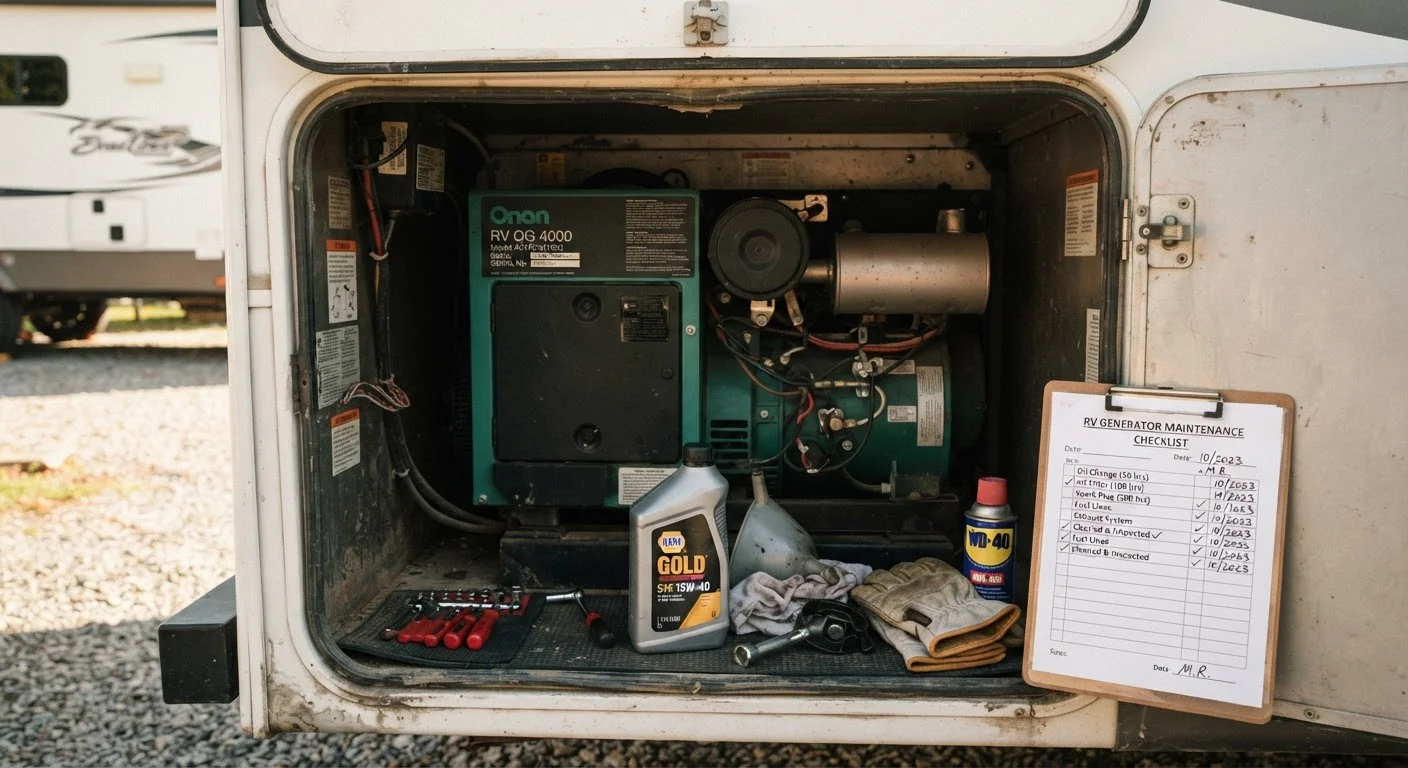
Keep a simple logbook in your generator compartment. Note the hour-meter reading after every oil change, filter swap, or spark plug replacement. This takes 30 seconds and prevents the guesswork that leads to deferred maintenance.
Fuel Management and Storage Protocols
Gasoline degrades noticeably within 30 days and can varnish fuel system components within 60-90 days of sitting. Propane and diesel generators are more forgiving, but fuel quality still matters.
60-90 days
Timeframe for gasoline to varnish fuel system components
Industry guidance from small-engine service technicians consistently cites this window as when untreated gasoline begins causing carburetor deposits.
50%
Minimum recommended load level for generator exercise runs
Running below half-load during routine exercise is widely considered insufficient to maintain piston rings and prevent wet-stacking in generator engines.
For gasoline-powered units, add a fuel stabilizer any time the generator will sit unused for more than three weeks. Run the engine for 10 minutes after adding the stabilizer so treated fuel reaches the carburetor. For seasonal storage exceeding 90 days, consider draining the carburetor bowl entirely after running the stabilizer through the system. Always consult your owner's manual and follow local regulations for fuel disposal.
Generator fuel management connects closely to house battery health - see RV battery types and their maintenance demands for how the two systems interact.
Load Testing: The Check Most Owners Skip
Running a generator at idle or very low load is not the same as exercising it properly. Generators need to operate under realistic load to burn off moisture, seat piston rings, and keep all internal components in working order.
A practical load test means running the generator at roughly 50% of its rated wattage for at least one hour. Turn on the rooftop air conditioner, plug in a battery charger, and run a small appliance simultaneously to build meaningful load. If your generator struggles to maintain voltage or frequency under that load, it warrants inspection by a qualified technician before your next trip.
Track Hours, Not Just the Calendar
Most built-in RV generators include an hour meter on the control panel or in the digital display. Record this reading every time you perform any service. If your unit lacks a built-in meter, inexpensive aftermarket hour meters are available at small-engine supply shops and are straightforward to install - though for installation, consult a qualified technician if you're unfamiliar with small-engine wiring.
For a broader view of seasonal checks that apply across your rig, the seasonal vehicle maintenance checklist is a useful companion reference.