Motorhomes vs. Towables: The Core Divide
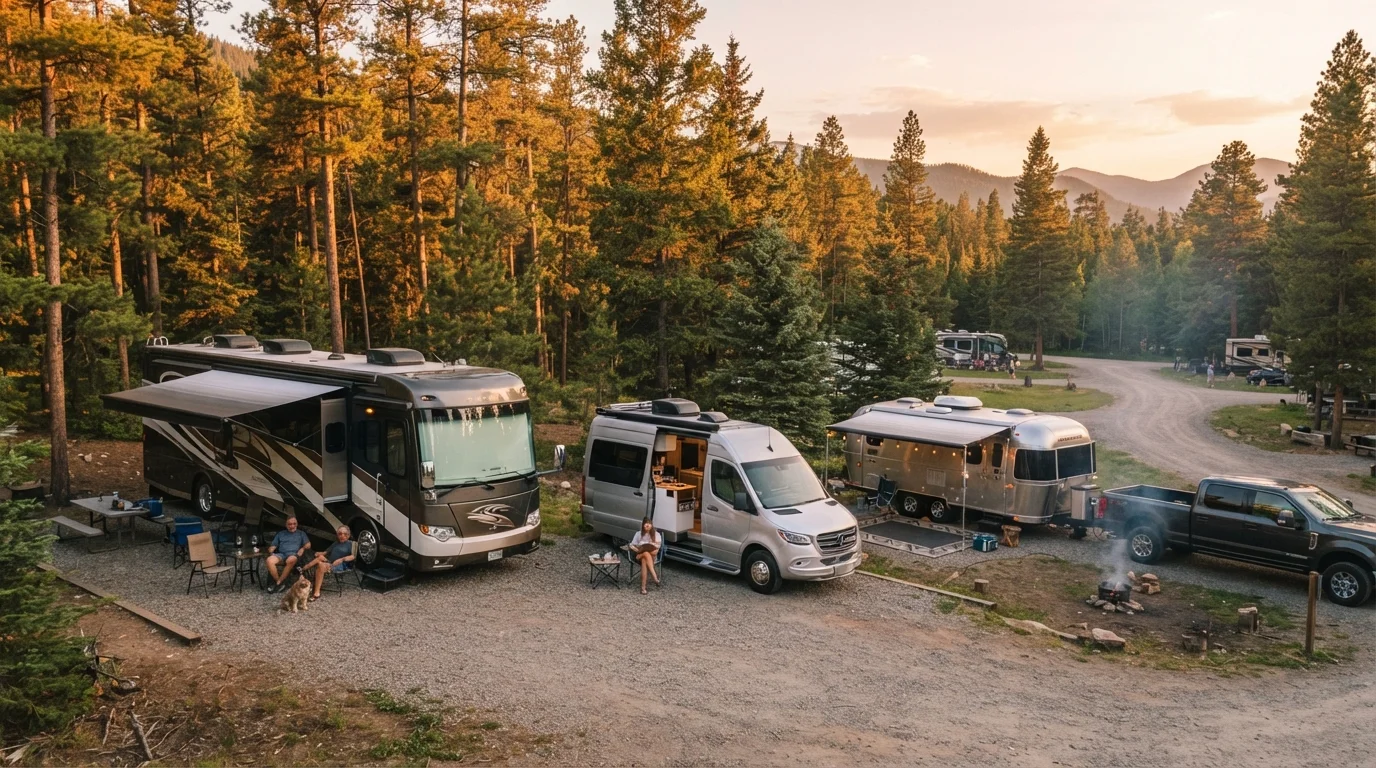
Every RV on the market falls into one of two fundamental categories: motorhomes, which have their own engine and drivetrain, and towables, which require a separate tow vehicle. This distinction shapes everything - from how you drive to camp, to what additional equipment you'll need, to how you spend a weekend when the RV stays parked.
Motorhomes give you a single, unified unit. You load up and go. Towables give you more flexibility at camp since you can unhitch and drive your tow vehicle independently. Neither is universally superior - the right choice depends on your habits, budget, and priorities. Understanding this divide is the single most important first step for any new buyer.
GVWR
Gross Vehicle Weight Rating - the maximum safe operating weight of a vehicle as specified by the manufacturer, including the vehicle itself plus cargo, passengers, and fuel.
Tow Rating
The maximum weight a tow vehicle is certified to pull, as determined by the manufacturer. Exceeding this limit is unsafe and can void warranties.
Slide-Out
A section of an RV's wall that extends outward when parked to increase interior floor space. Must be retracted before driving.
Boondocking
Camping without hookups for water, electricity, or sewer - typically on public land. Requires the RV to be self-sufficient using tanks, batteries, and generators or solar.
Diesel Pusher
A Class A motorhome with a diesel engine mounted at the rear of the vehicle. Generally associated with quieter operation and higher towing capacity compared to gas-engine front-drive models.
Kingpin Hitch
The coupling system used by fifth-wheel trailers, consisting of a pin on the trailer that locks into a hitch plate (called a fifth wheel) mounted in a pickup truck bed.
Class A, B, and C Motorhomes Explained
The letter-based class system applies exclusively to motorhomes and describes the underlying chassis and general size - not a strict luxury ranking. For a deeper breakdown, see our full Class A, B, and C motorhome guide.
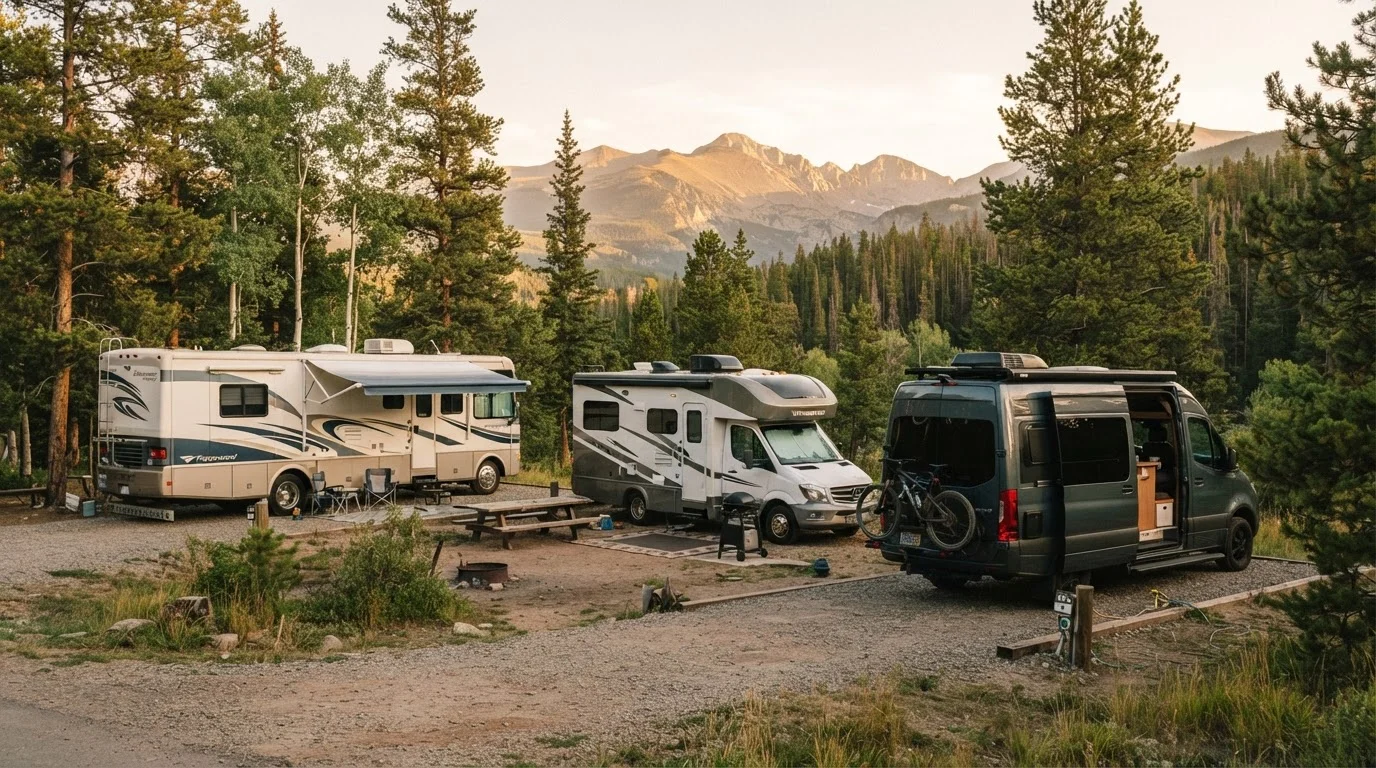
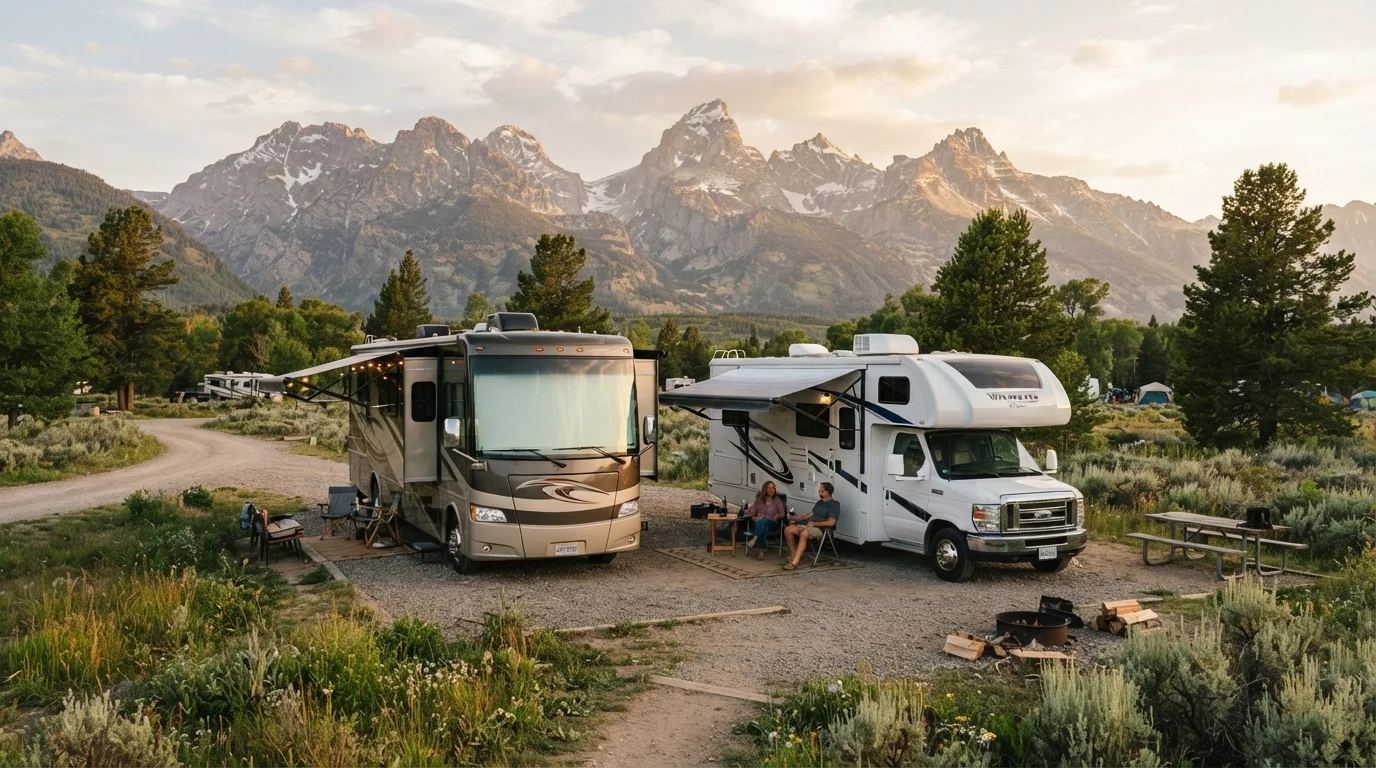
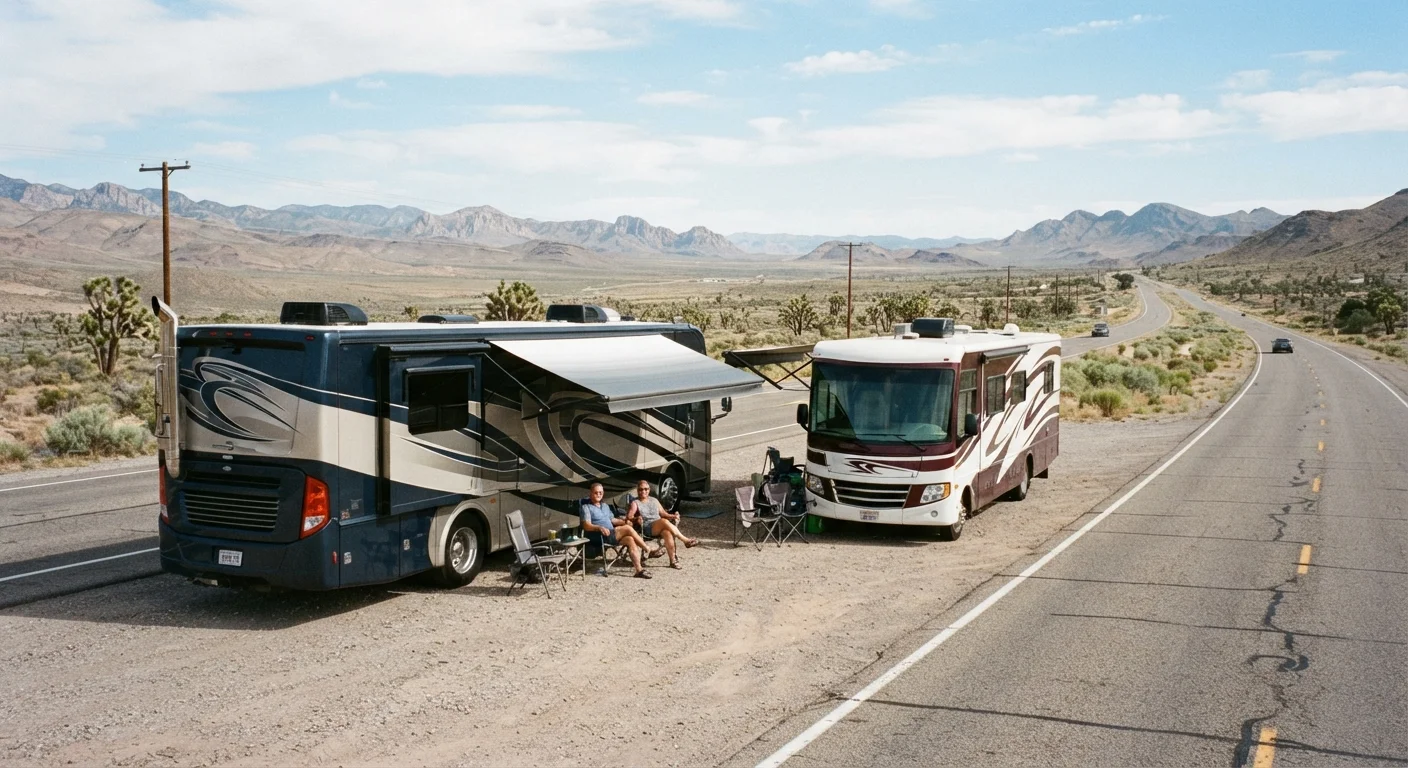
- Class A: Built on a purpose-built motorhome or commercial bus chassis, Class A units have a distinctive flat front and are the largest motorhomes available. Floor plans often include slide-outs, full kitchens, and separate bedrooms. They're well-suited to extended travel but require practice to drive and may be restricted from some campgrounds due to length.
- Class B (Camper Vans): Constructed on a full-size van chassis with a raised roof, Class B rigs are the most maneuverable and fuel-efficient motorhomes. They sacrifice interior space for ease of driving and parking - an appealing trade-off for couples or solo adventurers.
- Class C: Riding on a cutaway van or truck chassis, Class C motorhomes are identifiable by the over-cab sleeping bunk. They bridge the gap between the compact B and the expansive A, offering meaningful living space while remaining more approachable to new drivers than a full-sized Class A.
Test Drive Before You Decide
Many RV dealerships offer demo drives, and some RV rental platforms let you rent specific classes before committing to a purchase. Renting a Class C for a weekend before buying a Class A can reveal preferences - and deal-breakers - that no brochure will show you.
Towable Formats: Travel Trailers, Fifth Wheels, and More
Towable RVs span a broad spectrum of size and complexity. Matching the right format to your tow vehicle's actual rated capacity - not just its estimated capacity - is non-negotiable for safe travel.
- Travel Trailers
- The most common towable format, available in lengths from roughly 12 to 35 feet. They hitch to a standard receiver on most trucks, SUVs, or capable crossovers. Floor plan variety is extensive.
- Fifth-Wheel Trailers
- These large trailers use a kingpin hitch mounted in a pickup truck bed, providing a more stable towing connection. They typically offer more interior height and living space than a comparable travel trailer.
- Pop-Up / Folding Campers
- Lightweight canvas-sided units that fold down for towing and expand at camp. They're towable by a wide range of vehicles but offer minimal insulation and weather protection compared to hard-sided units.
- Truck Campers
- Slide into or mount on a pickup truck bed. No separate tow required - the truck becomes the RV. Floor space is limited, but off-road access is unmatched among common RV formats.
How to Match a Format to Your Travel Style
The RV market rewards honest self-assessment. Ask yourself a few core questions before narrowing your search:
- How often will you travel? Frequent, extended travel often favors a motorhome where setup and breakdown are faster. Occasional weekend camping can work well with a towable that stays hitched for short trips.
- Who's coming along? Families benefit from the sleeping capacity of larger towables or Class A and C motorhomes. Couples or solo travelers often find a Class B or small travel trailer more than sufficient.
- What do you already drive? Your current tow vehicle's rated capacity determines which towables are viable. Don't purchase a towable that exceeds your vehicle's tow rating under any circumstances.
- Where will you camp? National park sites often have length restrictions. Boondocking favors smaller, more self-sufficient units. Full-hookup resorts accommodate nearly any size.
Work through our buyer checklist to pressure-test your assumptions before committing to a class or format. Also be aware that common RV class myths can send first-time shoppers in the wrong direction.
Never Exceed Your Tow Vehicle's Rated Capacity
Towing beyond your vehicle's manufacturer-rated limit is dangerous and can result in loss of vehicle control, brake failure, or drivetrain damage. Always verify the loaded weight of any towable - not just the dry weight - against your tow vehicle's actual rating. Dry weight figures do not account for water, gear, or passengers.
What to Think About Before You Buy
Format and class knowledge gets you close - but a few practical considerations will protect you from buyer's remorse.
- Storage and parking: Where will you keep the RV when not in use? Many neighborhoods and HOAs restrict on-site storage. Measure your available space before falling in love with a floor plan.
- Maintenance commitments: All RVs - motorized or towable - require regular upkeep. Motorhomes add engine and drivetrain maintenance on top of standard RV systems. Review the RV maintenance basics to understand what ownership entails year-round.
- Pricing context: RV prices vary widely by format, age, and condition. If you're also new to evaluating vehicle pricing broadly, our vehicle pricing primer explains how to assess whether a listed price is reasonable.
- Long-term fit: If full-time living is on your horizon, the format question takes on even greater weight. Transitioning to full-time RV life covers the practical and lifestyle factors that should inform that larger decision.
This article provides general educational information about RV vehicle classes and formats. It is not personalized financial, legal, or purchasing advice. Consult qualified professionals and review applicable state regulations before making any purchase decision.