Why the Class Labels Exist
When the modern RV industry standardized its terminology, it needed a consistent way to describe motorhomes that were radically different in size and construction. The Class A, B, and C framework emerged as a practical shorthand used by manufacturers, dealers, and publications - not a government regulatory standard, but a durable industry convention.
The letters carry no value judgment. A Class B isn't inferior to a Class A any more than a studio apartment is inferior to a four-bedroom house. They reflect different design philosophies built for different travelers. For a deeper look at the terminology you'll encounter across all RV formats, see the RV glossary covering classes, types, and technical terms.
Class Labels Don't Indicate Quality or Price
A Class B motorhome can cost more than an entry-level Class A depending on the van platform, conversion quality, and included features. The letters describe construction type and chassis origin - not luxury level, durability, or value. Always evaluate specific units on their own merits rather than assuming a class hierarchy.
Class A: Maximum Space, Maximum Commitment
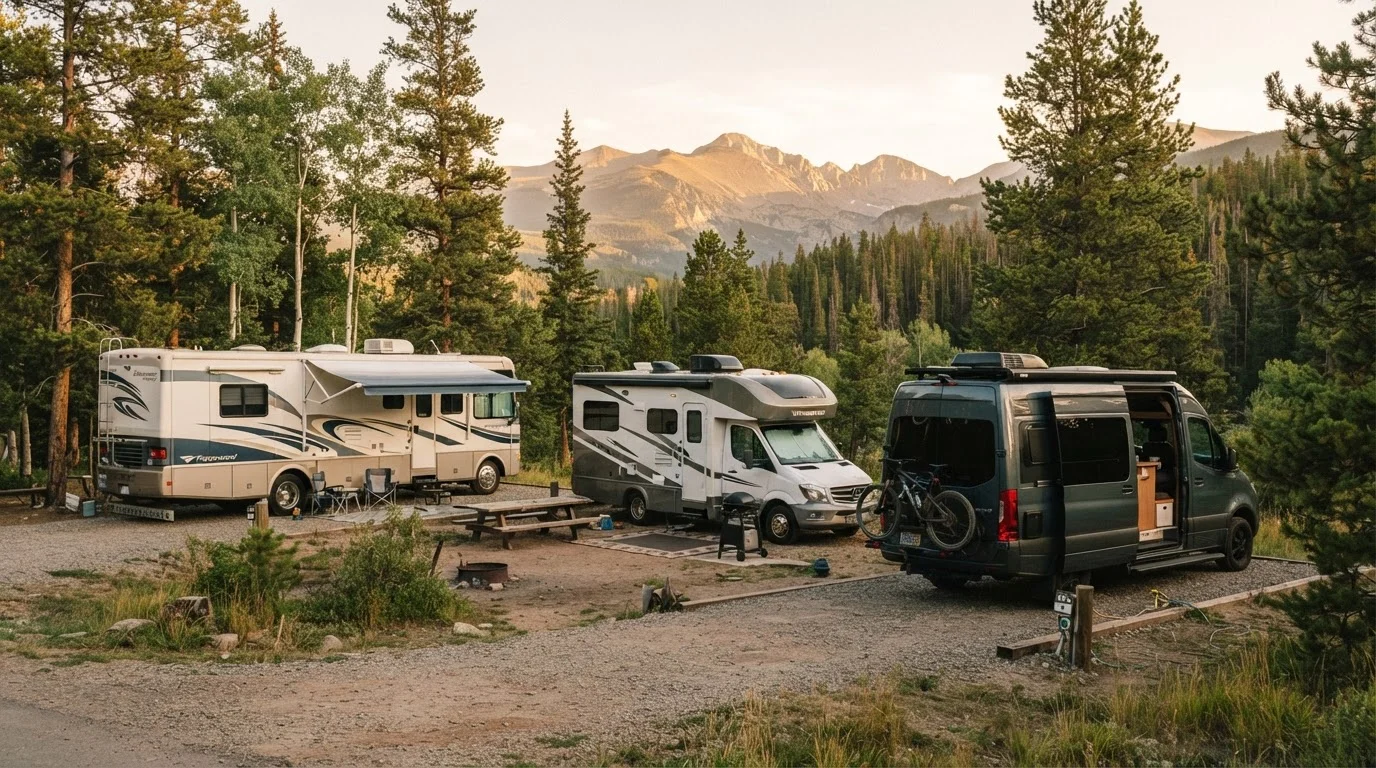
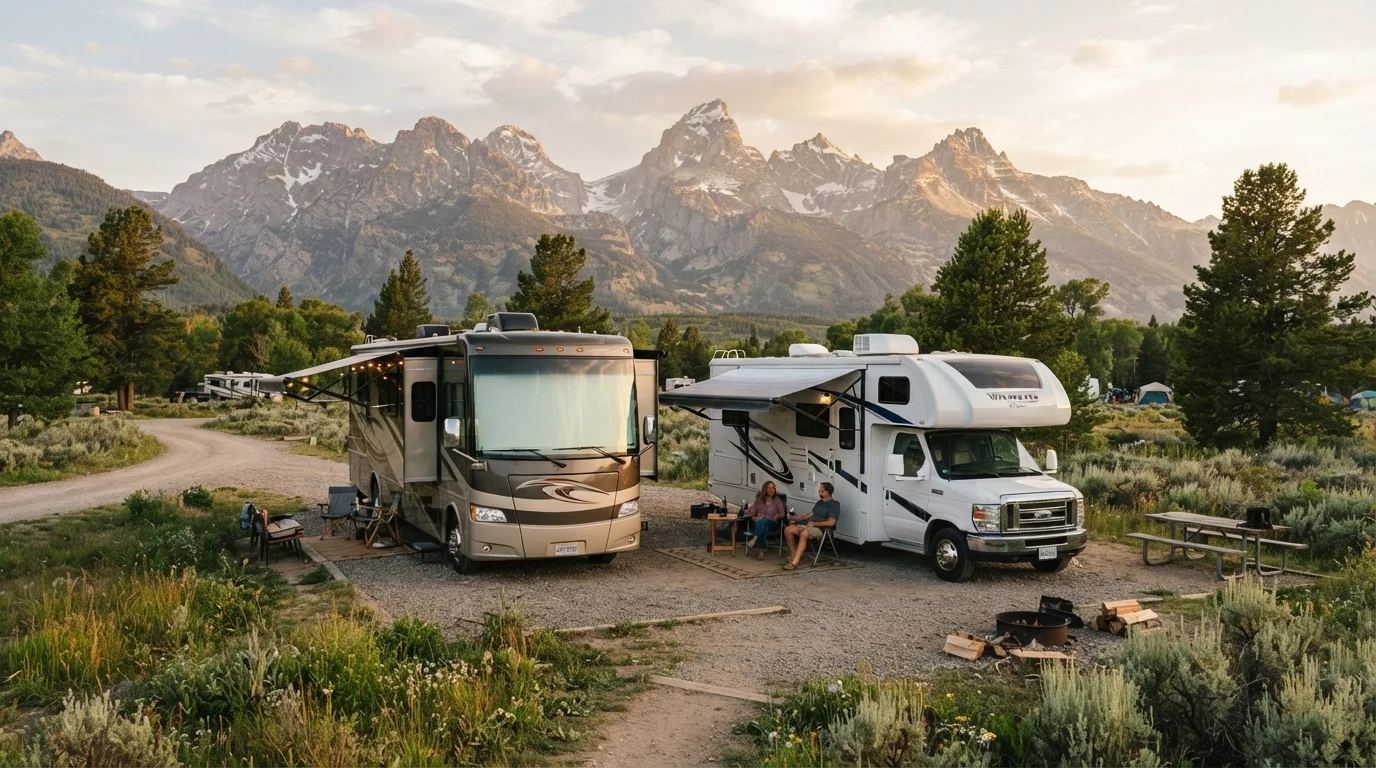
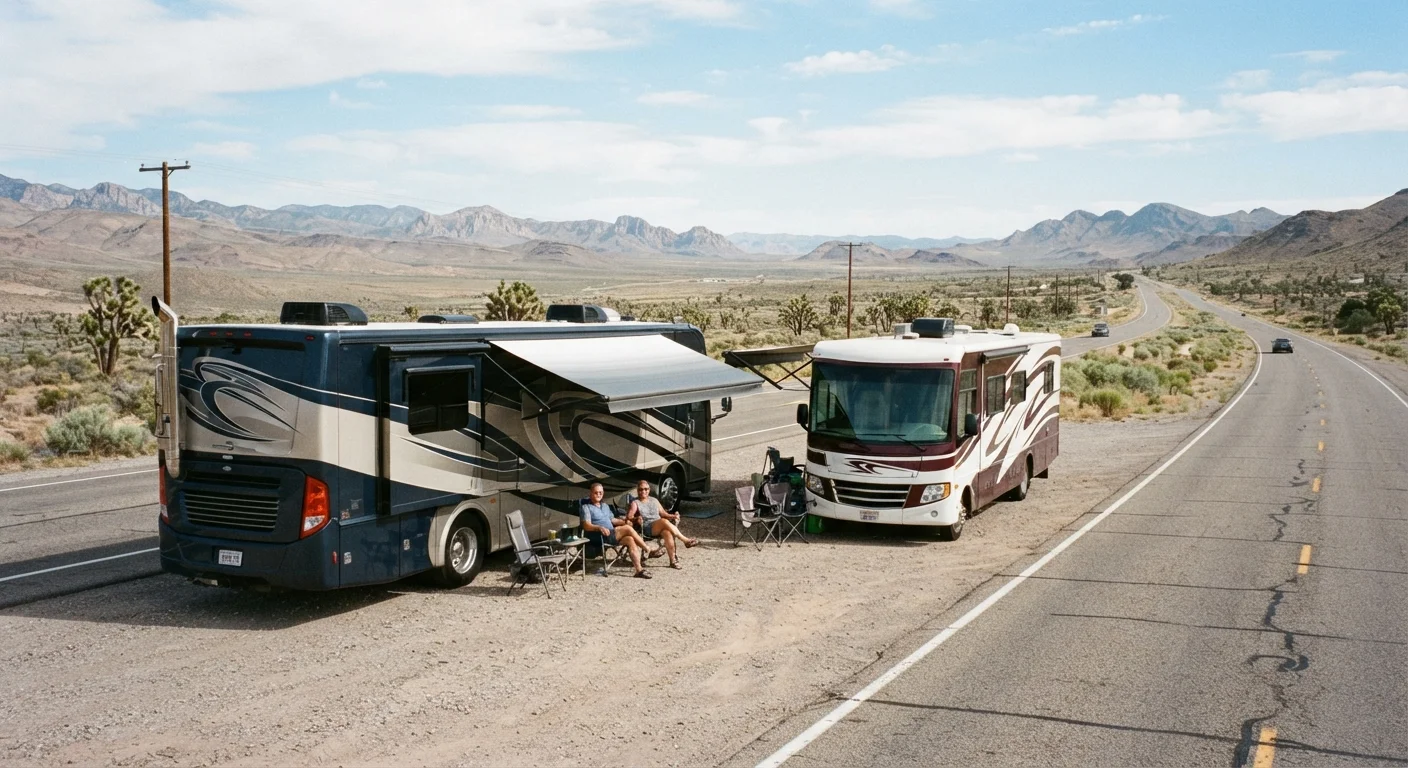
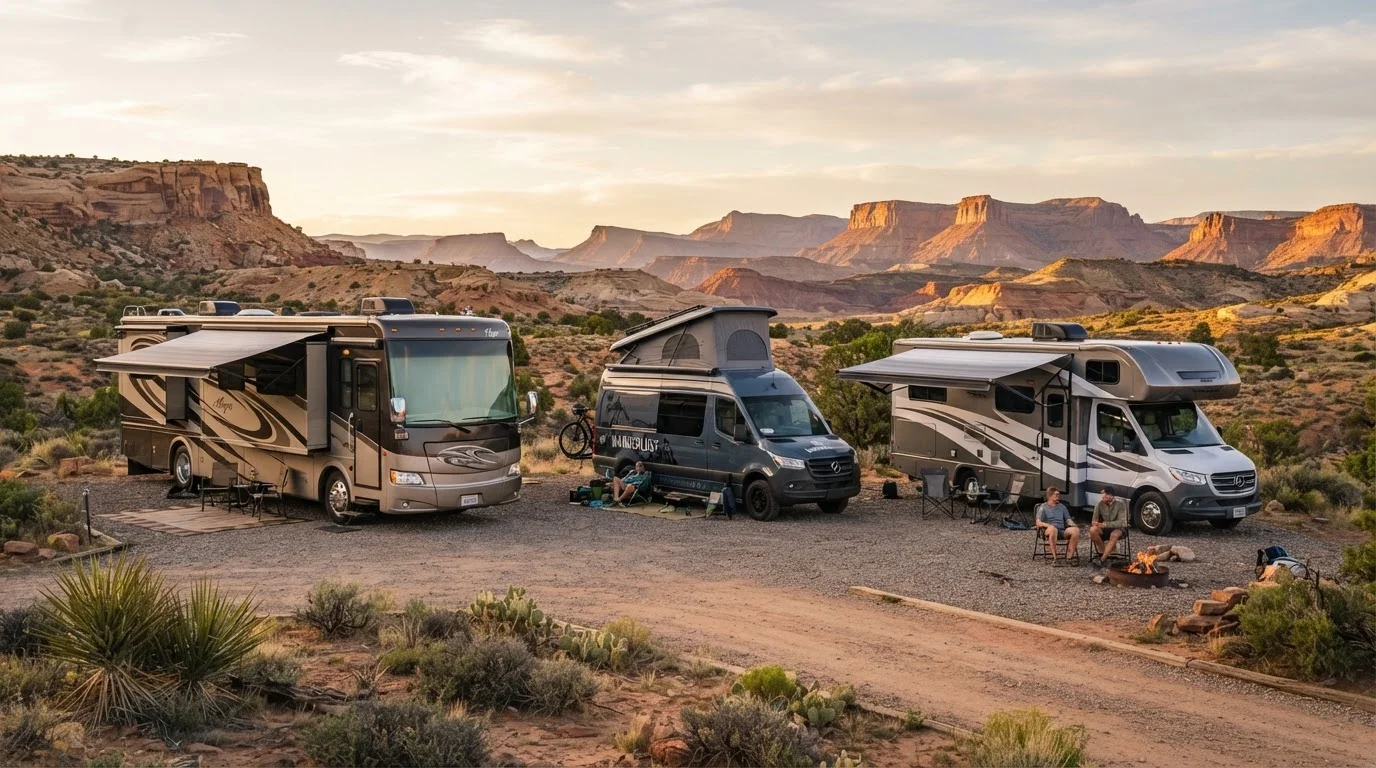
Class A motorhomes are the large, bus-style rigs that dominate highway rest stops and luxury campgrounds. They're built on either a heavy-duty diesel pusher chassis (with the engine mounted at the rear) or a gas-powered front-engine commercial chassis. Lengths typically run from 26 to over 45 feet.
Inside, Class A units can rival a small apartment - full kitchen, separate bedroom, multiple sleeping zones, and slide-out sections that expand floor space when parked. That livability makes them a popular choice for extended travel and full-time RV living. Full-time RV living resources can help you evaluate whether the Class A lifestyle suits your situation.
The tradeoffs are real: fuel costs are significant, campsite access is limited by length and height, and driving a 40-foot coach through urban areas requires genuine skill and experience. Maintenance complexity - and cost - scales accordingly. Routine RV maintenance guidance is worth reviewing before committing to any motorhome at this scale.
11.2M
U.S. households owning an RV
According to the RV Industry Association's ownership survey data, RV ownership has grown substantially over the past decade across all motorhome and towable categories.
~60%
RV shipments that are towable units
Industry shipment data consistently shows towable RVs (travel trailers, fifth wheels) outsell motorhomes, underscoring why the A/B/C classification - which covers only motorhomes - represents a meaningful but not majority segment.
7-14 mpg
Typical Class A fuel economy range
Fuel economy varies widely based on engine type, driving speed, and load; diesel pushers and gas-powered Class A chassis perform differently even within the same length range.
Class B: Small Footprint, Surprising Capability
Class B motorhomes - commonly called camper vans - are built by modifying full-size cargo vans such as the Mercedes-Benz Sprinter, Ford Transit, or Ram ProMaster. Their exterior dimensions are close to a standard large van, which means they fit in normal parking spots, handle like a familiar vehicle, and access campgrounds and national parks that prohibit larger rigs.
Modern Class B builds make impressive use of limited space: fold-down beds, compact wet baths, and efficient galley kitchens are standard in most configurations. However, livable square footage is genuinely constrained. Solo travelers and couples often find Class B units ideal for weekend trips or nomadic travel, while families typically need more room.
Fuel economy is comparatively favorable - a meaningful consideration for high-mileage travelers - and many Class B owners report using their rig as a daily driver, which changes the ownership economics significantly.
Class C: The Middle-Ground Motorhome
Class C motorhomes occupy the territory between the other two classes, and they're identifiable by one defining feature: a cab-over bunk or storage area that extends above the driver's cab. They're built on a cutaway truck or van chassis - think a Ford E-Series or Ram chassis cab - with a separate living module attached behind the cab.
Lengths range roughly from 20 to 35 feet. That size enables bunkhouse floor plans capable of sleeping five or six people, making Class C units genuinely practical for families. Driving dynamics are more approachable than Class A, since drivers sit in a familiar truck-cab position rather than behind an enormous windshield. Most hold a standard driver's license requirement in typical GVWR ranges.
Class C rigs sit in a pragmatic sweet spot for many first-time motorhome buyers. For a structured walkthrough of how to evaluate all three classes against your specific travel patterns, the article on choosing an RV class provides a useful decision framework. New buyers may also find value in the first-time RV buyer's guide that covers every major format in detail.
Rent Before You Commit
Renting each class for a short trip is one of the most practical ways to validate assumptions about size, drivability, and comfort before purchasing. Many experienced RVers recommend renting a Class C for a first experience - it offers meaningful living space while keeping the driving challenge manageable for newcomers.
Comparing the Three Classes Side by Side
The table below summarizes key characteristics across all three motorhome classes. Individual units within each class vary considerably, so treat these as general ranges rather than precise specifications.
| Characteristic | Class A | Class B | Class C |
|---|---|---|---|
| Typical length | 26-45+ ft | 17-24 ft | 20-35 ft |
| Chassis base | Bus or heavy commercial | Full-size cargo van | Cutaway truck/van |
| Cab-over section | No | No | Yes |
| Sleeping capacity | 4-10+ | 1-4 | 4-8 |
| Drivability | Requires experience | Van-like, accessible | Moderate |
| Typical use case | Full-time living, luxury touring | Solo/couple travel, daily use | Family trips, first-time buyers |
For a more detailed side-by-side breakdown of how these classes affect full-time and part-time living, see Class A, B, and C motorhomes compared - covering size, drivability, and livability in depth.