How Each Format Is Structured
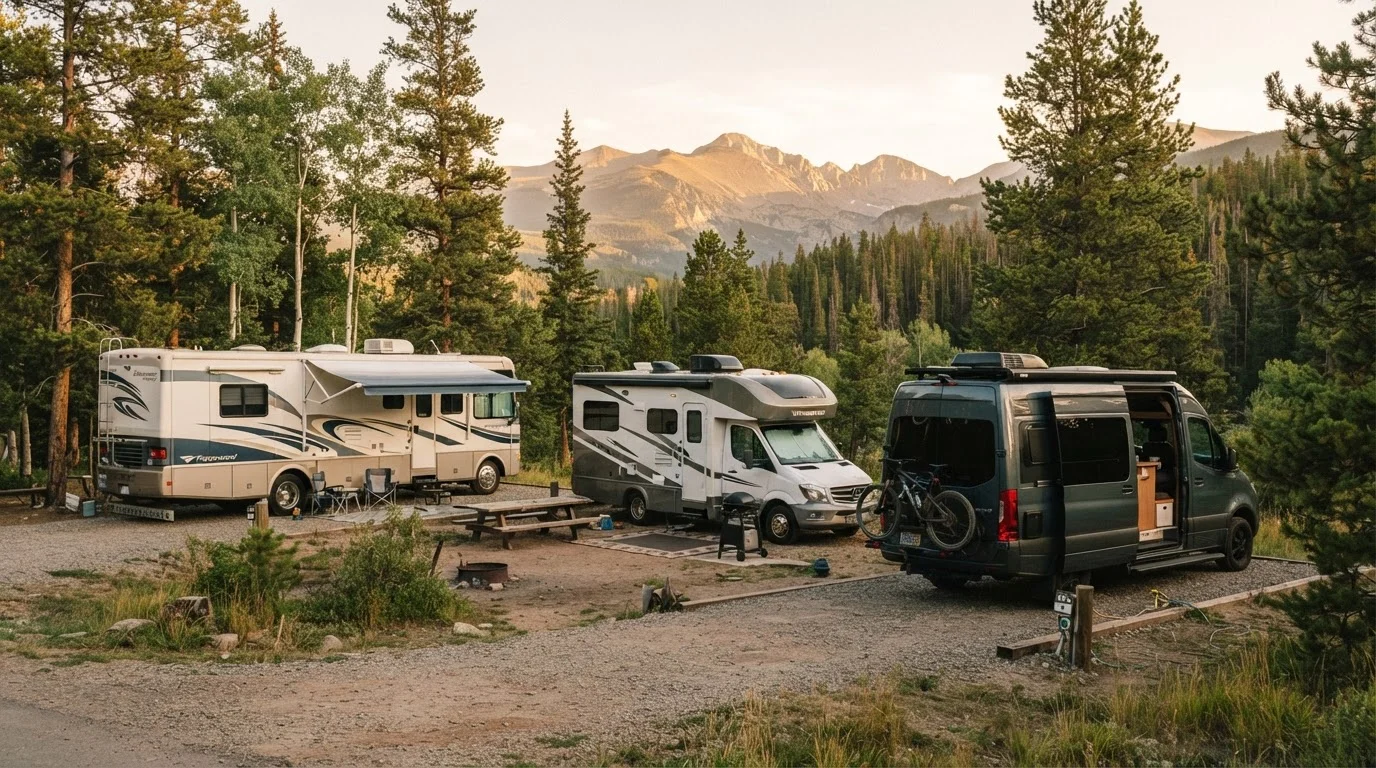
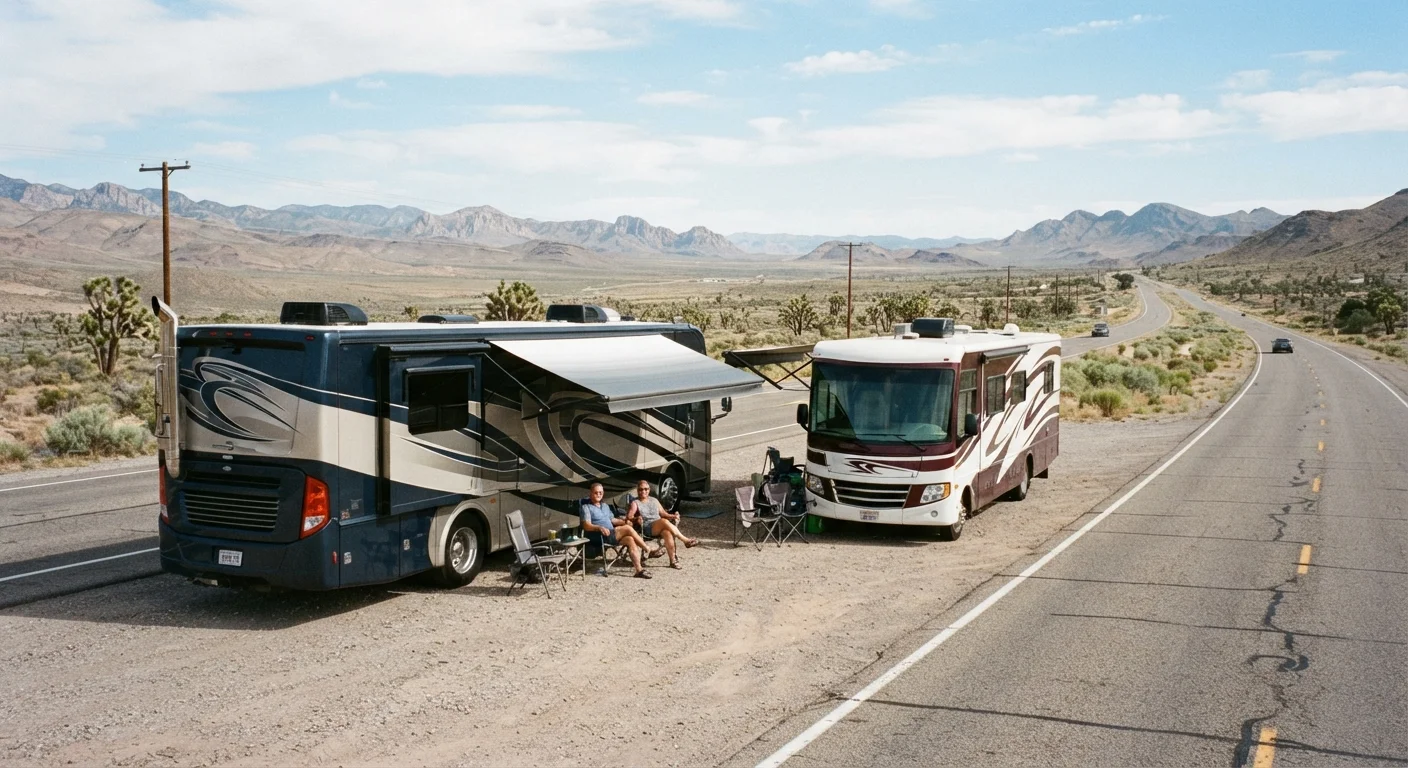
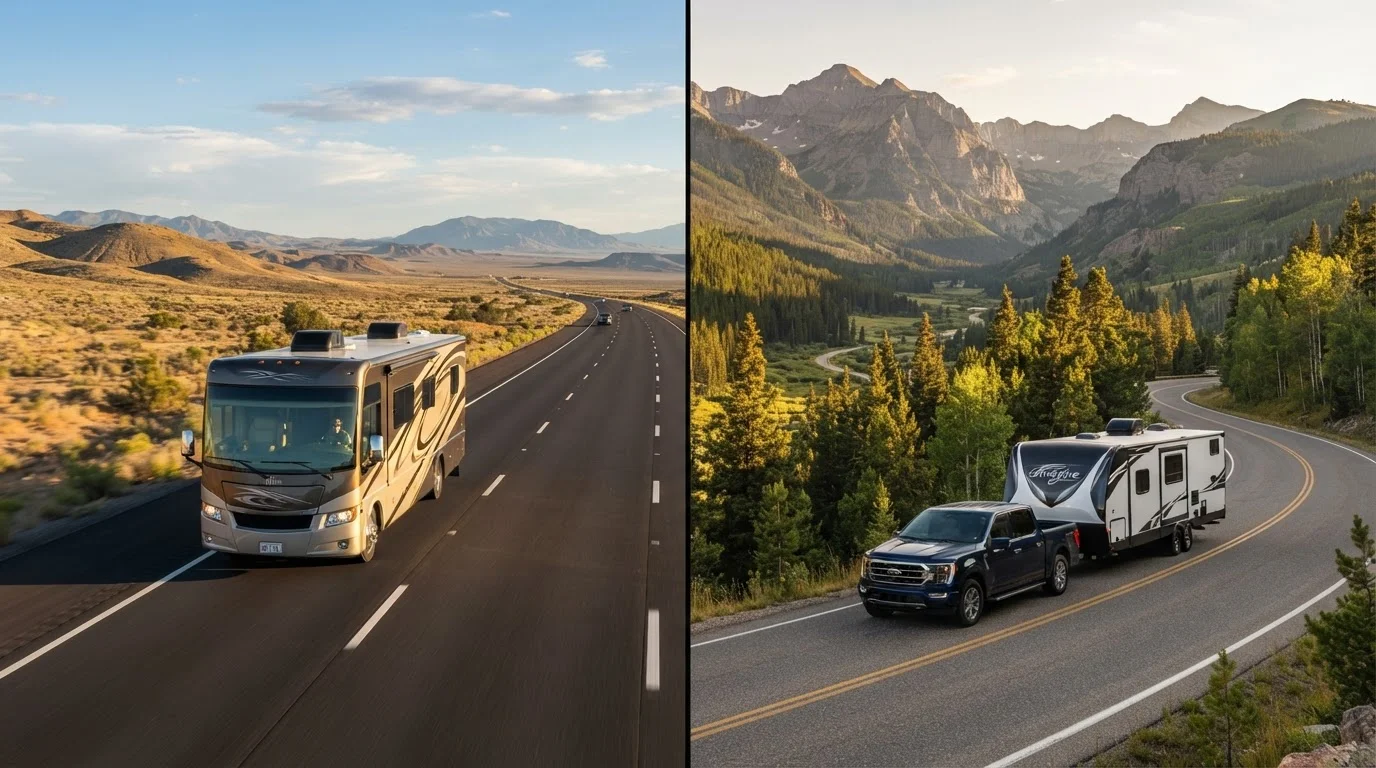
The fundamental difference between motorhomes and towables comes down to propulsion. A motorhome is a self-propelled recreational vehicle - the engine, chassis, and living quarters are all built into one unit. When you're ready to travel, you simply get in and drive. Classes A, B, and C each represent distinct size and layout approaches within this format; for a detailed breakdown, see our guide on Class A, B, and C motorhomes.
A towable RV, by contrast, has no engine of its own. It relies on a separate tow vehicle - typically a pickup truck, SUV, or heavy-duty van - to move from place to place. Towables span a wide range, from lightweight pop-up campers and travel trailers to full-size fifth wheels and toy haulers. Every major towable category has its own hitch requirements, weight ratings, and floor plan conventions.
| Criterion | Motorhome | Towable RV |
|---|---|---|
| Propulsion | Self-propelled engine onboard | Requires separate tow vehicle |
| Setup at camp | Park and level - no unhitching | Unhitch tow vehicle; level trailer |
| Campsite freedom | Must move entire unit to explore | Detach tow vehicle; explore freely |
| Typical entry price (new) | $80,000+ (Class B) to $200,000+ (Class A) | $20,000-$60,000 (trailer only) |
| Tow vehicle required | No (may tow a 'toad' separately) | Yes - must be rated for trailer weight |
| Driveability learning curve | Moderate - long vehicle, wide turns | Moderate to steep - backing, sway management |
| Maintenance separation | Living space and engine tied together | Tow vehicle and trailer serviced independently |
| Full-time living suitability | High - integrated systems and storage | High in fifth wheels; varies by trailer type |
Driving, Licensing, and Practical Operation
Motorhomes require you to drive the living space itself, which has real implications for parking, fuel stops, and navigation. Larger Class A coaches can stretch beyond 40 feet and may require a non-commercial CDL in some states above certain weight thresholds - verify your state's DMV requirements before committing. Fuel economy for gas-powered motorhomes typically ranges from 6-12 mpg depending on size and load; diesel models vary similarly. For a deeper look at how engine placement affects driveability, the comparison of diesel pusher vs. gas motorhome layouts is worth reviewing.
Towable rigs shift the driving complexity to the tow vehicle. Matching trailer weight to the tow vehicle's rated capacity - the Gross Vehicle Weight Rating (GVWR) and hitch class - is non-negotiable for safe operation. Sway control, weight distribution hitches, and brake controllers are all considerations that add to setup complexity but are well-understood by experienced towers. Backing a trailer into a tight campsite is a learnable skill, though it does carry a steeper initial learning curve than driving a motorhome straight in.
11.2M
RV-owning households in the US
According to the RV Industry Association, an estimated 11.2 million US households owned an RV as of recent industry surveys.
~85%
Share of RV shipments that are towables
Towable RVs consistently represent approximately 85% of annual wholesale RV shipments in the US, per RV Industry Association data.
Cost Structure: Upfront and Ongoing
Motorhomes consolidate all costs into a single purchase, but that purchase price is typically higher than a comparable towable setup. Entry-level Class B camper vans can start around $80,000-$100,000 new, while Class A coaches routinely exceed $200,000. Operating costs - insurance, engine maintenance, tire replacement on a heavy chassis - are also bundled together. If the engine requires a major repair, your entire living space is sidelined simultaneously.
Towable setups distribute costs differently. A quality travel trailer might range from $20,000 to $60,000, but you'll need a tow vehicle capable of handling it - which may mean purchasing or upgrading a truck. The upside: if the trailer needs service, you still have a functioning vehicle; if the tow vehicle needs work, the trailer remains intact. This separation of assets is a practical resilience that full-time RVers sometimes find valuable.
For readers still weighing their options at a high level, a structured checklist for choosing an RV class can help pressure-test assumptions before committing to either format.
Lifestyle Fit: Which Format Works for You?
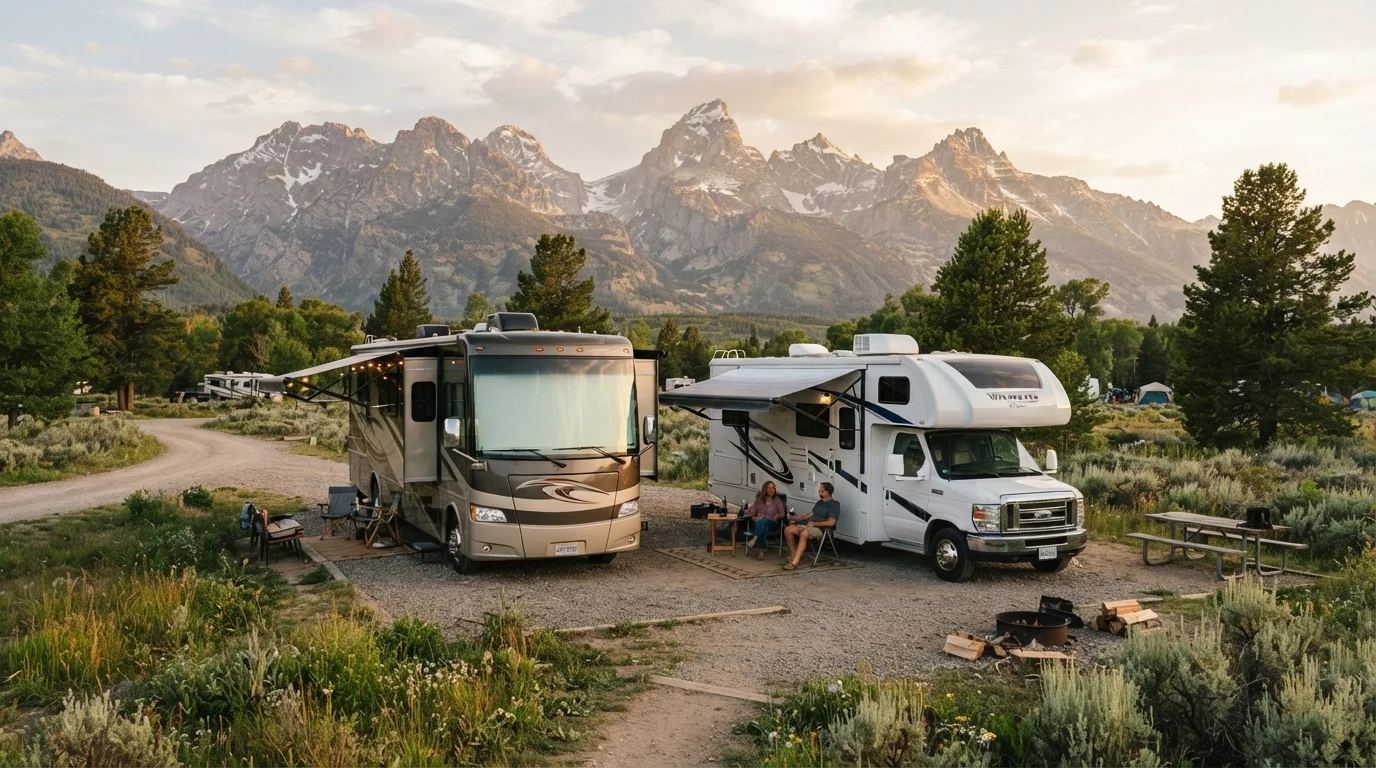
Campsite flexibility is where towables often shine. Once a fifth wheel or travel trailer is leveled and parked, the tow vehicle unhitches and becomes a free-roaming day vehicle - you can run errands, explore local roads, or reach trailheads without hauling your entire home. Motorhome travelers who want equivalent freedom typically tow a small car behind them (called a "toad"), which adds complexity and affects overall rig length.
Motorhomes tend to win on convenience for frequent movers. A travel day requires no hitching or pre-departure safety checks beyond standard walk-arounds. Everything stays where you left it. For anyone considering full-time RV living, this streamlined workflow reduces daily friction considerably. It's also worth noting that motorhomes and towables serve very different needs compared to more rugged formats - if off-pavement exploration appeals to you, overlanding vs. RV camping examines that separate decision entirely.
Weight Ratings Are Non-Negotiable
When evaluating a towable setup, always cross-reference the trailer's Gross Vehicle Weight Rating (GVWR) against the tow vehicle's manufacturer-rated towing capacity - not advertised maximums. Exceeding these ratings creates genuine safety hazards and may void insurance coverage. When in doubt, consult a certified RV technician or the tow vehicle manufacturer's towing guide for your specific configuration.