What Sets These Formats Apart From Other RVs
Most RV categories - from Class A motorhomes to fifth wheels - prioritize living space. Pop-up campers and truck campers take a different approach, optimizing for weight, portability, and versatility over square footage. They occupy a distinct corner of the towable RV landscape that appeals to campers who want minimal setup friction and maximum access to remote terrain.
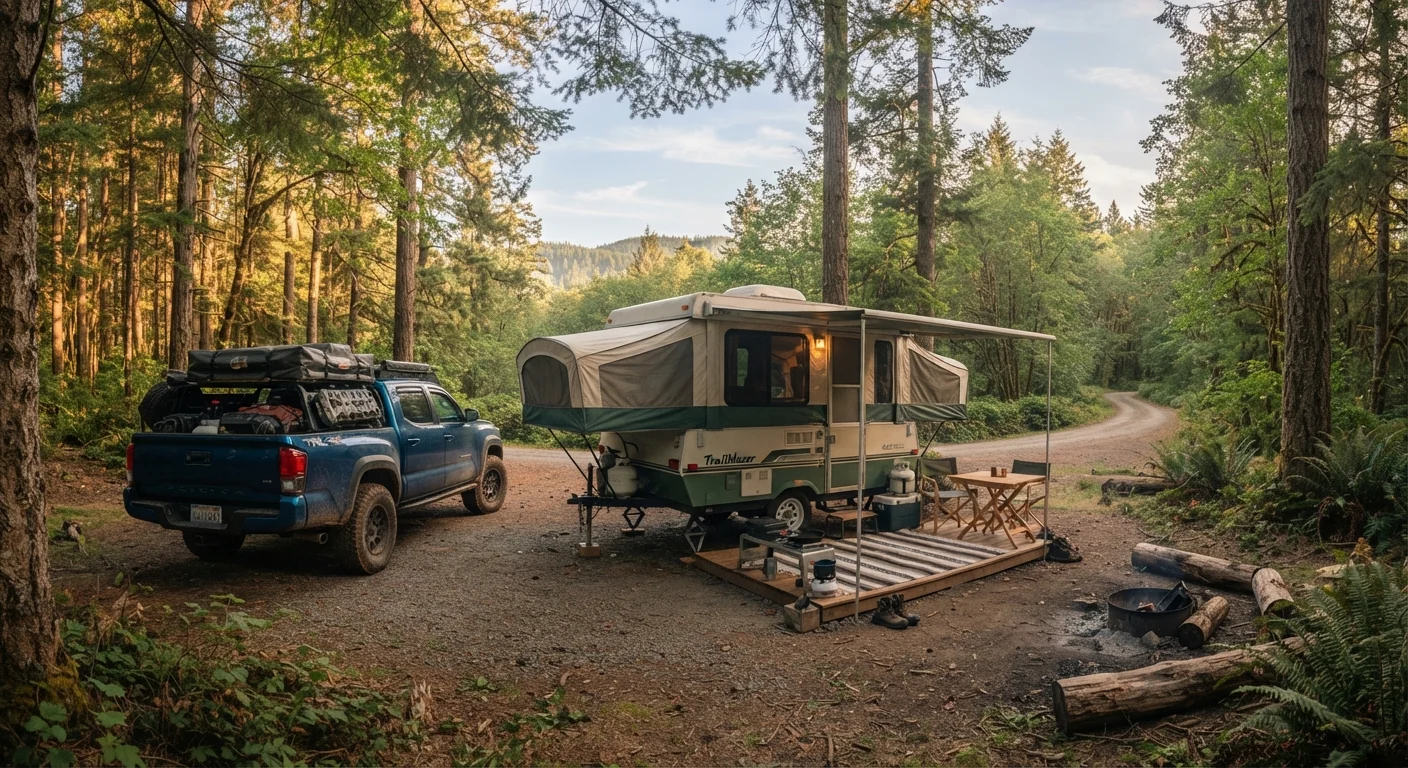
A pop-up camper is a towable trailer that collapses to a low-profile box for transport, then expands at camp by raising a roof and unfolding sleeping bunks. A truck camper is a self-contained living unit that loads directly into a pickup truck bed - no separate trailer, no dedicated hitch receiver beyond anchor points.
Neither format includes a chassis of its own. That's the defining characteristic: they borrow mobility from the tow vehicle rather than supplying it independently.
~2,500 lbs
Average pop-up camper tow weight
Most folding camping trailers fall between 1,500 and 4,000 lbs GVWR, making them towable by a wide range of vehicles.
1,000-5,000 lbs
Truck camper weight range
Weight varies considerably based on construction, slide-outs, and amenities; payload ratings of the truck must be verified independently.
10-20 min
Typical pop-up setup time
Experienced owners can fully raise and level a pop-up camper in under 20 minutes at a prepared site.
Pop-Up Campers: How They Work and Who They Suit
When collapsed, a pop-up camper sits low enough to reduce aerodynamic drag significantly compared to a travel trailer of similar sleeping capacity. This translates into better fuel economy during the drive and a lower center of gravity when navigating winding roads.
At camp, the roof cranks or motors upward, canvas or hard-sided walls extend, and fold-out sleeping platforms emerge from each end. Most pop-ups include a dinette, small galley kitchen, and basic storage. Higher-spec models add indoor bathrooms and improved insulation.
The format suits campers who:
- Own a mid-size truck, SUV, or capable crossover with limited tow ratings
- Prioritize fuel efficiency on longer drives to trailheads
- Camp seasonally in moderate climates (canvas walls limit cold-weather comfort)
- Want more campsite options, including sites with low-clearance overhangs
Inspect Canvas Before Every Season
Canvas panels on soft-sided pop-ups are the most maintenance-intensive component. Inspect seams, zippers, and waterproof coatings before each camping season and after any trip with heavy rain. Re-treating canvas with a fabric waterproofer extends lifespan significantly and prevents the mildew issues that develop when wet canvas is stored folded.
The trade-off is setup time - expanding and leveling a pop-up takes more effort than driving a motorhome into a site. Canvas maintenance and weatherproofing are ongoing responsibilities owners should factor in.
Truck Campers: Off-Road Capability Meets Self-Contained Living
A truck camper transforms a standard pickup into a mobile basecamp without adding a trailer to manage. Because the unit sits in the truck bed, the rig corners like a single vehicle, reverses intuitively, and navigates narrow forest roads where a trailer's rear overhang would cause problems.
Units range from minimalist "dry" campers with just a sleeping platform and storage, to fully self-contained models with dinettes, wet baths, propane ranges, and freshwater tanks. Slide-out sections add living width when parked, though they add weight that must be balanced against payload capacity.
Payload rating - not tow rating - is the critical figure for truck campers. The camper's weight rides in the bed, loading the truck's rear axle. Exceeding the truck's payload capacity compromises handling, braking, and tire safety. This is a technical point worth consulting a qualified mechanic or dealer service department about before purchasing.
For readers interested in how truck campers compare to purpose-built overland rigs, see our overview of overlanding vs. RV camping setups. Truck capability comparisons across models are also covered in our trucks and SUVs hub.
Where These Formats Fit in a Broader RV Strategy
Pop-up campers and truck campers are often entry points into RV ownership - lower acquisition costs, simpler storage requirements, and reduced maintenance overhead make them accessible to first-time buyers. Some enthusiasts use them as secondary rigs alongside a larger motorhome, deploying the lightweight unit for backcountry trips where the primary rig won't fit.
Neither format, however, is well-positioned for full-time residence. Insulation limitations, condensation in canvas models, and compact storage create real friction for extended living. Readers considering life on the road should review the practical trade-offs in our guide to full-time RV living trade-offs and our look at matching RV class to trip type.
For weekend runs, shoulder-season trips, and adventure-focused travel where agility matters more than amenities, pop-ups and truck campers remain genuinely useful formats - not compromises, but deliberate choices built around a specific style of camping.
“The lightest rig that meets your needs is almost always the right rig. Weight is the enemy of fuel economy, maneuverability, and campsite access - and most campers overestimate how much space they actually need.”
— RVs & Campers Editorial Team, Vehicle and camping format analysts