Why RV Class Matters Before You Book a Single Campsite
The RV market sorts itself into motorized classes (A, B, and C) and towable formats (travel trailers, fifth wheels, pop-ups). Each category was engineered with a different traveler in mind, and choosing the wrong one creates friction on every single trip - not just occasionally. Understanding what each class label actually means is the first step toward a purchase you won't regret.
The core variables to weigh are: trip length, how many people are coming along, how often you'll use the rig, whether you need a separate tow vehicle, and how comfortable you are handling a large vehicle. These aren't abstract considerations - they directly determine which format will serve you well and which will frustrate you.
| Class B | Class C | Class A | Travel Trailer / Fifth Wheel | |
|---|---|---|---|---|
| Typical Length | 18-24 ft | 20-38 ft | 26-45 ft | 12-40 ft |
| Sleeps | 1-2 | 4-6 | 4-8 | 2-10 (varies) |
| Driveability | Easy, van-like | Moderate | Challenging, large | Tow vehicle required |
| Best Trip Length | Weekend to 1 week | 1 week to extended | Extended to full-time | Weekend to full-time |
| Living Space | Minimal | Moderate | Spacious | Varies widely |
| Fuel Efficiency | Highest | Moderate | Lowest | Depends on tow vehicle |
| Full-Time Suitability | Low-Moderate | Moderate | High | Moderate-High |
Class B: The Weekend Sprint Specialist
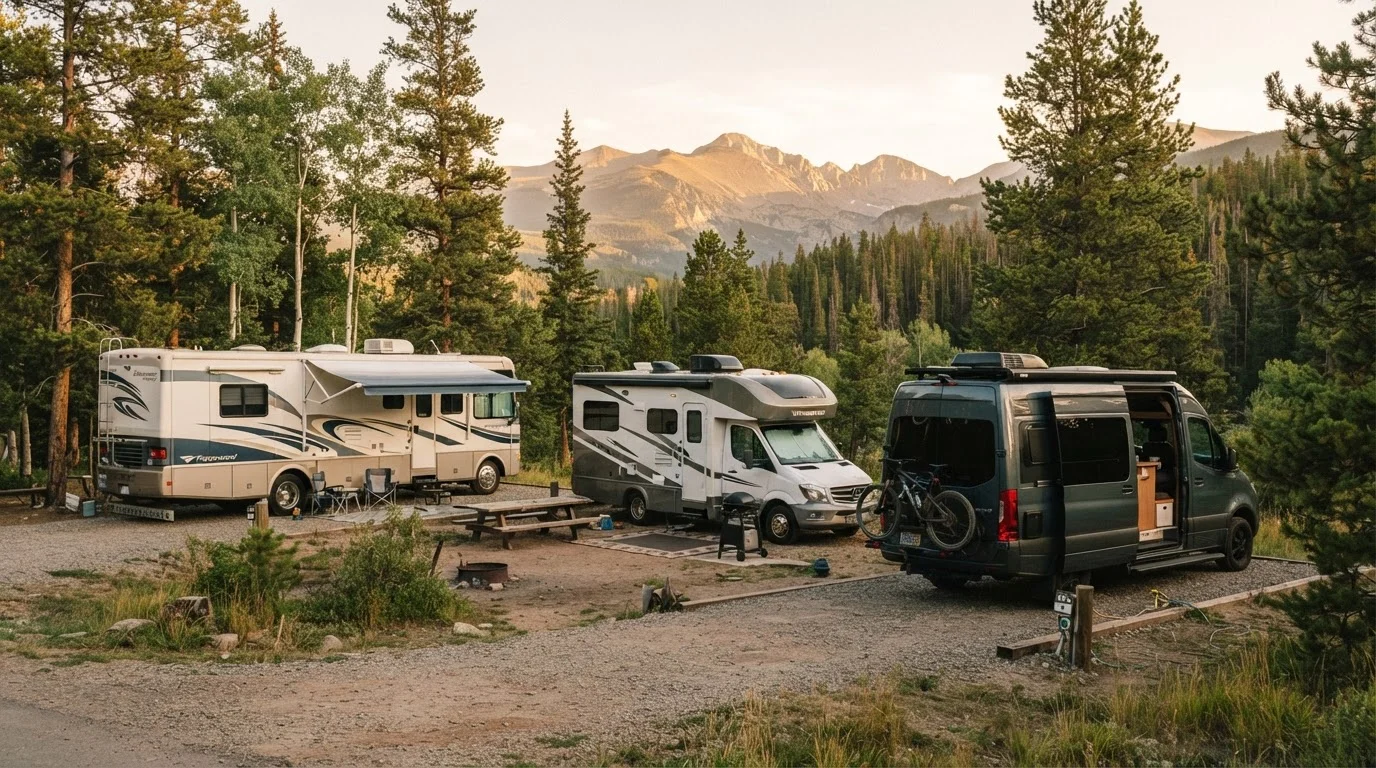
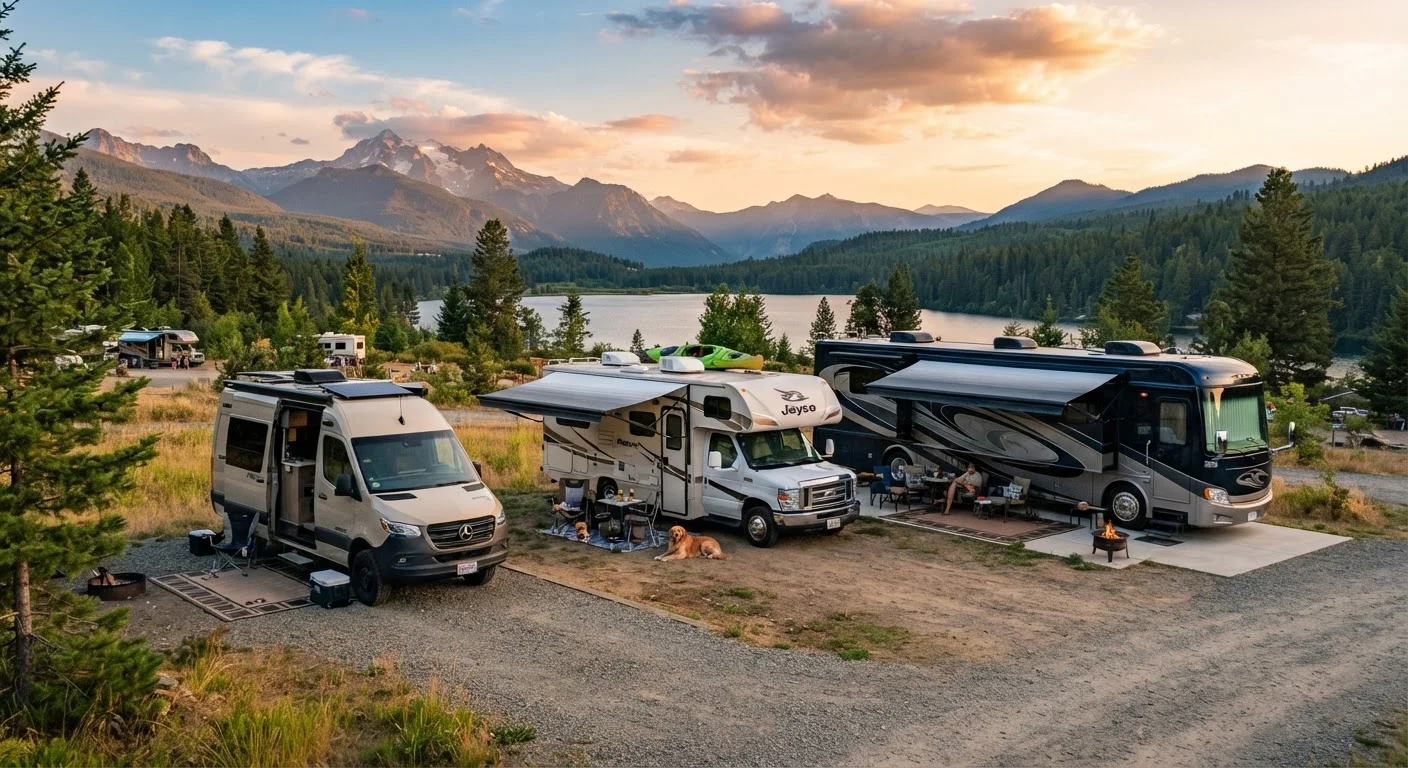
Class B campervans - built on a standard cargo van chassis - typically run between 18 and 24 feet. That compact footprint means you can park in most public lots, navigate mountain switchbacks without white knuckles, and skip dedicated campsite reservations in favor of dispersed camping on public land.
For solo travelers or couples doing two- to three-day trips, a Class B is hard to beat on convenience. Setup time is near zero, fuel efficiency is noticeably better than larger motorhomes, and the rig doubles as a daily driver for many owners. The trade-off is obvious: living space is tight, storage is limited, and shower facilities are minimal or absent on many builds. When a group of four tries to spend a long weekend in a Class B, discomfort sets in quickly.
Rent Before You Buy
If you're uncertain whether a Class B's compact layout will work for your travel style, renting one for a weekend trip is a low-cost way to find out. Many experienced RVers recommend testing at least two different class formats before purchasing - the feel of driving, sleeping, and cooking in each rig is difficult to gauge from a dealership walkthrough alone.
If you're drawn to the Class B footprint but want to understand the full spectrum before committing, this checklist of questions helps pressure-test your assumptions before you sign anything.
Class C and Class A: From Family Trips to Full-Time Living
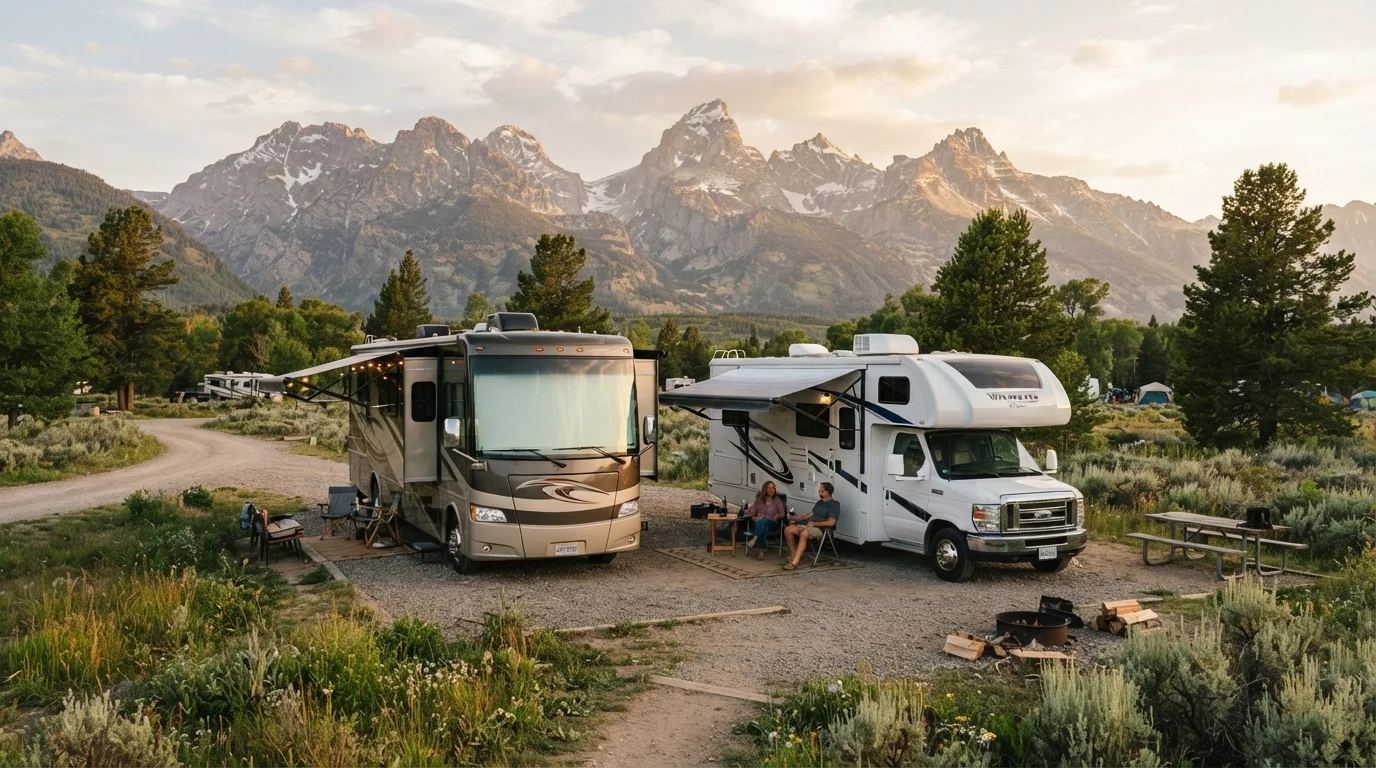
Class C motorhomes - identifiable by the cab-over bunk extending above the driving compartment - range from roughly 20 to 38 feet. They're built on a cut-away truck or van chassis, which gives most drivers a familiar handling feel. A Class C comfortably sleeps four to six people, carries a dedicated bathroom, and typically includes enough kitchen counter space to actually cook a real meal. For families doing week-long or extended trips several times a year, Class C hits a practical sweet spot between maneuverability and livability.
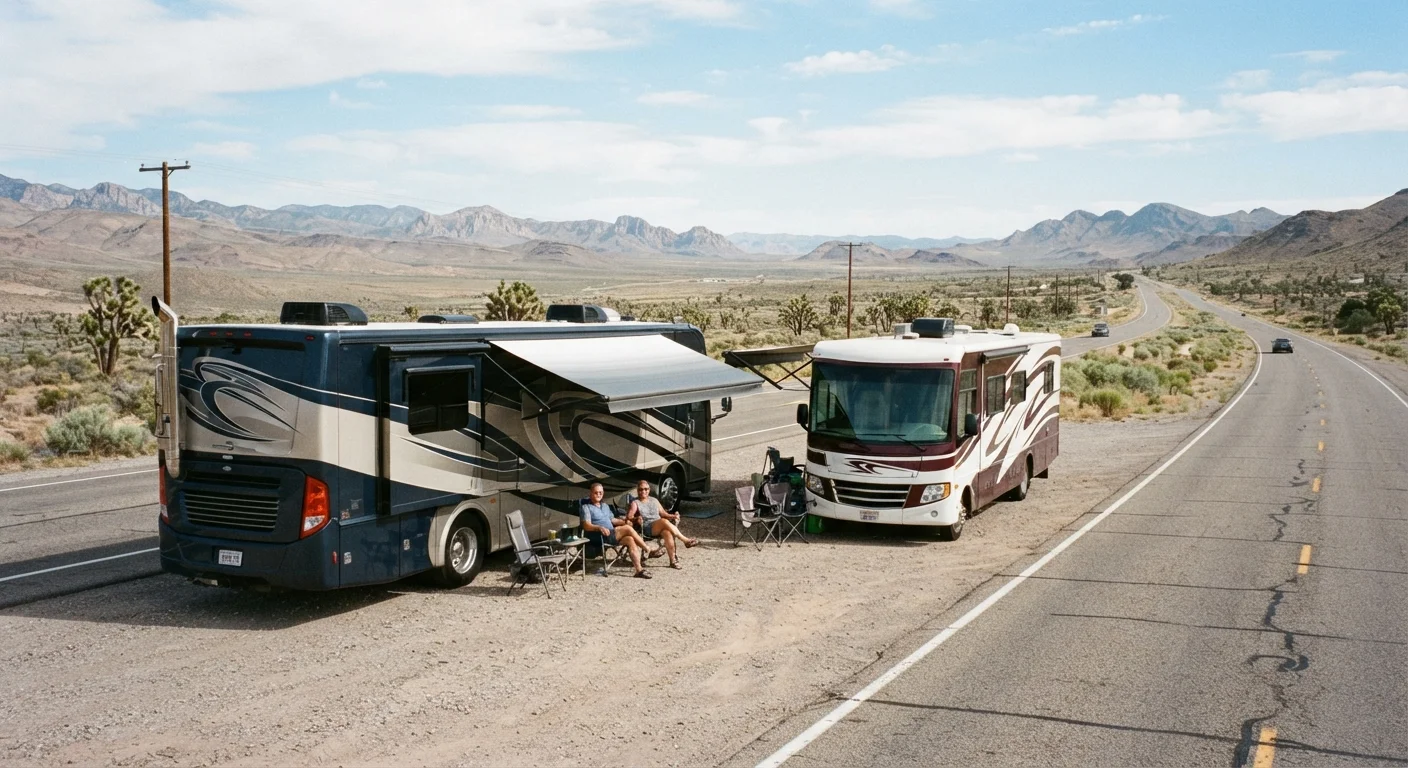
Class A coaches sit at the top of the size and amenity range - diesel pushers can stretch past 45 feet and rival small apartments in finish quality. The floor plans support slide-outs, full-size appliances, and separate sleeping areas, which is why Class A is the dominant choice among people making the transition to full-time RV living. The costs - purchase price, fuel, campsite fees for larger pads, and maintenance - are proportionally higher, and urban driving or tight campgrounds can be genuinely difficult. For a detailed side-by-side breakdown of these two classes, the Class A vs. Class C comparison covers the key trade-offs in practical terms.
~11 million
US households owning an RV
According to RVIA industry data, RV ownership has grown steadily, with motorhomes representing a significant share of the overall market.
1 million+
Americans living full-time in RVs
Industry estimates suggest over one million people in the US consider an RV their primary residence, with Class A motorhomes and fifth wheels the most commonly cited formats.
Towable Formats: Flexibility at a Different Cost
Travel trailers, fifth wheels, and pop-up campers don't come with an engine - they hitch to a truck, SUV, or van you already own. That separation can be an advantage: you tow the camper to the site, unhitch, and use your tow vehicle freely. Fifth wheels offer some of the most generous living space available in any towable format, rivaling Class A interiors at a lower unit price point, though the truck required to tow a large fifth wheel is a significant added expense.
Pop-up campers and truck campers sit at the lightweight end of the spectrum and represent the most accessible entry point into camping with an RV-style shelter. These lighter formats have their own distinct strengths and limitations worth understanding before ruling them out.
The consistent challenge with towables is the skill required to back into a campsite and the logistics of managing two vehicles. For full-timers, having a second vehicle in tow - whether a car behind a Class A or a truck pulling a fifth wheel - adds operational complexity that's worth factoring into your long-term planning. If you're weighing whether a motorhome or a towable-plus-tow-vehicle setup is the right structure, common first-buyer misjudgments about RV class selection are worth reviewing before you commit.