How to Use This Glossary
RV research involves a dense layer of abbreviations, weight ratings, and class labels that vary by manufacturer and format. This glossary cuts through that complexity by defining the terms you'll encounter most often - whether you're reading a spec sheet, evaluating a dealer listing, or comparing formats for the first time.
Terms are grouped by category below. For a deeper look at how classes and formats interact in practice, see the RV class system explained and our guide to towable RV categories.
| Motorhome Classes | Class A, Class B, Class C (RVIA classification framework) |
| Towable RV Types | Travel trailer, fifth wheel, toy hauler, pop-up, teardrop |
| Typical Class A Length Range | 26-45 feet |
| Class B (Camper Van) Length Range | 16-24 feet |
| Fifth Wheel Hitch Location | Pickup truck bed (kingpin coupling) |
| CCC Formula | GVWR minus UVW |
Motorhome Classes and Towable Types
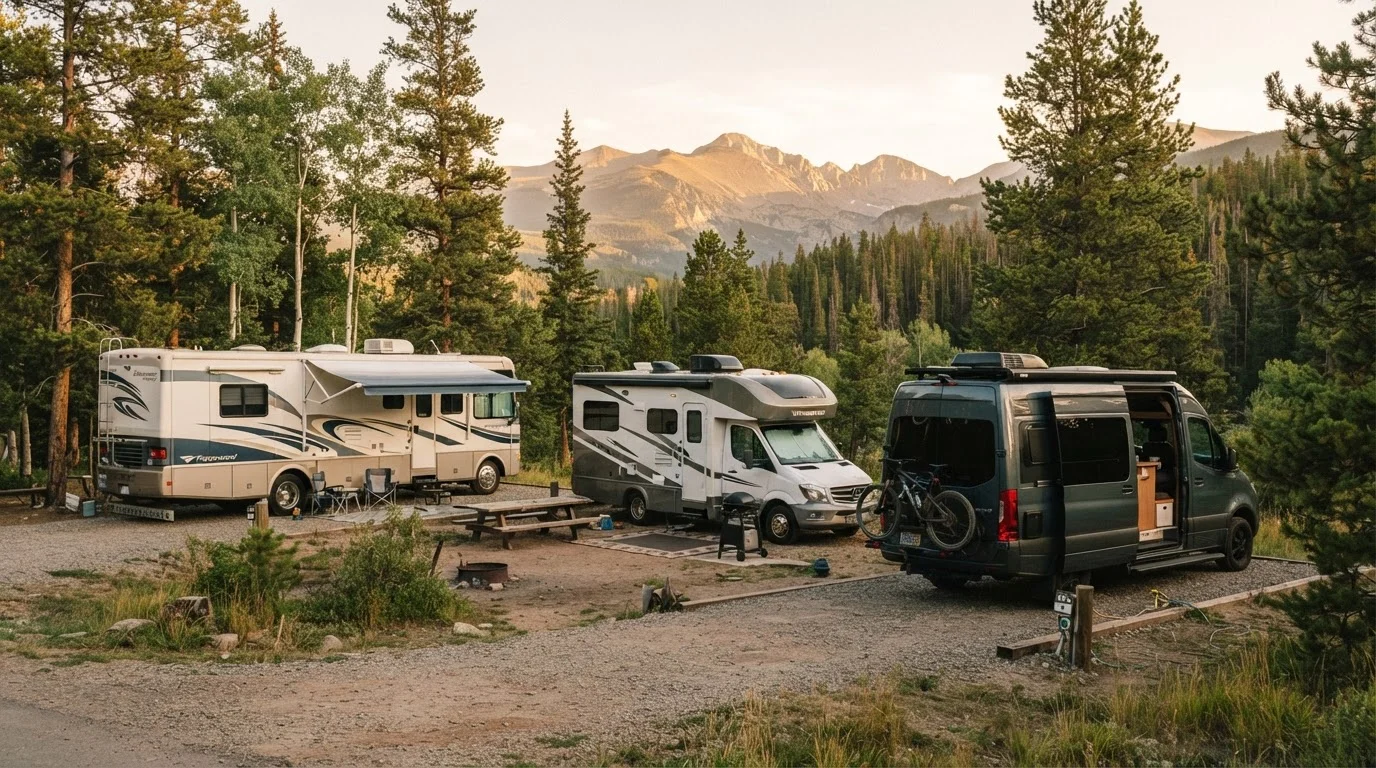
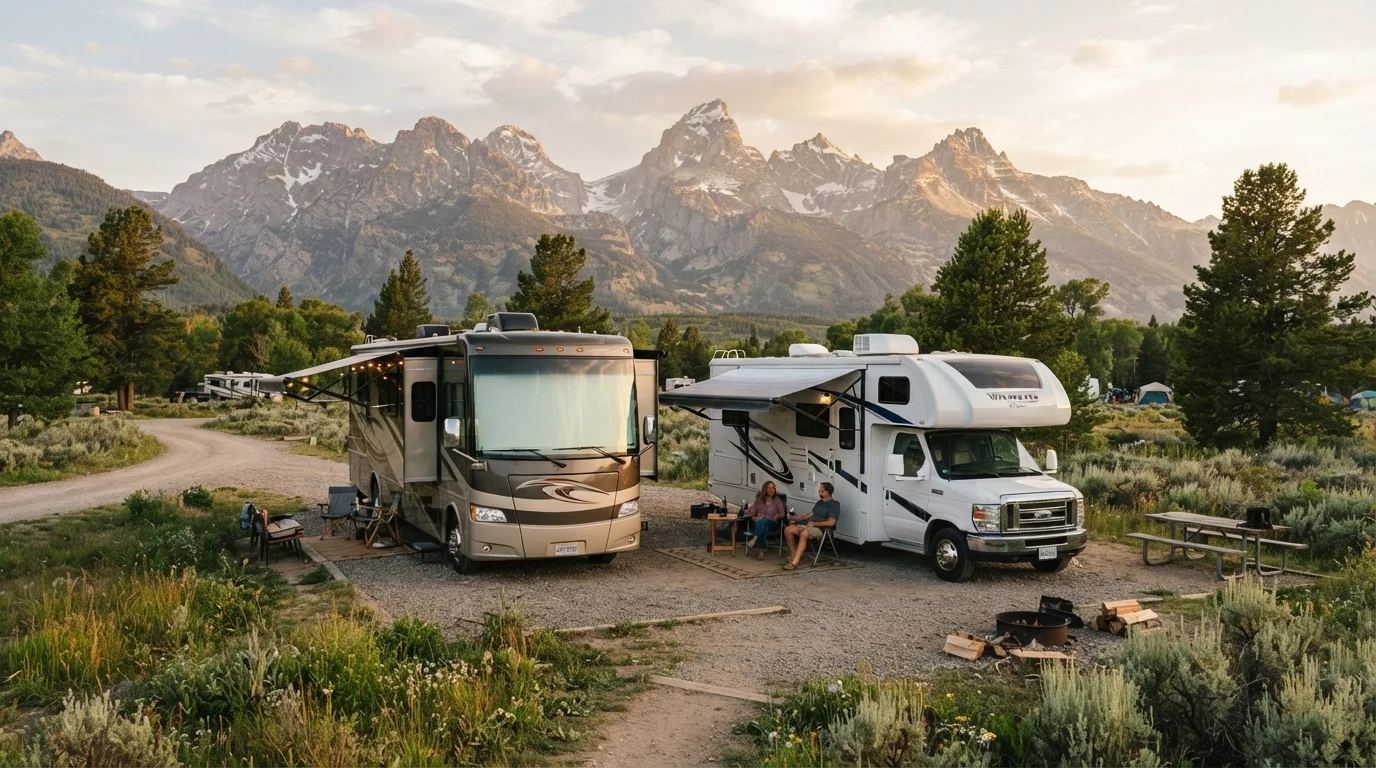
Class A motorhomes are the largest self-propelled RVs, built on a dedicated coach or commercial bus chassis. They range roughly 26-45 feet in length and typically offer the most living space, storage, and amenity options of any motorhome class.
Class B motorhomes - commonly called camper vans - are built within a standard van body. Their compact footprint (usually 16-24 feet) makes them the most maneuverable motorhome class and the easiest to park in urban environments or standard campsites.
Class C motorhomes occupy the middle ground, built on a cutaway truck or van chassis with a distinctive over-cab sleeping area. They're shorter than most Class A units but offer more interior volume than a Class B.
On the towable side, the primary distinctions come down to hitch type and structural form. Travel trailers connect to a standard receiver hitch and come in lengths spanning from compact teardrops to 35-foot family units. Fifth wheels require a bed-mounted hitch and generally permit heavier, taller configurations. See our full first-time buyer's format guide for a side-by-side walkthrough.
Weight Ratings and Loading Terms
Understanding weight ratings is non-negotiable for safe RV operation. The three core ratings - GVWR, GCWR, and GAWR - are stamped on the vehicle's compliance label and set firm operational limits.
Weight Ratings Are Legal Limits, Not Suggestions
GVWR, GCWR, and GAWR are set by the manufacturer and have safety and legal implications. Operating an RV or tow vehicle over its rated limits can void warranty coverage, compromise braking and handling, and result in liability in the event of an accident. Always verify your loaded weight at a certified truck scale before a long trip.
Payload refers to the weight an RV can carry beyond its own structure - essentially the sum of occupants, fresh water (roughly 8.3 lbs per gallon), food, gear, and any aftermarket additions. Payload is not a manufacturer-published figure for most RVs; calculate it by subtracting UVW from GVWR.
Tongue weight is the downward force a trailer exerts on the hitch ball. Most hitch manufacturers recommend keeping tongue weight between 10% and 15% of the trailer's total loaded weight. Too little tongue weight causes trailer sway; too much overloads the tow vehicle's rear suspension.
For a comprehensive explanation of how these ratings interact when you're spec'ing a truck to tow an RV, refer to our GVWR and weight ratings reference.
Setup, Systems, and Living Terms
Beyond classes and weight ratings, everyday RV use introduces its own vocabulary around hookups, power, and site setup.
GVWR
Gross Vehicle Weight Rating - the maximum allowable weight of an RV when fully loaded, including passengers, cargo, fuel, and fresh water. Exceeding GVWR is a safety and legal violation. See our weight ratings guide for full detail.
Dry Weight
The weight of an RV as it leaves the factory, with no passengers, cargo, fluids, or dealer-added options. Dry weight is a baseline, not an operational figure - always account for the difference between dry weight and GVWR when planning your load.
GCWR
Gross Combined Weight Rating - the maximum allowable weight of a tow vehicle plus the loaded trailer it pulls. Staying within GCWR protects the tow vehicle's drivetrain, brakes, and chassis from overload stress.
Slide-Out
A wall section that extends outward from the RV's main body when parked, significantly enlarging the living area. Slide-outs may be found in living rooms, bedrooms, or kitchen areas, and require level ground and clearance to deploy safely.
Tag Axle
A third axle positioned behind the drive axle on large Class A diesel pushers, used to distribute weight more evenly and improve braking capacity. Tag axle RVs typically carry higher payload ratings.
Fifth Wheel
A towable RV that connects to a hitch mounted in a pickup truck's bed rather than the standard receiver hitch. The over-bed coupling provides greater stability and typically allows taller, heavier units than a conventional travel trailer.
Diesel Pusher
A Class A motorhome with a diesel engine mounted at the rear of the chassis. The rear-engine design lowers noise in the cab, improves weight distribution, and generally supports higher GVWR ratings.
UVW
Unloaded Vehicle Weight - similar to dry weight but sometimes includes standard dealer-installed options. Manufacturers may define UVW slightly differently, so always verify what is included before comparing figures across brands.
Boondocking
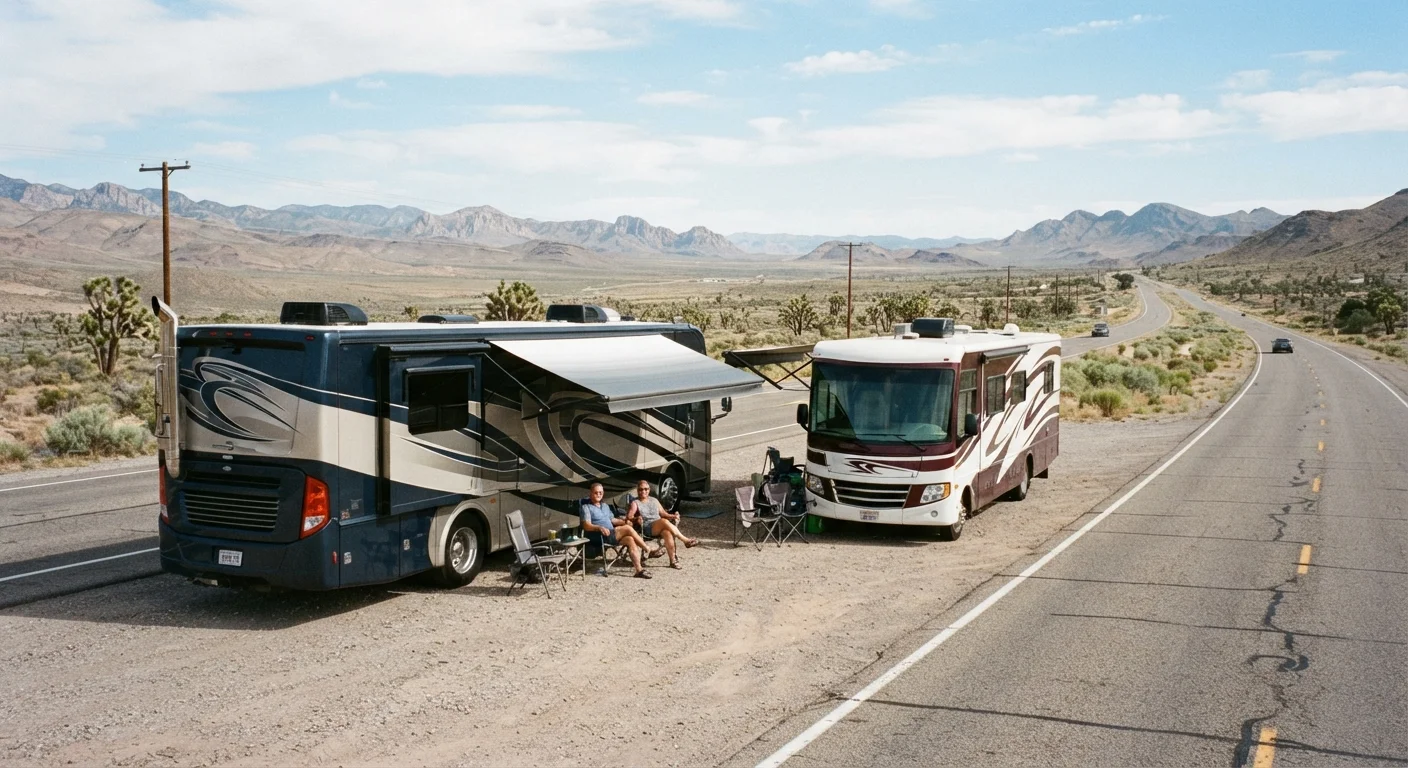
Camping in a location with no electrical, water, or sewer hookups - also called dry camping or off-grid camping. It requires self-sufficient power (typically solar or generator), fresh water reserves, and monitored grey and black tank capacity.
CCC (Cargo Carrying Capacity)
The maximum weight of gear, passengers, food, water, and personal items an RV can carry once standard equipment is on board. CCC is calculated as GVWR minus UVW and is the most practical loading limit for daily use.
Toy Hauler
A travel trailer or fifth wheel with a built-in rear garage designed to transport powersports equipment such as ATVs, motorcycles, or dirt bikes. The garage typically converts to sleeping or living space when gear is unloaded.
Pop-Up Camper
A folding camping trailer that collapses to a low-profile unit for towing and expands at camp to reveal canvas or hard-sided sleeping areas. Its light weight makes it compatible with a wide range of tow vehicles.
Full hookup describes a campsite that provides shore power (typically 30-amp or 50-amp electrical), a water connection, and a sewer connection. Partial hookup usually means power and water only, with no sewer - requiring tank management. Boondocking (defined in the glossary above) sits at the opposite end of the spectrum entirely.
Grey water is the wastewater collected from sinks and showers. Black water refers to toilet waste held in a sealed tank until emptied at a dump station. Both tanks have finite capacity; knowing their sizes relative to your usage patterns is a core part of trip planning. For ongoing guidance on system care, the RV maintenance hub covers seasonal and routine upkeep in detail.
If you're ready to move from definitions to decisions, these questions help pressure-test your RV class assumptions before you commit to a format.