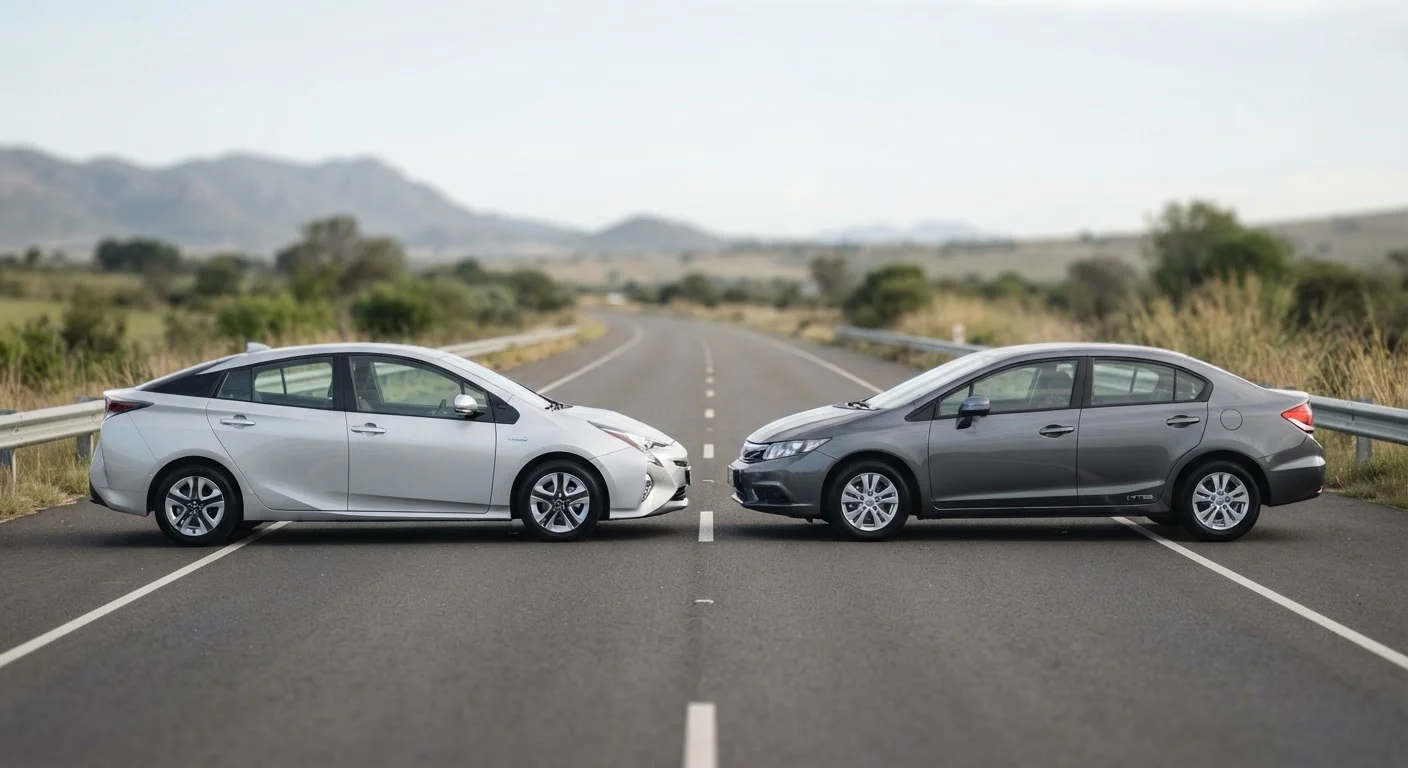

How the Body Styles Actually Differ
The sedan is defined by its three-box construction: a distinct engine compartment, passenger cabin, and enclosed trunk. That trunk is a sealed structural unit - it does not connect openly to the rear seat area. The hatchback, by contrast, uses a two-box layout where the cargo floor and rear passenger space share one continuous volume, accessed through a top-hinged liftgate rather than a traditional decklid.
This isn't just a styling preference. It's a fundamental engineering difference with downstream effects on cargo access, acoustic performance, structural rigidity, and aerodynamics. To understand which body style suits your situation, it helps to trace each trade-off back to that single architectural distinction.
For a thorough grounding in the spec language used to describe both body styles, the complete sedan glossary covers 40 core terms worth knowing before you step into a showroom.
| Criterion | Sedan | Hatchback |
|---|---|---|
| Cargo access | Decklid trunk, fixed lip | Top-hinged liftgate, open to cabin |
| Cargo flexibility | Limited by trunk structure | Expandable via fold-flat rear seats |
| Cabin noise isolation | Better - trunk acts as buffer | Less - cargo and cabin share airspace |
| Aerodynamic profile | Predictable rear separation | Varies by hatch angle; fastbacks can be competitive |
| Torsional rigidity | Aided by enclosed trunk structure | Requires additional bracing on some platforms |
| Urban maneuverability | Rear visibility more limited | Large rear glass improves visibility |
| US resale positioning | Historically broader buyer appeal | Varies more by brand and segment |
| Typical overall length | Often longer due to trunk overhang | Shorter footprint for similar interior volume |
Cargo, Cabin, and Practicality
On paper, sedans and hatchbacks of similar length can show comparable trunk volume figures - typically measured in cubic feet with seats up. But those numbers obscure a critical usability gap. Because a hatchback's cargo area opens directly into the cabin, folding the rear seats creates an unobstructed, flat-ish load floor that can accommodate bicycles, flat-pack furniture, or surfboards. A sedan's trunk lip and the structural parcel shelf above it impose a hard limit on what fits.
Hatchback liftgates also open wide and high, eliminating the awkward reach-and-lift maneuver required to load heavy items over a sedan's decklid. The trade-off: that open connection between cargo and cabin means noise, odors, and temperature from the rear load area travel forward unimpeded.
~10-15 cu ft
Typical sedan trunk volume (seats up)
Most compact and mid-size sedans fall in this range; hatchbacks often match or exceed this figure with seats folded.
2-4 inches
Typical trunk lip load height advantage
Hatchback liftgates generally open 2-4 inches lower to the load floor than a comparable sedan decklid, easing heavy item loading.
0.26-0.32 Cd
Typical drag coefficient range for both body styles
Modern fastback hatchbacks can achieve drag coefficients within this range, comparable to many well-optimized sedans.
Sedan trunks, while volume-constrained, offer genuine advantages for road trips. Luggage stays cooler, quieter, and physically separated - a meaningful distinction if you're packing perishables or sensitive equipment. Some sedans offer a pass-through ski hatch, a partial workaround that doesn't close the practicality gap but narrows it for specific loads.
If your driving patterns include regular cargo-heavy runs, matching your vehicle to your actual driving patterns provides a structured method for weighing these factors against your real routine.
Aerodynamics, Dynamics, and the Ride Experience
The aerodynamic picture for hatchbacks is more nuanced than the blunt-rear stereotype suggests. A well-designed fastback hatchback - with a shallow, raked rear glass angle - can achieve a drag coefficient (Cd) competitive with, or even lower than, many sedans. A more upright hatch angle, however, increases drag and can generate lift at the rear axle, which affects high-speed stability.
Sedans generally present a cleaner aerodynamic separation point at the trunk's trailing edge, which tends to produce predictable, low-lift behavior at highway speeds. This is one reason why most performance-oriented platforms in the US market historically defaulted to the sedan body - though modern hatchback development has largely closed that gap.
Body rigidity is another dimension worth considering. A sedan's enclosed trunk contributes to overall torsional stiffness, which is how well the car resists twisting forces through corners. Hatchbacks - particularly those with large rear glass areas and wide liftgate openings - can show marginally lower torsional rigidity unless the manufacturer compensates with additional chassis bracing. In practice, modern platforms are engineered to minimize this difference, but it's worth noting when evaluating sportier trims.
For those moving toward a specific model decision, the mid-size sedan comparison breaks down how these dynamics play out across real powertrain and dimension data.
Which Body Style Fits Your Situation
Body style is not a proxy for quality - it's a proxy for use case. A sedan is not more refined simply because it has a trunk, and a hatchback is not more practical in every scenario. The right framework is to start with how you actually use a car day-to-day.
Highway-heavy commuters, buyers in markets where trunk security matters (rental cars, airport parking), and those prioritizing acoustic comfort will find the sedan's architecture genuinely better suited. Urban drivers, anyone who regularly moves gear larger than luggage, and buyers who want one vehicle to handle multiple roles without stepping into SUV territory will find the hatchback's integrated layout more functional.
Price positioning is also worth factoring in. In the US market, sedans and hatchbacks sharing the same platform often carry different MSRP levels, and resale data has historically favored sedans in broader geographic markets - though this varies by brand and model cycle. Neither claim should be taken as a guarantee; consult current market listings and depreciation data for the specific vehicles you're evaluating.
If you're approaching this decision from scratch, this structured starting point for sedan shopping covers how to build a consideration framework before visiting a dealership. And once you're ready to evaluate specific specs, reading a sedan spec sheet without getting lost identifies which figures actually differentiate vehicles and which are marketing filler.
This article provides general vehicle information for educational purposes. Pricing, resale values, and performance characteristics vary by specific model, trim, and market conditions. Consult current listings and qualified advisers before making a purchase decision.