
Why Subtle Credit Habits Carry Outsized Weight
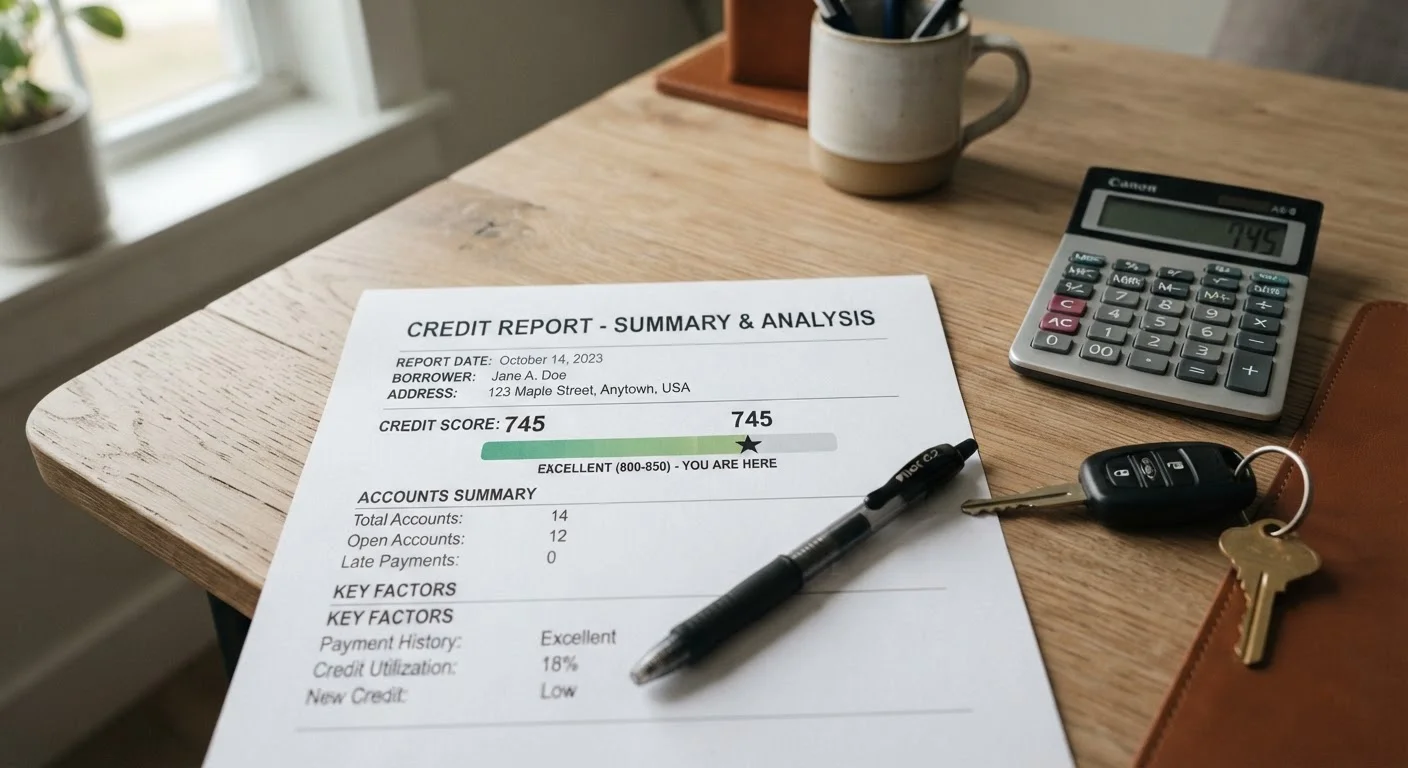
Most auto loan applicants focus on their credit score as a single number to clear. What many underestimate is that lenders examine an entire credit narrative-payment history, account mix, utilization patterns, inquiry volume, and account age-each contributing to the risk picture a lender assembles. A score in the mid-600s accompanied by clean, consistent behavior may outperform a higher score riddled with recent volatility.
Understanding exactly how lenders read your credit report is the first step toward removing avoidable obstacles. The mistakes below are particularly damaging because they often go unnoticed until an application is declined-or a rate comes back higher than expected.
Carrying high revolving credit utilization across credit cards and lines of credit before applying.
Why it happens: Applicants assume that because utilization affects general credit scores, only carrying high balances long-term matters. In practice, lenders pull reports at a specific moment, and a snapshot of high utilization-even temporarily-reads as elevated financial stress.
Opening new credit accounts in the months immediately preceding an auto loan application.
Why it happens: Consumers often open a retail card for a purchase discount or consolidate debt with a new personal loan without considering the timing impact on an upcoming vehicle application.
Ignoring thin or inactive accounts that reduce credit mix and average account age.
Why it happens: Closing old cards after paying them off feels responsible, but it can shorten credit history and reduce the mix of account types-both factors scoring models weigh.
Assuming a single missed or late payment from years ago is irrelevant to current underwriting.
Why it happens: Borrowers often believe that time heals all credit wounds automatically. While older negative items carry less weight, auto lenders-particularly those using risk-tiered pricing-may still flag patterns of delinquency even when they are several years old.
Misunderstanding your own credit score by relying solely on a single free score source.
Why it happens: Free scores from banking apps or credit monitoring services often use a different scoring model than the one auto lenders use. FICO's Auto Score variants, for example, weight auto loan payment history differently than a general FICO 8 score.
Credit Report Errors and Pre-Application Blind Spots
Beyond behavioral habits, structural problems can quietly undermine an otherwise solid application. One of the most overlooked is unresolved errors on the credit report itself. The Consumer Financial Protection Bureau has documented that a meaningful share of consumers find inaccuracies on at least one of their three major credit reports. An erroneous collection account or a balance reported higher than actual can drop a score by dozens of points-enough to shift rate tiers.
Don't Wait Until Application Day to Check Your Report
Disputing an error after submitting an application rarely helps-lenders use the report pulled at the time of application. Corrections can take 30 to 45 days to appear across all bureaus, and some items require follow-up with the original creditor as well. Build in at least 60 days of lead time to identify and resolve any inaccuracies before your planned application date.
Before submitting any auto loan application, pull reports from all three major bureaus (Equifax, Experian, and TransUnion) and dispute discrepancies in writing. The Fair Credit Reporting Act requires bureaus to investigate disputes within 30 days. Allow sufficient lead time; corrections take time to propagate.
Another blind spot is failing to understand inquiry mechanics. Spreading applications across lenders in an unstructured way over several weeks can appear as multiple independent inquiries rather than a single rate-shopping event. The difference between hard and soft inquiries and how rate-shopping windows work is explained in more detail in a dedicated guide. For practical strategies, see rate shopping without damaging your credit score.
1 in 5
Consumers with a credit report error
The Federal Trade Commission has found that approximately one in five consumers has an error on at least one credit report that could affect their score.
45 days
Rate-shopping window for auto loans
FICO's newer scoring models treat multiple auto loan inquiries within a 45-day window as a single inquiry, minimizing score impact from comparison shopping.
If your application has already been declined, don't guess at the cause. A loan decline letter reveals the specific reason codes lenders used-reading it carefully points directly to what needs to be corrected. For a structured preparation process, the credit readiness checklist for car buyers can help you assess your standing before reapplying.
This article is for general informational purposes only and does not constitute personalized financial, legal, or credit advice. Consult a qualified financial professional for guidance specific to your situation.