
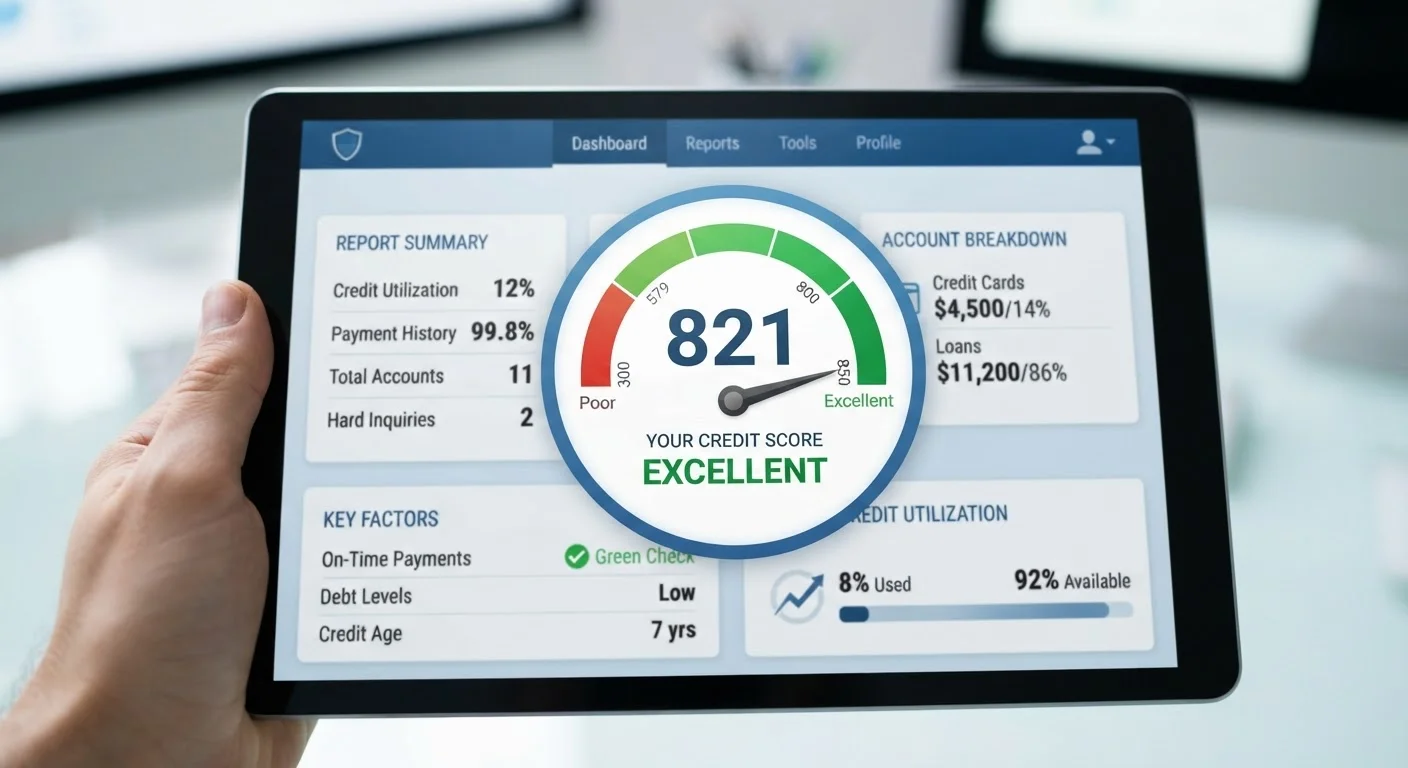
Payment History: The Factor With the Most Influence
Your record of paying debts on time accounts for approximately 35% of your FICO® score - making it the single most consequential factor. Lenders interpret this history as the clearest signal of how reliably you will manage future obligations. Even one 30-day late payment can produce a meaningful score drop, and the more recent the delinquency, the heavier its impact.
For vehicle financing in particular, lenders want to see a clean payment record across all account types - credit cards, existing loans, student debt, and utilities that appear on your report. If your history includes past delinquencies, consistent on-time payments over subsequent months and years will gradually reduce their weight. See how auto lenders read your credit report for a closer look at how this history is interpreted during the approval process.
Set Up Autopay Before You Apply
Because payment history carries the most scoring weight, protecting it is the highest-priority action before pursuing auto financing. Setting up automatic minimum payments on every open account eliminates the risk of accidentally missing a due date during the busy period of vehicle shopping. Even one 30-day late payment can take months of positive behavior to offset.
Amounts Owed: Why Utilisation Is a Lever You Can Control
The second-largest factor - roughly 30% of your score - is sometimes called credit utilisation: the ratio of your current revolving balances to your total credit limits. A borrower carrying $4,000 in balances against $10,000 in available credit has a 40% utilisation rate, which most scoring models consider elevated. Keeping utilisation below 30% is a widely cited guideline, though lower is generally better.
This factor is one of the most responsive in your credit profile. Paying down revolving balances before submitting a loan application can produce a meaningful score improvement within one to two billing cycles - faster than almost any other strategy. Note that installment loan balances (like an existing auto or mortgage loan) are considered separately and have a smaller impact on utilisation than revolving credit card balances.
35%
Weight of payment history in FICO® score
According to FICO®, payment history is the largest single contributor to a standard credit score calculation.
30%
Recommended maximum credit utilisation rate
Consumer credit guidance widely published by financial educators identifies 30% utilisation as a general threshold for maintaining a healthy score.
~5 pts
Typical score impact of a single hard inquiry
FICO® data indicates that a new hard credit inquiry typically reduces a score by fewer than five points for most consumers.
Length of History, Credit Mix, and New Inquiries
Length of credit history (15% of your score) measures the age of your oldest account, your newest account, and the average age across all accounts. Closing an old credit card can unintentionally shorten your average account age and nudge your score downward, so think carefully before closing long-standing accounts before a vehicle purchase.
Credit mix (10%) rewards having experience with different types of credit - revolving accounts like credit cards alongside installment loans like auto or student debt. If you have only ever used one type, taking on the other responsibly over time can modestly improve your score. This factor matters far less than payment history or utilisation, so it should not motivate taking on unnecessary debt.
New credit inquiries (10%) are generated whenever a lender conducts a hard pull of your report. Each inquiry can reduce your score by a few points for a short period. When rate-shopping for a car loan, submitting applications within a condensed timeframe allows most scoring models to group those inquiries and count them as one. Understanding these dynamics is foundational before working through a credit readiness checklist ahead of your application.
Soft Inquiries Don't Affect Your Score
Checking your own credit report or score, receiving pre-qualification offers, or having an employer run a background check all generate soft inquiries, which have no effect on your score. Only hard inquiries - initiated when you formally apply for credit - carry scoring impact. Reviewing your own report regularly is a recommended practice, not a risk.
How These Factors Shape Your Auto Financing Outcomes
Lenders don't evaluate your score in isolation - they look at the underlying data driving it. A score of 700 built on thin credit history with a single card looks different to an underwriter than a 700 built on a decade of diverse, well-managed accounts. Both the score and the story behind it influence the loan terms you're offered. This connection between your credit profile and financing outcomes is explored in more depth in the rates and terms section, where APR ranges by credit tier are discussed.
Before you apply, building credit before applying for vehicle finance outlines actionable steps across all five factor categories. Whether you're targeting a lower APR on a new car loan or positioning yourself to lease, improving even one or two of these factors in advance can translate directly into better terms. If your situation involves deciding between financing structures, factors that determine whether a loan or lease fits your situation connects your credit profile to that broader decision.
This article is for general informational and educational purposes only and does not constitute personalised financial, credit, or legal advice. Consult a qualified financial professional for guidance specific to your circumstances.