
The Financial Logic Behind Leasing
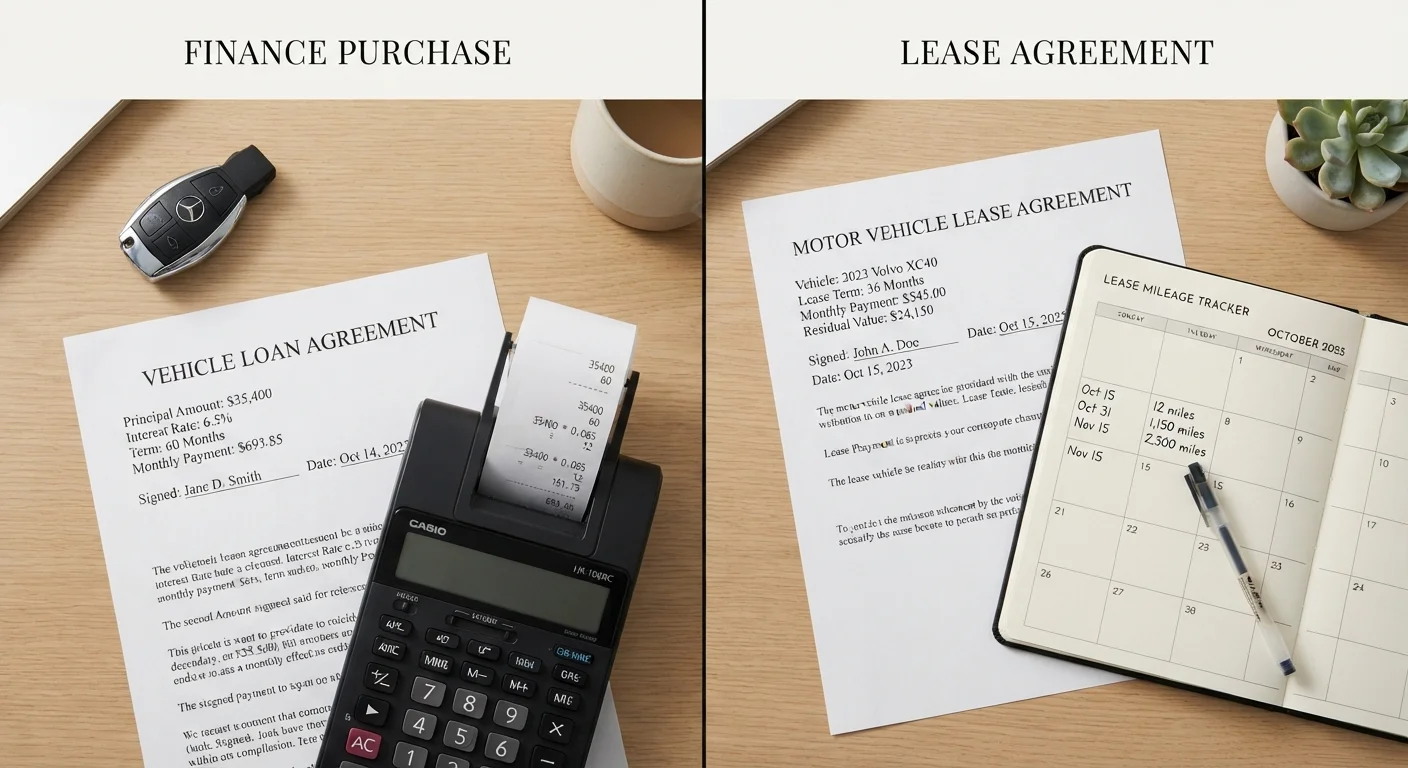
At its core, a lease payment funds only the depreciation that occurs during the lease term - plus a financing charge called the money factor (essentially the lease equivalent of an interest rate) and applicable taxes and fees. Because you are not financing the entire purchase price of the vehicle, monthly payments on a lease are structurally lower than loan payments on the same vehicle, often by a meaningful margin.
This distinction matters most when capital efficiency is a priority. A driver who can redirect the monthly payment difference into other financial goals - emergency savings, retirement contributions, or reducing higher-interest debt - may come out ahead even if the lease itself builds no equity. See how these costs stack up side by side to understand where each structure leads over a full vehicle cycle.
20-30%
Typical monthly payment difference vs. a loan
Industry analysts generally estimate lease payments run 20-30% lower than equivalent loan payments on the same vehicle, reflecting the depreciation-only payment structure.
39 months
Common maximum consumer lease term
Most manufacturer-sponsored lease programs cap terms at 36-39 months to keep the vehicle within the factory warranty window and maintain residual value predictability.
Advantages of Leasing in the Right Circumstances
Leasing is not universally better, but under specific conditions it holds clear financial advantages worth understanding.
Lower monthly payments for equivalent vehicle
Because lease payments cover only the depreciation portion of the vehicle's value during the term, they typically run 20-30% lower than loan payments on the same model and trim, improving near-term cash flow.
Depreciation risk transfers to the lessor
In a closed-end lease - the standard consumer structure - the residual value is set at signing. If the vehicle depreciates faster than projected, that loss belongs to the leasing company, not you.
Predictable, warranty-covered maintenance window
Most consumer leases run 24 to 39 months, aligning with the manufacturer's bumper-to-bumper warranty. Major repair costs are largely avoided, making budgeting more predictable.
Consistent access to newer safety and technology features
Cycling vehicles every two to three years means drivers regularly access updated driver-assistance systems, infotainment, and fuel-efficiency improvements without managing a trade-in or sale.
Potential business-use tax advantages
When a vehicle is used for qualifying business purposes, a portion of lease payments may be deductible as a business expense under IRS rules - an advantage worth reviewing with a tax professional.
For a deeper look at how lease agreements are structured and what contract language to scrutinize, review the full leasing overview before committing to any terms.
Where Leasing Falls Short
The financial case for leasing weakens - or reverses - when certain conditions aren't met. Understanding these limits helps you avoid a situation where the structural advantages of a lease are overwhelmed by its constraints.
No equity or ownership interest accumulates
Every payment reduces what you owe for use of the vehicle, not ownership of it. At lease end, you walk away with nothing to trade in or sell unless you exercise a purchase option at the residual price.
Mileage caps create real financial exposure
Most consumer leases allow 10,000 to 15,000 miles annually. Excess mileage penalties - commonly $0.15 to $0.30 per mile - can produce hundreds or thousands of dollars in charges at lease end.
Early termination is costly and complex
Exiting a lease before the term ends typically involves early termination fees that can equal or exceed the remaining payment obligation, making leases inflexible if your circumstances change.
Wear-and-tear standards create ambiguity
Lessors define acceptable wear differently, and damage judged excessive at vehicle return - even minor dents, interior stains, or tire wear - triggers charges that erode the payment savings.
Continuous payment cycle with no endpoint
Drivers who perpetually lease never reach the point a loan borrower does - owning a vehicle outright and eliminating the monthly payment. Over a long horizon, this can represent a significant cumulative cost difference.
Lease-end surprises are a significant source of unexpected expense. Excess mileage charges, wear-and-tear fees, and disposition costs are all worth understanding before you sign. Similarly, eight key factors - from your credit profile to annual mileage - shape which path fits.
Closed-End vs. Open-End Leases
The vast majority of consumer vehicle leases are closed-end, meaning the residual value is fixed at signing and you bear no risk if the vehicle's market value falls below that figure. Open-end leases - more common in commercial fleet contexts - work differently and can expose the lessee to residual value risk. Understanding which structure applies to your agreement is an important step before signing.
Making a Confident Financing Decision
Neither a loan nor a lease is the default superior choice - the right answer depends on measurable inputs: your typical annual mileage, how long you hold vehicles, your cash flow priorities, and whether the vehicle serves a business purpose. Reviewing how interest rates and loan terms affect total cost alongside lease money factors gives you the most complete picture of what each path actually costs.
If you are still working through those inputs, a structured checklist of questions about your budget and usage is a practical next step before you commit. And once you understand the mechanics, proven approaches to negotiating terms and reading agreements apply regardless of which path you choose.
This article is for general informational and educational purposes only and does not constitute personalized financial, tax, or legal advice. Consult a qualified financial adviser or tax professional for guidance specific to your circumstances.