
The LTV Formula and What It Tells Lenders
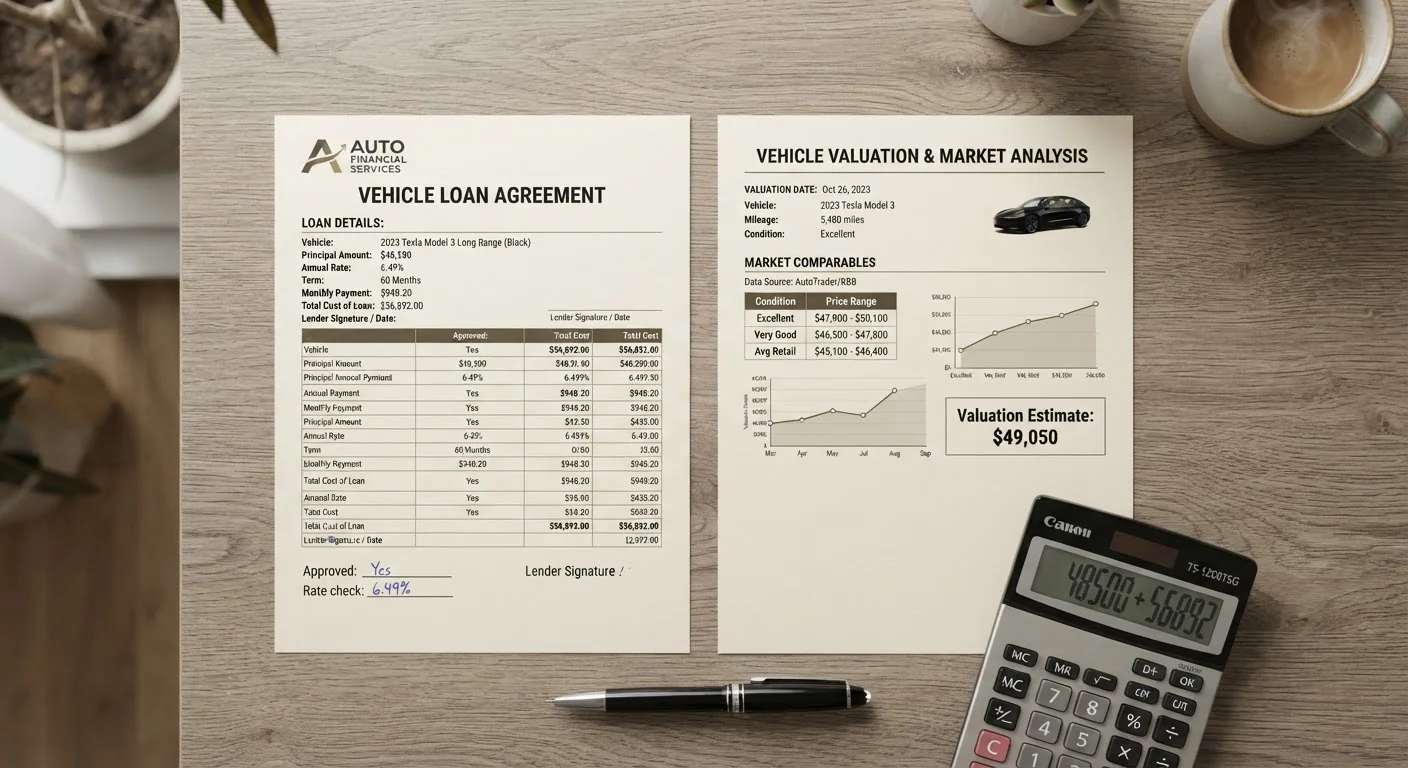
Loan-to-value ratio is a straightforward calculation with significant consequences. Divide the amount you're borrowing by the vehicle's appraised market value, then multiply by 100 to get a percentage. For example, financing $24,000 on a vehicle valued at $30,000 produces an LTV of 80%. Finance that same $24,000 on a vehicle valued at $22,000 and the LTV jumps to roughly 109%.
That number tells a lender how much cushion - or equity - sits between the loan balance and the asset backing it. When a borrower defaults, the lender repossesses and sells the vehicle. An LTV above 100% means the lender cannot fully recover the outstanding balance from the sale alone, making the loan inherently riskier. This risk calculus is why LTV influences both approval decisions and the interest rate attached to an offer.
125%
Common maximum LTV cap among auto lenders
Many mainstream auto lenders set an upper LTV limit around 125% of the vehicle's book value, though thresholds vary by institution and borrower profile.
15-25%
Typical first-year vehicle depreciation
Industry data consistently shows new vehicles lose roughly 15% to 25% of their value in the first year, which directly erodes equity for high-LTV borrowers early in the loan term.
80%
LTV threshold lenders generally consider low-risk
An LTV at or below 80% is broadly viewed within the lending industry as a favorable equity position that reduces default exposure for the lender.
How LTV Affects Your Rate and Approval Odds
Lenders don't evaluate LTV in isolation - they layer it over your credit profile to build a risk picture. A borrower with a strong credit score but a high LTV may still face a rate premium. Conversely, a modest credit profile paired with a low LTV can partially offset perceived risk. Understanding this interplay matters when you're structuring a deal. For a deeper look at how credit tiers shape rate ranges, see how credit score tiers translate into rate ranges.
Most lenders publish internal LTV caps - maximum percentages they'll finance for a given loan tier. Common thresholds sit around 100% to 125% of the vehicle's value, with rates stepping up as LTV climbs. Some lenders impose hard caps that no credit profile can overcome. If your financing includes rolled-in fees, a service contract, or negative equity from a trade-in, your effective LTV can exceed the purchase price LTV by a meaningful margin.
Check Book Value Before You Finance
Before finalizing any loan, look up the vehicle's market value using an independent source such as NADA Guides or Kelley Blue Book. If the loan amount exceeds that figure, you're entering the loan underwater. Even a modest down payment - enough to bring LTV to or below 100% - meaningfully reduces your risk exposure over the loan term.
Going Underwater: What High LTV Means Over Time
Starting a loan with an LTV above 100% puts you in an immediately vulnerable position. Vehicle depreciation - which is steepest in the first one to two years of ownership - widens the gap between what you owe and what the vehicle is worth. If you need to sell, refinance, or total the vehicle early in the loan term, that gap becomes a direct financial liability.
Gap insurance (Guaranteed Asset Protection) exists specifically to cover the difference between an insurance payout and the remaining loan balance after a total loss. While gap coverage can limit the damage, it doesn't eliminate the underlying risk created by a high starting LTV. The more prudent approach is reducing LTV before the loan begins - through a down payment, by selecting a vehicle priced at or below market value, or by managing your overall debt load to qualify for better loan structures.
Gap Insurance Does Not Fix a High LTV
Gap coverage is designed to bridge the difference between an insurance payout and your remaining loan balance after a total loss - it is not a strategy for managing a structurally high LTV. Relying on gap insurance as a safety net for an overleveraged loan still leaves you exposed to the higher interest rates and slower equity build associated with high LTV financing. Reducing LTV upfront is a more durable approach.
Using LTV to Evaluate a Deal Structure
Before signing any financing agreement, calculate the LTV yourself using an independent vehicle valuation - don't rely solely on the figures the dealership presents. If the loan amount exceeds the vehicle's independently verified market value, understand exactly why: are taxes and fees being financed? Is negative equity from a trade rolling in? Each of those adds to your LTV and your long-term exposure.
A well-structured deal keeps LTV at or below the vehicle's market value, minimizes financed add-ons, and aligns the loan term with expected ownership duration. Longer terms lower monthly payments but slow equity build-up, keeping LTV elevated for a greater portion of the loan life. When reviewing the full loan offer, cross-check LTV against all stated terms - reading a loan offer carefully before you sign is the clearest way to confirm the numbers match your negotiated deal.
This article is for general informational and educational purposes only and does not constitute personalized financial advice. Consult a qualified financial professional before making decisions about your specific loan or vehicle purchase situation.