Hammer Price vs. What the Buyer Actually Paid
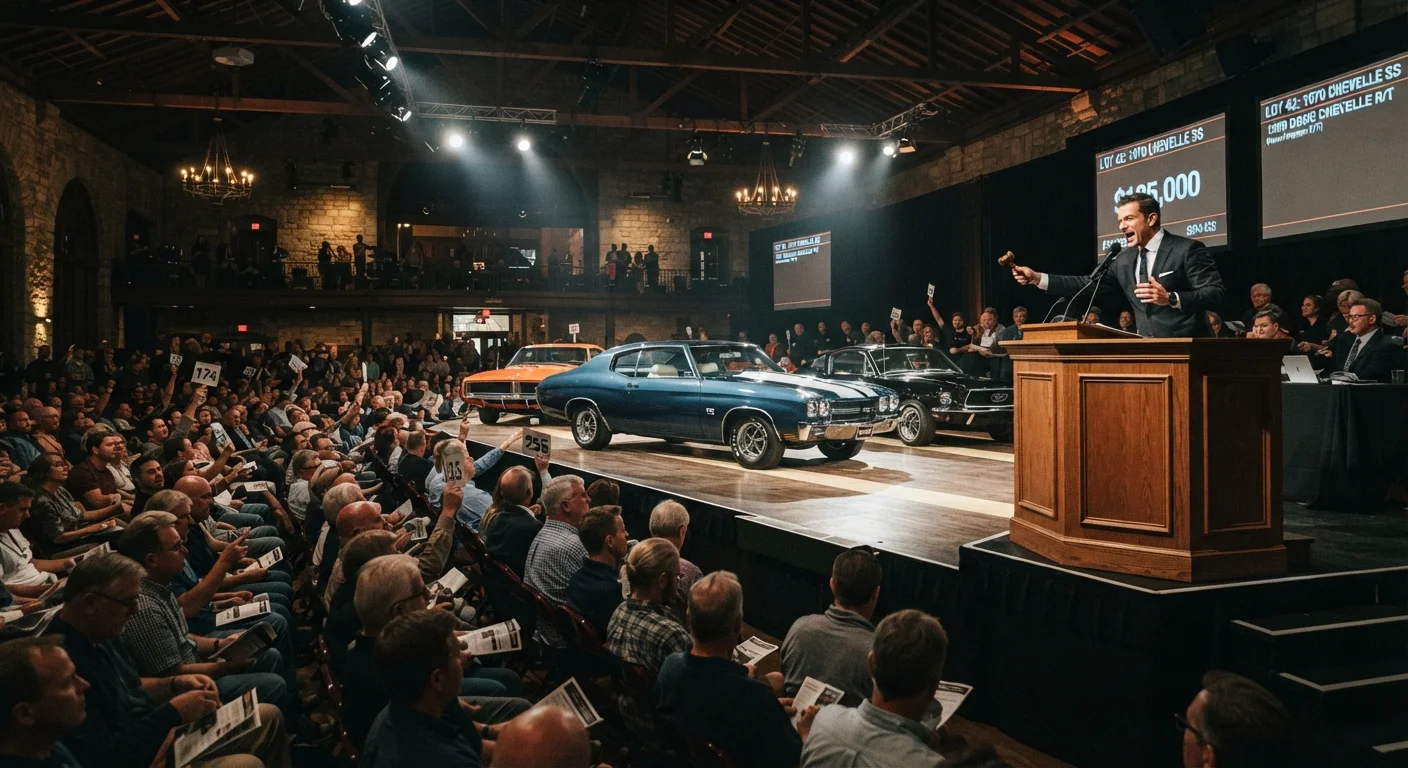
When auction results flash across automotive enthusiast forums, the figure everyone quotes is the hammer price - the number called at the moment the gavel falls. That number, however, is not what the winning bidder actually paid. Nearly every major collector car auction house charges a buyer's premium, a percentage added to the hammer price that typically ranges from 10% to 15% at the lower end, and can climb higher on six-figure vehicles depending on the house's fee structure.
For valuation purposes, the all-in transaction price - hammer plus premium, plus applicable taxes and transport - is the figure that represents true market value. If you're using reported results to benchmark a private-party purchase or insurance appraisal, always seek out the total cost data, not just the headline number. Reputable auction database services do publish all-in figures, but you may need to calculate it yourself from published fee schedules when only the hammer price is listed.
Understanding this distinction is foundational. As market value explained for car buyers makes clear, no single number defines what a vehicle is worth - context is everything.
Reading Reserve Dynamics and 'No Sale' Results
A result listed as no sale, passed, or bid to is not a failed data point - it is actionable intelligence. When a car fails to meet its reserve (the confidential minimum the seller will accept), the highest bid recorded tells you where informed, competitive buyer interest stopped. If a 1969 Camaro Z/28 draws bids to $85,000 but the reserve sits at $105,000, the market has just told you something important: motivated buyers with real money on the table assigned a ceiling well below the seller's expectation.
Conversely, when a vehicle sells above its pre-sale estimate, that signals either exceptional provenance, a heated bidding environment, or scarcity in the current market cycle. Neither extreme should be treated as a reliable floor or ceiling for all comparable examples - one anomalous result can reflect two determined bidders rather than broad market consensus.
Always calculate the all-in transaction price before using a result as a comparable.
Buyer's premiums materially inflate the real cost of acquisition beyond the hammer price. Using hammer price alone as a benchmark understates what the market actually paid, leading to mispriced offers or appraisals.
Record and analyze no-sale results alongside sold results for any marque you're tracking.
No-sale bids establish where competitive buyer interest peaks without seller acceptance, creating a realistic ceiling benchmark independent of reserve expectations. Over time, patterns of consistent no-sales around a price band reveal structural market resistance.
Filter auction comparables by condition grade, not just year, make, and model.
Condition grade is one of the largest price drivers in the collector car market. Blending Concours results with driver-quality results produces a misleading average that accurately represents neither segment.
Cross-reference auction data with private-sale records from marque clubs and registries.
Auction venues represent a subset of the overall market. Private sales - particularly within enthusiast communities - can reflect different pricing dynamics and provide a fuller picture of true market liquidity.
Weight recent results more heavily, but do not ignore multi-year trend data.
Collector car values respond to economic cycles, generational taste shifts, and media attention. A result from five years ago may be directionally useful but not numerically applicable to today's market.
Cross-reference no-sale data against subsequent private sales when that information is available through registries or marque clubs. Patterns across multiple auction cycles reveal whether a reserve is systematically out of step with the market or whether one cycle was simply an outlier.
Condition, Provenance, and the Compounding Value Factors
Auction results only translate meaningfully when you account for the specific characteristics of the car that sold. Two ostensibly identical 1957 Chevrolet Bel Airs can command prices that differ by tens of thousands of dollars based on condition grade, originality of drivetrain components, quality of documentation, and show history. The variables behind top-tier classic car valuations illustrate how these factors compound rather than add linearly.
When analyzing a result, ask:
- Was this a matching-numbers car? Correct VIN-stamped engine and transmission codes can add material value over a numbers-correct but replaced drivetrain.
- What condition grade was assigned? Major auction houses publish pre-sale condition reports. A Concours-restored example and a driver-quality survivor are not comparable data points for the same valuation exercise.
- Was provenance documented? Factory build sheets, dealer invoices, and documented ownership history compress buyer uncertainty and support higher bids.
10-15%+
Typical buyer's premium at major collector auctions
Buyer's premiums at established collector car auction houses commonly range from 10% to 15% of the hammer price, with tiered structures that can vary by lot value.
~30-40%
Share of auction lots that may not meet reserve
Industry observers have noted that at specialty collector auctions, a meaningful share of consigned vehicles - sometimes approaching one-third or more depending on the event - are passed or listed as no sale when reserves are not met.
For a broader introduction to how these variables interact, classic vehicle valuation for beginners provides a solid framework before diving into raw auction data.
Building a Reliable Valuation Picture From Auction Data
A single auction result - even from a prestigious house - is a data point, not a valuation. Reliable benchmarking requires aggregating results across multiple sales, ideally spanning at least two to three auction seasons, to smooth out anomalies driven by bidder competition, economic conditions, or the specific presentation of a car on a given day.
Reputable collector car auction databases allow filtering by year, make, model, and sometimes condition tier. Use these tools to establish a result range rather than a single target number, then weight recent results more heavily given that collector tastes and economic conditions shift. The common classic car value myths article is worth reading alongside this exercise - certain assumptions about appreciation or segment demand can skew how you interpret results.
Finally, remember that auction results reflect a specific transaction context: motivated sellers, a competitive room, and the theater of live bidding. Private sales between knowledgeable parties often transact at a discount to auction comps. If you're evaluating a private-party listing, that gap is a legitimate negotiating reference - not evidence that the seller is wrong. For a broader perspective on treating classics as financial instruments, see separating passion from financial expectation in classic car collecting.