What Each Approach Actually Covers
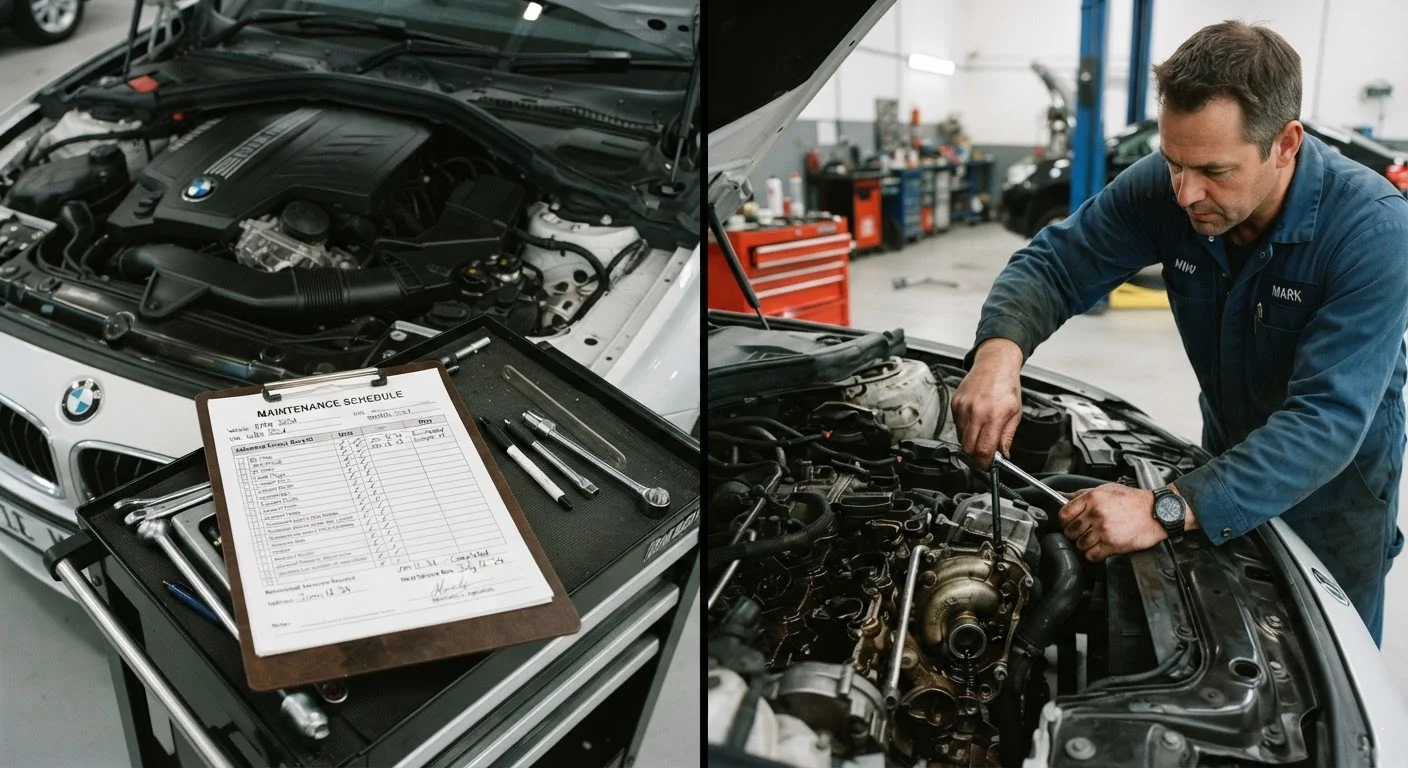
A scheduled service plan is a prepaid or subscription-style agreement - typically offered by dealerships or manufacturers - that covers a defined set of maintenance items (oil changes, filter replacements, brake fluid, spark plugs, etc.) at manufacturer-recommended intervals over a set period or mileage. The fee is fixed in advance, giving you a known cost.
Pay-as-you-go maintenance means authorising and paying for each service or repair individually as it arises, using either a franchised dealer, an independent workshop, or a mix of both. There's no upfront commitment; you shop for labour and parts on each occasion.
The distinction matters because the two models carry different risk profiles. A fixed plan trades flexibility for predictability; ad-hoc servicing does the reverse. Neither is inherently superior - the right choice depends on your vehicle's age, your annual mileage, your cashflow tolerance, and whether a manufacturer warranty is still in play. See our overview of routine maintenance schedules for a grounding in what standard service intervals typically include.
| Criterion | Scheduled Servicing | Pay-As-You-Go |
|---|---|---|
| Cost predictability | High - fixed fee known upfront | Low - varies per service event |
| Flexibility | Low - set intervals and inclusions | High - choose timing and workshop |
| Warranty compatibility | Typically aligned with manufacturer terms | Risk of voiding warranty if terms not met |
| Best vehicle age | New to mid-age vehicles | Older, out-of-warranty vehicles |
| Risk of overpaying | Higher if mileage is low | Lower for disciplined, informed owners |
| Exposure to large unexpected bills | Lower within plan scope | Higher - no cost buffer built in |
| Requires service record discipline | Plan provider tracks for you | Owner must track independently |
Running the Numbers: Where Each Model Wins
To compare honestly, you need a like-for-like calculation over the same ownership window - typically three to five years. A scheduled plan may quote, for example, a flat annual fee covering three services. But if your driving pattern means you'd only trigger two services per year under a time-or-mileage schedule, you're effectively prepaying for work you won't use.
Conversely, pay-as-you-go exposes you to labour rate variability. A single unexpected repair - a snapped timing chain, a failed water pump - can eclipse a full year's plan cost in one invoice. The question is whether the statistical likelihood of that event, combined with its cost, exceeds what you'd pay in plan premiums over the same period.
~$500-$1,200
Typical annual scheduled plan cost range
Industry estimates from service plan providers suggest annual plan fees commonly fall in this range for mainstream vehicles, though costs vary significantly by make, model, and inclusions.
30-40%
Potential labour cost saving at independent workshops
Consumer research across multiple markets suggests independent workshops frequently charge 30-40% less for equivalent labour compared to franchised dealer rates, though parts quality and warranty coverage may differ.
A practical framework: list every service your vehicle's manual specifies for your expected mileage over the ownership period. Price each one at independent workshop rates in your area. Compare that total to the plan's total cost (including any financing charges if the plan is credit-funded). If the plan costs more than 15-20% above your independent quote total, the premium is likely buying you convenience and risk protection - not a financial saving.
For further context on how deferred servicing compounds costs, our article on why skipping scheduled maintenance costs more than it saves walks through common deferral scenarios.
Factors That Shift the Balance
Warranty obligations. Many manufacturer warranties require that servicing be carried out at authorised dealers at prescribed intervals. During the warranty period, a franchised dealer's scheduled plan may be the only option that preserves your coverage - worth factoring in before opting out.
Vehicle age and complexity. Newer vehicles with complex electronics, direct-injection engines, or advanced driver-assistance systems may require diagnostic equipment that independent workshops don't always carry. Older, mechanically simpler vehicles are far better suited to independent servicing and the pay-as-you-go model.
Mileage profile. High-mileage drivers - those covering significantly more than the national average annually - often find scheduled plans cost-effective because they'll use every included service. Understanding whether mileage or time triggers your intervals first will help you map this accurately.
Record-keeping discipline. Pay-as-you-go only works as a long-term strategy if you track every service, part, and repair. A well-maintained log protects resale value and helps you spot recurring issues early. Our guide to keeping a repair log explains what to capture and how to organise it effectively.
Don't Confuse a Service Plan with a Warranty
A scheduled service plan covers routine maintenance items - oil, filters, fluids, minor wear parts - at defined intervals. It does not cover mechanical failure, accidental damage, or component breakdown the way an extended warranty or mechanical breakdown insurance does. Owners sometimes assume their plan protects them from large repair bills; it generally does not. If protection against unexpected mechanical failures is your goal, investigate mechanical breakdown insurance separately.
Finally, consider how each approach fits into your broader ownership cost picture. Our article on keeping long-term ownership costs under control provides a useful framework for viewing maintenance spending alongside insurance, depreciation, and financing.
This article provides general information for educational purposes only and does not constitute financial or mechanical advice. Costs and warranty conditions vary by vehicle, location, and provider. Consult a qualified mechanic or financial professional for guidance specific to your situation.