Why Most Owners Skip the Log - and What It Costs Them
Ask most vehicle owners when they last replaced their brake fluid and you'll get a shrug. Memory is a poor maintenance tool. Without a written record, intervals slip, duplicate work gets done, and repeat failures go unrecognized as patterns. Over a vehicle's lifetime, those gaps accumulate into real cost - both in unnecessary repairs and in lost resale credibility.
A repair log solves all three problems simultaneously. It functions as a vehicle's medical chart: a chronological account of what was done, when, at what mileage, and for how much. That record becomes increasingly valuable the longer you own the vehicle. It's also the foundation of confident DIY work - knowing what was replaced 18 months ago shapes how you diagnose a related symptom today.
For owners who work on their own vehicles, a log also doubles as a parts reference. Which brand of thermostat did you fit last time? What torque spec did you use on the caliper bracket? That information lives in the log, not in your head. See our routine maintenance hub for additional context on building sustainable upkeep habits.
What to Record in Every Entry
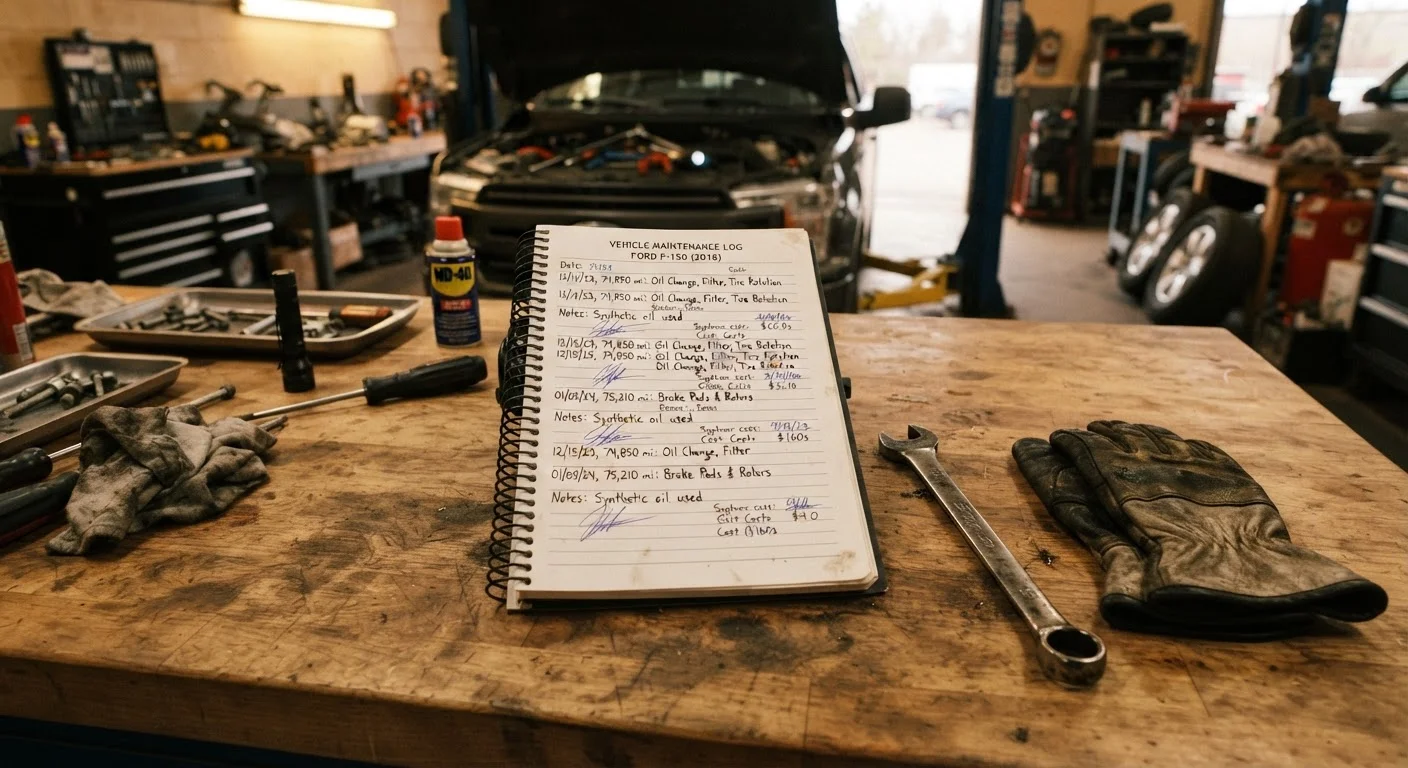
The value of a log is proportional to its detail. A bare-minimum entry should capture: the date, current odometer reading, work performed, parts used (including part numbers where practical), labor source (DIY or shop name), and total cost. Optional but useful additions include the symptom that triggered the work, the root cause diagnosed, and any follow-up items flagged for later.
Record the odometer reading for every entry, not just the date.
Many service intervals are mileage-based rather than time-based. Without odometer data, you can't accurately determine when a fluid, filter, or belt is due for replacement. Mileage tracking also reveals usage patterns - a vehicle that racks up miles quickly needs more frequent attention than one driven sparingly.
Log the root cause, not just the symptom or part replaced.
Replacing a part without documenting why it failed leaves you blind to the underlying cause. If the same component fails again, knowing the previous diagnosis is essential to identifying whether the repair addressed the root issue or only a symptom of something deeper.
Include part numbers and supplier type for every component installed.
Part numbers eliminate ambiguity when reordering or cross-referencing. Knowing whether a part was OEM, OE-equivalent, or aftermarket also matters for warranty purposes and when troubleshooting a repeat failure - some quality-sensitive applications respond poorly to certain aftermarket substitutes.
Note any follow-up items or advisory flags at the end of each entry.
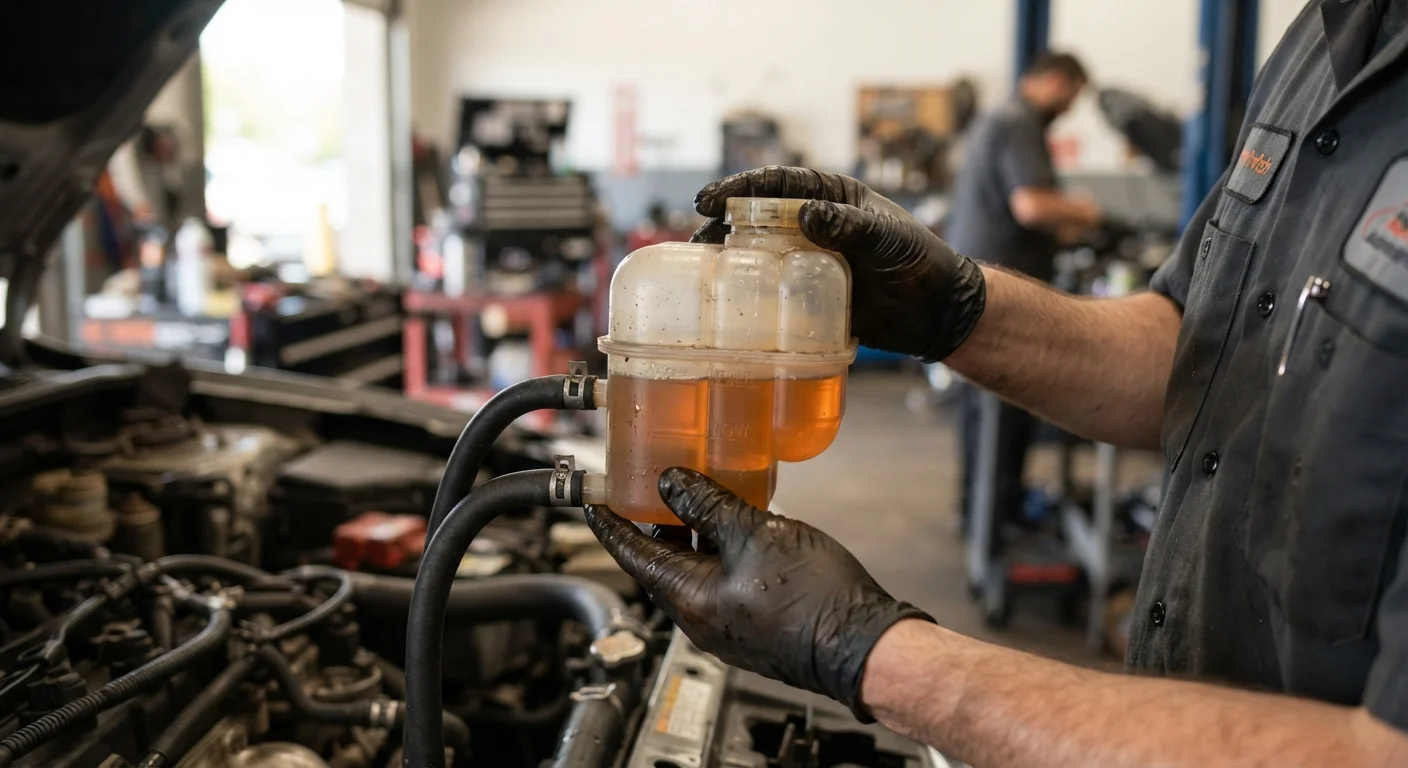
During a repair, you often spot adjacent issues - a slightly worn belt, a seeping gasket, a corroded connector - that don't require immediate action but shouldn't be forgotten. Capturing these at the time prevents them from slipping through until they become urgent failures.
Create a separate section or tag for recurring system issues.
Patterns only become visible when related entries are easy to review together. Grouping entries by system - electrical, cooling, brakes, suspension - lets you quickly see whether a particular system is underperforming relative to the vehicle's age and mileage.
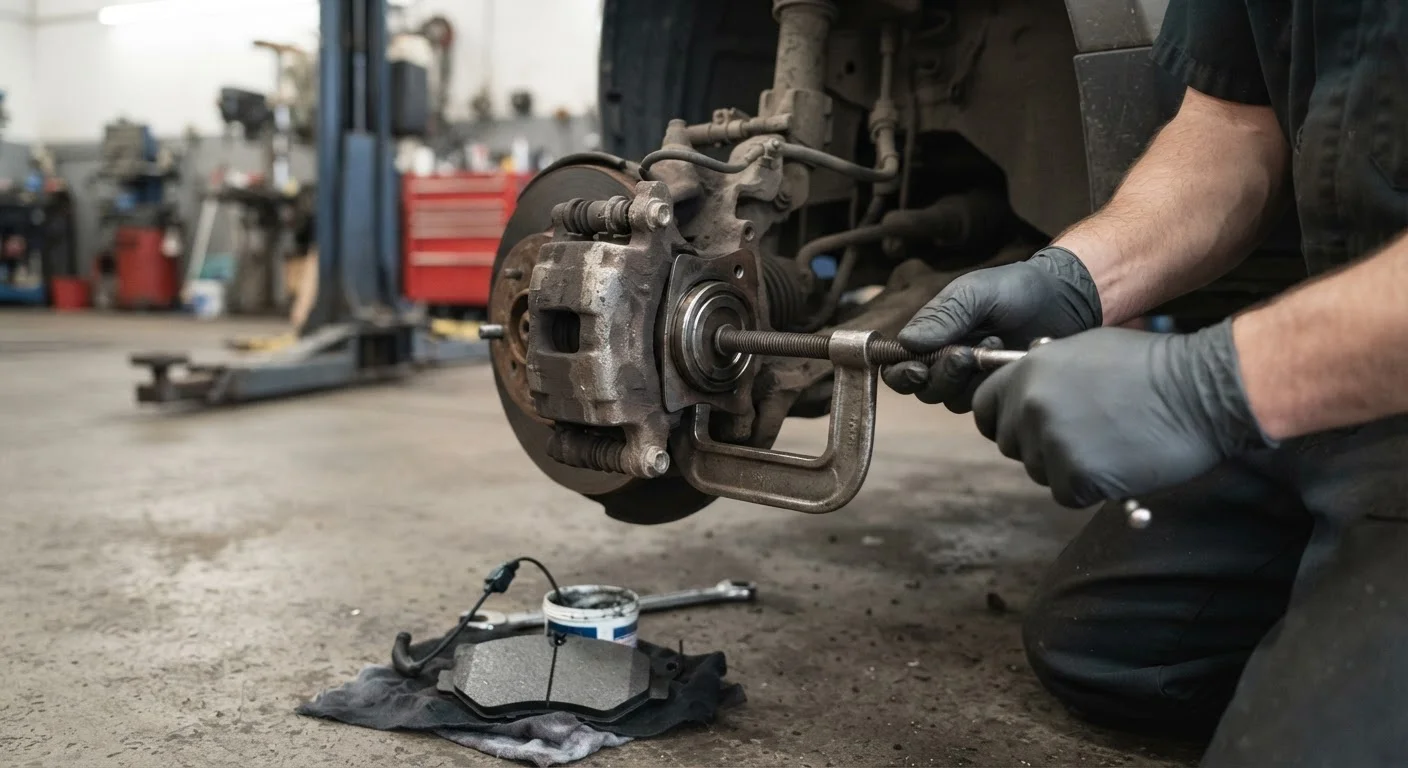
For parts-heavy jobs - engine rebuilds, suspension overhauls, brake system refreshes - photograph components before and after. Link those photos to the log entry by date or a short reference code. This takes two minutes and pays dividends when you're troubleshooting a related issue months later.
If you own a classic or specialty vehicle, provenance documentation overlaps with repair logging. Documenting a classic car's history covers the additional layer of ownership and originality records that collectors value most.
Formats That Actually Get Used
The best log format is the one you'll actually maintain. Options range from a pocket-sized notebook in the glove box to a dedicated app, a spreadsheet, or a cloud document shared with a co-owner. Each has genuine merits.
Start Your Log Today, Even Mid-Ownership
You don't need to own a vehicle from new to benefit from a repair log. Start with what you know: gather any receipts, inspection reports, or shop invoices you have and reconstruct a baseline entry for each. From that point forward, every entry you add increases the log's value. An incomplete history is still far more useful than no history at all.
Paper logs are immediate - no device needed, no login required. They also survive a dead phone battery in the driveway. A simple A5 notebook with one page per service event is sufficient for most owners. Spreadsheets add sortability and calculation: you can sum annual maintenance costs, flag intervals by mileage, and filter by system (engine, brakes, electrical). Apps designed for vehicle maintenance tracking can auto-populate service reminders based on your entries.
Whatever format you choose, keep it in one place and commit to logging an entry within 24 hours of completing any work. Entries written a week later tend to omit details that matter. For a deeper look at how maintenance record-keeping connects to long-term ownership economics, see keeping long-term ownership costs under control.
Using Your Log to Work Smarter
A log that's only read at resale is a wasted tool. Review it periodically - every six months is a reasonable cadence - and look for patterns. If a sensor has been replaced twice in three years, that's a signal worth investigating at the system level rather than reaching for another replacement part. If your oil change intervals have been creeping longer, the log makes that visible.
Your log also informs budgeting. Tallying annual maintenance costs by category shows where money actually goes - versus where you assumed it went. That data is directly useful when weighing scheduled servicing against pay-as-you-go maintenance as a cost strategy.
At resale, a complete log is a credibility document. It shows the buyer - and any pre-purchase inspector - that the vehicle has been cared for methodically. That transparency typically supports negotiating from a stronger position, though it does not guarantee any specific outcome. For related guidance, building a personal maintenance log covers resale-specific considerations in greater depth.