Why Restoration Budgets Rarely Hold
Every seasoned restorer has a version of the same story: a project that seemed straightforward at acquisition turned into a multi-year, five-figure undertaking once the panels came off. The vehicle looked solid from the outside, the price felt right, and the enthusiasm was real. What got underestimated were the costs hiding beneath the surface - literally and financially.
Restoration economics differ from almost every other home-improvement or hobby analogy enthusiasts reach for. Labour is highly specialised, parts supply for low-volume models can be genuinely scarce, and the collector market applies its own logic to what a finished vehicle is actually worth. Understanding these dynamics before committing is the difference between a rewarding project and a financially painful one. For a broader look at the beliefs that shape these miscalculations, see our piece on classic car value myths.
Skipping a pre-purchase inspection by a marque-qualified mechanic or restorer.
Why it happens: Buyers are often emotionally invested by the time they're looking at a specific vehicle, and an independent inspection can feel like an obstacle or an insult to the seller.
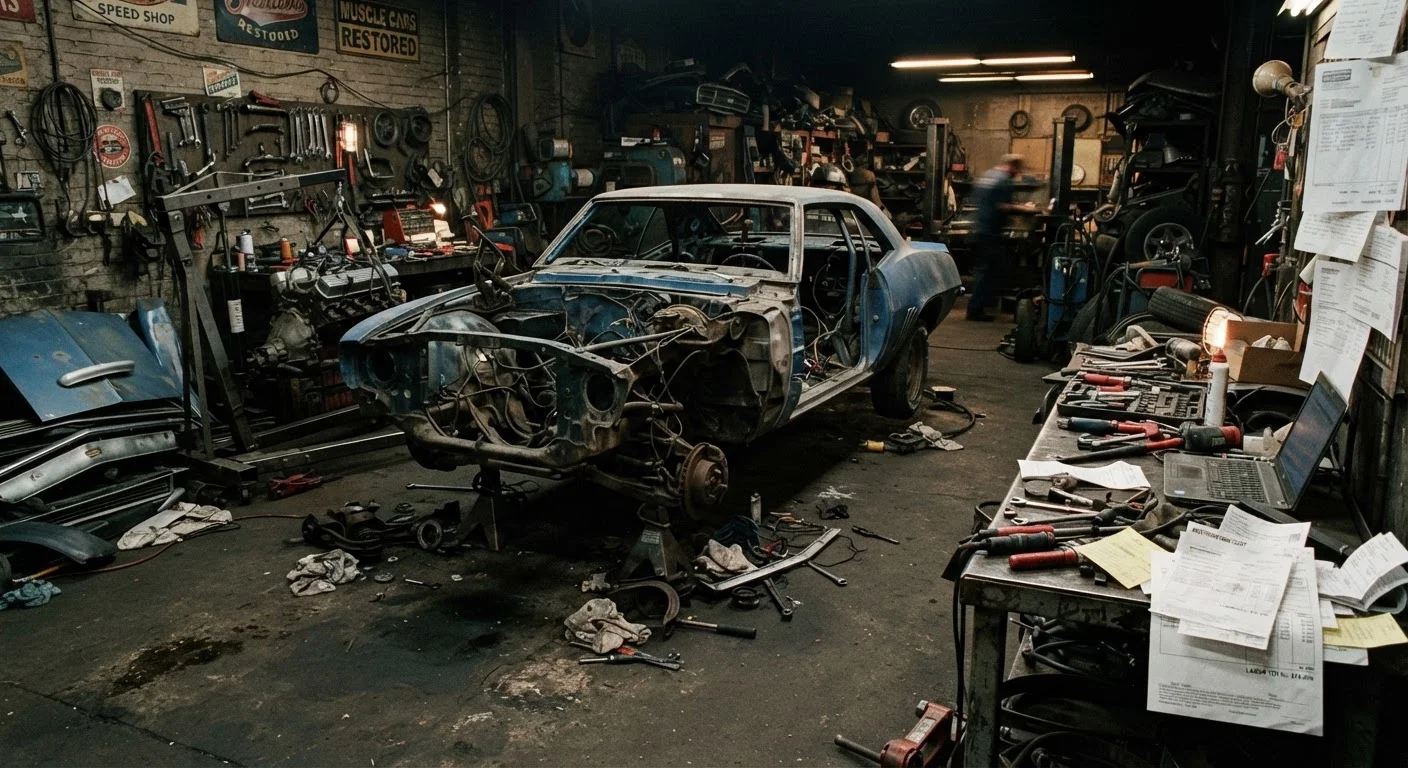
Underestimating the true extent of rust and structural damage before bodywork begins.
Why it happens: Surface rust is visible; structural rust hiding behind rocker panels, floor pans, and frame rails is not. Sellers and buyers alike may genuinely not know the full picture until metal is cut away.
Pricing the project against reproduction parts availability without verifying the correct or original-spec components required.
Why it happens: Reproduction parts have made many restorations more accessible, but collectors' markets - and some judging standards - require factory-correct, date-coded, or numbers-matching components that reproductions cannot substitute.
Budgeting labour at general shop rates rather than specialist marque rates.
Why it happens: Enthusiasts often compare restoration quotes to standard mechanical or body shop hourly rates, which are significantly lower than what a marque-experienced craftsperson commands.
Assuming the finished vehicle's market value will recover total restoration costs.
Why it happens: The logic feels intuitive - invest in quality, recoup at sale - but collector vehicle markets are driven by desirability, rarity, provenance, and timing, not by the sum of labour receipts.
Overlooking the cost and complexity of compliance, storage, and insurance during a multi-year project.
Why it happens: Attention during planning is naturally focused on parts and labour; carrying costs feel abstract until the bills arrive monthly.
Where the Numbers Most Often Go Wrong
Even experienced enthusiasts can struggle to anticipate the compounding nature of restoration expenses. Each discipline - metalwork, mechanical, trim, paint - carries its own discovery risk, and those discoveries rarely come with good news.
40-60%
Common restoration budget overrun range
Industry observers and restoration shop owners frequently cite overruns of 40-60% above initial estimates as typical once hidden structural work is discovered on collector vehicles.
3-5×
Price premium for original vs. reproduction parts
Original, date-coded, or factory-correct components for desirable American muscle and pony car models commonly trade at three to five times the price of quality reproduction equivalents at specialist auctions.
60-80%
Restorations that recoup less than total cost at sale
Marque historians and auction analysts consistently note that the majority of fully documented restorations sell for less than the combined acquisition and restoration investment, particularly on lower-volume models.
The scope of a restoration is also closely tied to its intended purpose. A concours-correct build demands date-coded components and exacting finish standards that a driver-quality project can sidestep. Understanding which approach fits your goals - and your budget - is essential from day one. Our comparison of rotisserie versus driver-quality restoration lays out what each commitment actually entails.
Authenticity requirements in particular create sourcing challenges that inflate costs unpredictably. For vehicles where judges and serious collectors evaluate period accuracy down to casting dates and factory finish textures, what constitutes a correct restoration becomes a central budgetary variable, not an afterthought.
DIY Bodywork Carries Its Own Financial Risk
Attempting structural bodywork or panel fabrication without sufficient skill and equipment can compound damage and inflate eventual professional repair costs. Our guide on the real costs and limits of DIY repairs outlines where home repair ambition most often creates larger problems. Knowing your limits before cutting metal is not a concession - it is sound project management.
First-time project buyers would also benefit from reviewing why first-time collectors underestimate running costs before committing. Storage, insurance, and ongoing maintenance add carrying costs that extend well beyond the restoration phase itself - costs that belong in any honest project ledger. Our broader resource on vehicle ownership costs provides useful context for building a complete financial picture.