What Counts as a Military Surplus Vehicle?
The term military surplus vehicle covers any motorized or tracked conveyance that was originally procured by a branch of the U.S. Armed Forces - or a foreign military - and subsequently made available for civilian acquisition through formal disposal processes. The category is broader than most newcomers expect.
Demilitarization
The process of removing or disabling military-specific systems - weapons, armor, classified equipment - so a vehicle can legally transfer to civilian ownership under federal guidelines.
NSN (NATO Stock Number)
A 13-digit identification number assigned to every item in NATO military supply chains. Finding a matching NSN on a vehicle's data plate confirms its original military specification.
BER (Beyond Economical Repair)
A military condition classification indicating the cost to restore a vehicle to operational status exceeds a set threshold - not necessarily that the vehicle is unsalvageable for a collector.
Data Plate
A metal tag affixed to the vehicle by the manufacturer, recording original specifications, model designation, contract number, and sometimes unit markings. Intact data plates are highly valued by collectors for provenance verification.
MVPA
The Military Vehicle Preservation Association - the primary U.S. organization for collectors, restorers, and historians of military vehicles, hosting events and maintaining technical resources.
NOS (New Old Stock)
Genuine parts that were manufactured during the vehicle's original production run and have never been used. NOS military parts are prized for correct-specification restorations.
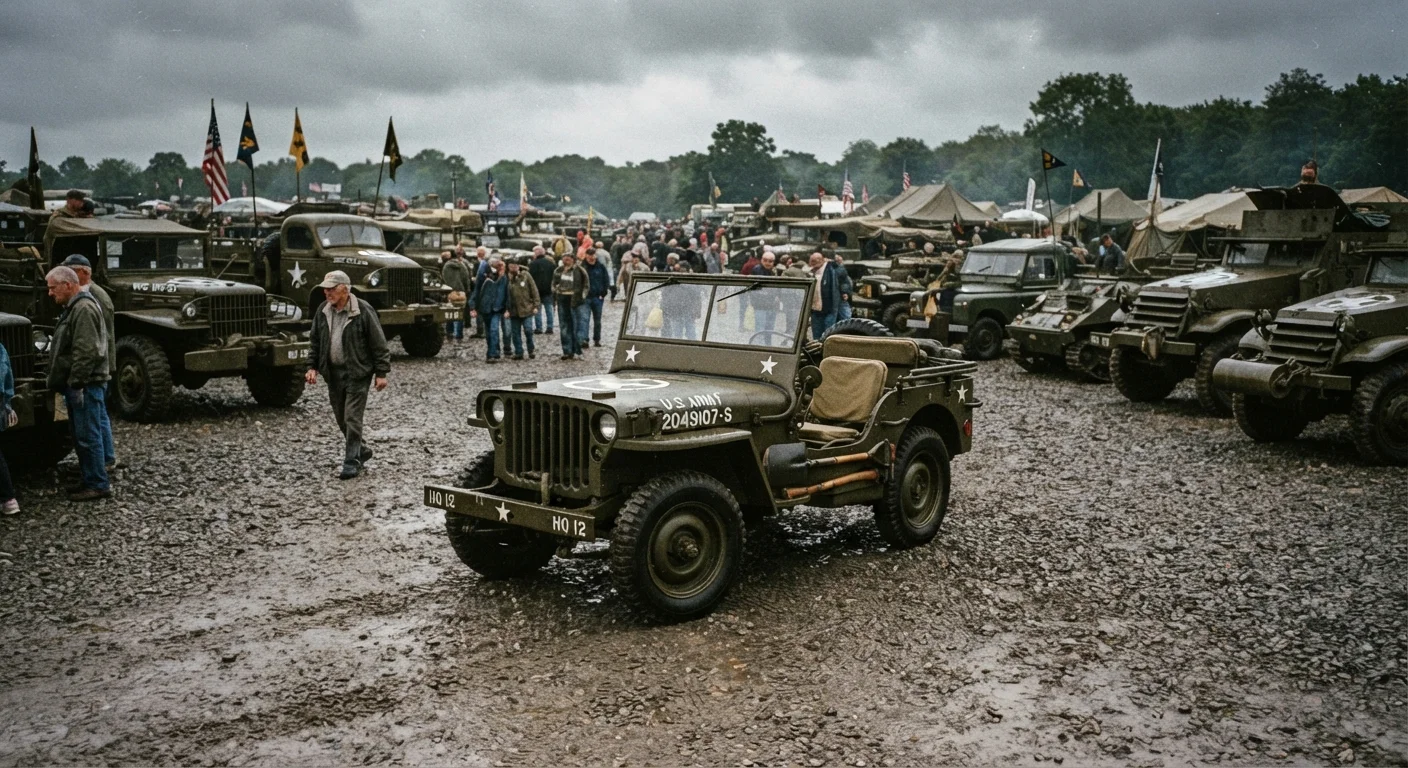
At the lighter end sits the iconic WWII-era Willys MB and Ford GPW jeep, along with postwar derivatives like the M38 and M38A1. Mid-tier platforms include the ubiquitous M35 "Deuce and a Half" cargo truck and the Vietnam-era M151 MUTT. Heavier still are 5-ton M939 series trucks and the more recent HMMWV (High Mobility Multipurpose Wheeled Vehicle), commonly called the Humvee. Tracked vehicles - including the M113 Armored Personnel Carrier and various engineer platforms - represent the rarest and most regulated segment.
Foreign military vehicles are also a significant part of the collector market. British Land Rovers, German Unimogs, and various Cold War-era Eastern Bloc trucks have all found homes in American collections, often imported under specific customs provisions. Understanding which category a vehicle falls into shapes every subsequent decision about acquisition, titling, and use.
Understanding Condition and Classification
Military condition grading is a functional system, not a cosmetic one - and conflating the two is one of the most common mistakes first-time buyers make. Government disposal records use terms like Serviceable, Unserviceable, and Beyond Economical Repair (BER). These reflect operational readiness, not appearance or collector desirability.
A vehicle classified as Serviceable met military readiness standards at the time of disposal - but that standard allows for significant surface wear, non-original components, and field repairs. An Unserviceable vehicle may simply need a part that was unavailable in the field. BER status often means structural or drivetrain issues that the military deemed uneconomical to fix, not necessarily that the vehicle is beyond a motivated collector's reach.
These grades do not map neatly onto standard collector terminology. For a plain-language guide to how condition grades work in the broader classic vehicle market, see the collector condition terms guide - understanding both systems helps you translate between seller language and actual vehicle state.
Request All Disposal Documentation
When purchasing any surplus military vehicle, ask for the original government disposal paperwork - particularly any DD Form 1348 or equivalent transfer document. This record establishes the vehicle's demilitarization status and chain of custody. Missing or inconsistent paperwork is a red flag worth investigating before funds change hands.
Original military data plates, NATO stock numbers, and unit markings are significant to serious collectors. Verify that paperwork accompanying the vehicle - including any DD Form 1348 disposal documents - matches what you're physically inspecting.
Legal and Regulatory Considerations
Civilian ownership of military surplus vehicles is legal across most of the United States, but the regulatory landscape is layered and varies significantly by vehicle type, state, and intended use.
At the federal level, the key concern is demilitarization. The Defense Logistics Agency (DLA) oversees disposition of excess military property and requires that certain systems be rendered inoperable before transfer to civilian hands. This typically means weapon mounts removed or cut, communications equipment stripped, and - for armored vehicles - hull modifications that satisfy federal requirements. Purchasing through authorized government auction channels generally means this work is already done; buying through private parties requires verifying compliance documentation independently.
State Road-Use Laws Vary Widely
Do not assume a vehicle legally titled in one state is automatically road-legal in another. Tracked vehicles are prohibited from public roads in most jurisdictions, and emissions exemptions for historic vehicles differ significantly across states. Verify your specific state's requirements with the DMV before purchasing - not after.
At the state level, wheeled vehicles may require standard titling, registration, and in some states, emissions testing. Tracked vehicles present a separate challenge: most states prohibit their operation on public roads entirely, limiting use to private property or permitted events. A handful of states have specific provisions for historic military vehicles, so researching your state's DMV rules before purchase is non-negotiable.
Certain platforms - most notably the M151 MUTT - were subjected to mandatory demilitarization orders due to rollover concerns, meaning intact examples carry title complications. Always confirm a vehicle's legal status with your state motor vehicle authority before committing funds.
Where Surplus Vehicles Are Sourced
The acquisition pipeline for military surplus vehicles differs from conventional classic car sourcing in important ways. Government auctions - primarily through GovPlanet and the Defense Logistics Agency's own disposal channels - are the most transparent entry point. Vehicles are listed with condition notes and often photos, though in-person inspection opportunities vary.
Specialist military vehicle dealers maintain standing inventory and typically have more provenance documentation than private sellers. Shows organized through the Military Vehicle Preservation Association (MVPA) function as both marketplaces and knowledge exchanges - serious collectors regularly transact there, and the community vetting that happens informally at these events is difficult to replicate online.
Private sales through classifieds, online forums, and estate sales also surface legitimate examples, but require more due diligence. The same principles that apply to sourcing any collector vehicle - documented history, verifiable provenance, physical inspection - apply here with even greater weight, given the complexity of demilitarization compliance. For a broader look at how experienced collectors approach acquisition across all channels, the guide to sourcing classic vehicles offers relevant framing.
Ownership Costs and Restoration Realities
Military surplus vehicles are frequently underpriced at initial acquisition relative to total cost of ownership - a pattern that catches newcomers off guard. Parts availability is the central variable. For platforms like the M35 truck or the older M38 jeep, a robust aftermarket exists and NOS (new old stock) military parts remain findable. For less common platforms, sourcing becomes a research project of its own.
Diesel engines - common across most post-WWII U.S. military platforms - require mechanics familiar with older commercial or military diesels. The Continental LDS-465 and Detroit Diesel engines found in various M-series trucks are well-documented but not every shop has worked on them. Budget for specialist labor or plan to develop that capability yourself.
Restoration philosophy matters here. A military vehicle restored to correct military specification - the equivalent of a numbers-matching restoration in the civilian collector world - commands stronger interest at shows and among serious buyers. Over-restoring to showroom condition or adding civilian comforts can reduce authenticity value. For a deeper look at how restoration choices affect long-term market positioning, the classic vehicle restoration and value guide provides useful context applicable across collector categories.
Storage requirements are also non-trivial. Many of these vehicles are large, heavy, and ill-suited to standard residential garages. Factor covered storage, floor load capacity, and access for maintenance into your ownership plan from the outset.
This article provides general educational information about military surplus vehicles as collectibles. It is not legal, financial, or regulatory advice. Ownership rules, titling requirements, and demilitarization standards vary by jurisdiction and vehicle type. Consult a qualified attorney and your state motor vehicle authority before purchasing any surplus military vehicle.