Sourcing a Worthy Candidate
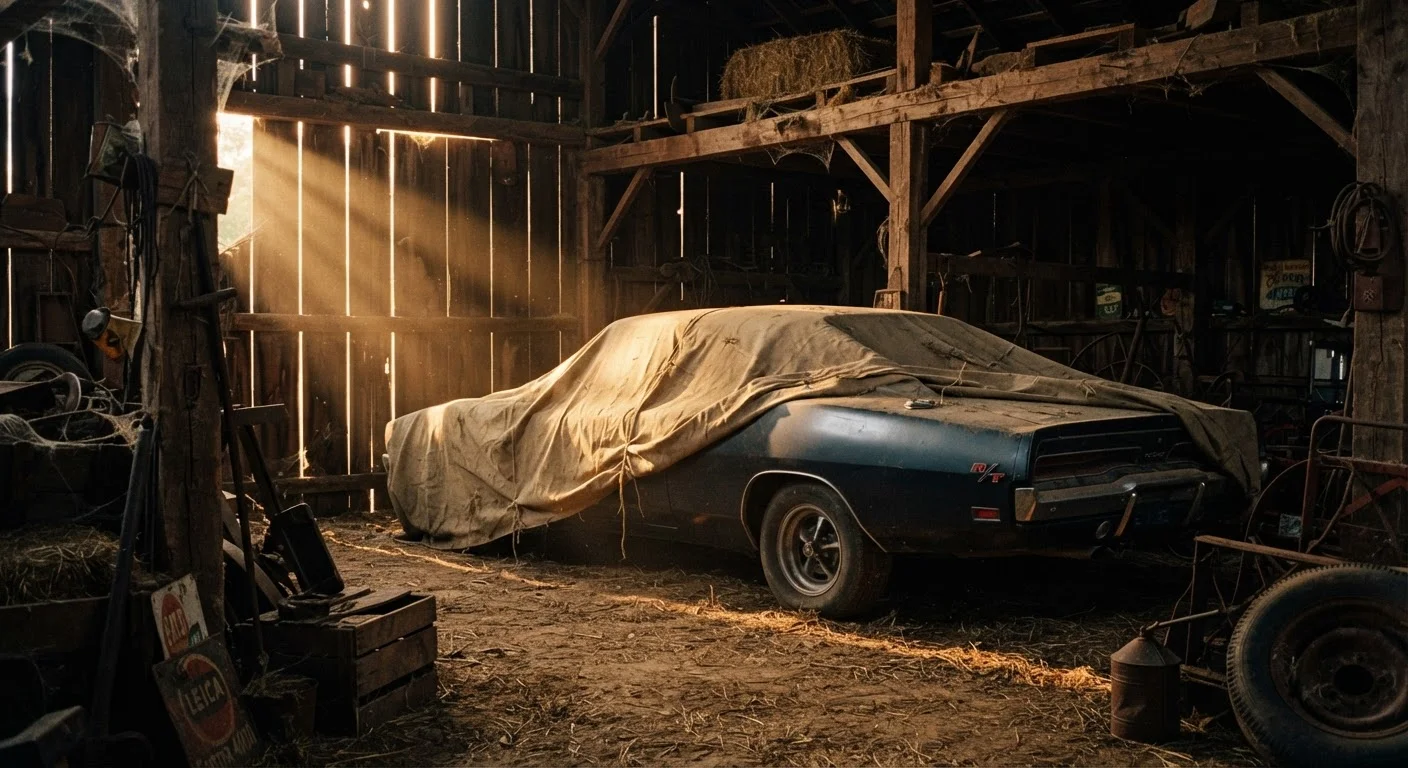
Every successful classic restoration starts with disciplined sourcing. The vehicle you choose sets a ceiling on both the project's enjoyment and its eventual market value - no amount of skilled craftsmanship can fully overcome a flawed starting point.
When evaluating candidates, prioritize structural integrity above cosmetic appeal. Surface rust is workable; frame rot or compromised floor pans can make a project economically untenable. Request complete ownership and maintenance records whenever available, and cross-reference the Vehicle Identification Number (VIN) against any factory build sheets or broadcast sheets that survive for the marque. A clean, documented history builds the provenance narrative that serious buyers and appraisers value.
Private sales, estate auctions, marque-specific clubs, and regional swap meets each offer access to candidates that never reach mainstream listings. Developing relationships within enthusiast communities - see Classic Car Culture for an overview of the hobby's networks - often surfaces the most honest examples at realistic prices.
Before committing to any candidate, obtain a pre-purchase inspection from a marque specialist - not a general mechanic - who can decode factory stampings and identify non-original components specific to that model.
Marque specialists recognize VIN-decoder nuances, correct casting dates, and period-correct hardware that general inspectors routinely miss, saving buyers from costly authenticity surprises post-purchase.
Document every step of the restoration with dated photographs and retained receipts: this paper trail becomes a tangible asset at resale and is often the deciding factor for discerning buyers comparing comparable examples.
Provenance documentation functions as a form of verifiable quality assurance; auction houses and private buyers alike assign measurable premiums to well-documented restorations over undocumented ones.
For enthusiasts drawn to niche segments, the same sourcing discipline applies. The field guide to military surplus vehicles illustrates how classification and ownership rules shape the candidate pool even before condition enters the equation.
Assessing Condition: What the Grades Really Mean
The classic car market relies on a broadly shared condition-grading vocabulary - terms like concours, driver, and project carry real pricing weight. Understanding what separates each grade is not academic: it determines how you interpret an asking price and how you negotiate.
A concours-grade vehicle is expected to exhibit near-factory-correct presentation with documented, high-quality restoration work or exceptional originality. A driver-grade car is mechanically sound and presentable but carries visible wear consistent with regular use. A project vehicle requires substantial investment before it reaches either of those standards. The full breakdown of condition grades and pricing implications provides a detailed reference for each classification.
30-50%
Typical premium for numbers-matching drivetrain
Auction data from major collector car houses consistently shows this spread for high-demand muscle car segments compared to non-matching equivalents.
2-3×
How often restoration budgets exceed initial estimates
Industry practitioners and marque specialists frequently note that first-time restorers underestimate total project cost by a factor of two to three.
60%+
Share of classic car value tied to condition grade
Valuation frameworks used by established appraisers weight condition as the dominant factor, outpacing rarity or provenance for most segments.
Inspect systematically: body panels for filler and respray (a magnet helps identify heavy filler), frame rails for weld repairs or boxing, the firewall for stampings that confirm factory build data, and the undercarriage for evidence of prior accident damage. If in doubt, commission an independent pre-purchase inspection by a specialist familiar with the specific marque before committing.
Authenticity, Numbers-Matching, and Why It Moves Markets
In collector circles, numbers-matching refers to a vehicle whose major drivetrain components - engine, transmission, and sometimes rear axle - carry stampings that correspond to the original VIN. For many marques, a confirmed numbers-matching drivetrain commands a meaningful premium over an otherwise identical car with a replacement engine, even a correct-era unit.
The logic is straightforward: authenticity is finite. Once an original engine is replaced, that factory-correct combination cannot be recreated. Auction results from established houses consistently show the spread between numbers-matching and non-matching examples of the same model, particularly for high-demand muscle cars and limited-production variants.
“The difference between a good restoration and a great one is almost always in the documentation. The car tells one story; the paperwork confirms it.”
— Collective observation from marque registry judges, Classic vehicle concours judging community
Provenance documentation amplifies authenticity. Factory window stickers (Monroney labels), dealer invoices, original title chains, and period photographs all contribute to a verifiable story. For survivors - unrestored originals with original paint and interior - this documentation can be especially consequential. The case for leaving patina alone explores why the survivor philosophy has reshaped collector values in recent decades.
Be alert to misrepresentation. Stamping fraud exists, and some sellers misapply the term numbers-matching loosely. Cross-verify engine codes against published factory decoder resources specific to the marque before accepting any authenticity claim at face value.
Restoration Choices and Their Market Value Consequences
Restoration is not a single decision - it is a sequence of choices, each with financial and market-value implications. The core question is whether the goal is personal enjoyment, eventual resale, or show competition, because the answer should shape every subsequent decision.
A correct restoration - one that returns a vehicle to factory-original specification using period-appropriate materials and methods - generally supports the strongest resale position for high-demand models. Modifications, even tasteful ones, narrow the buyer pool. Non-factory paint colors, aftermarket interiors, or engine swaps may improve the driving experience but typically reduce appeal to the collectors who pay the highest prices.
Document Every Restoration Step
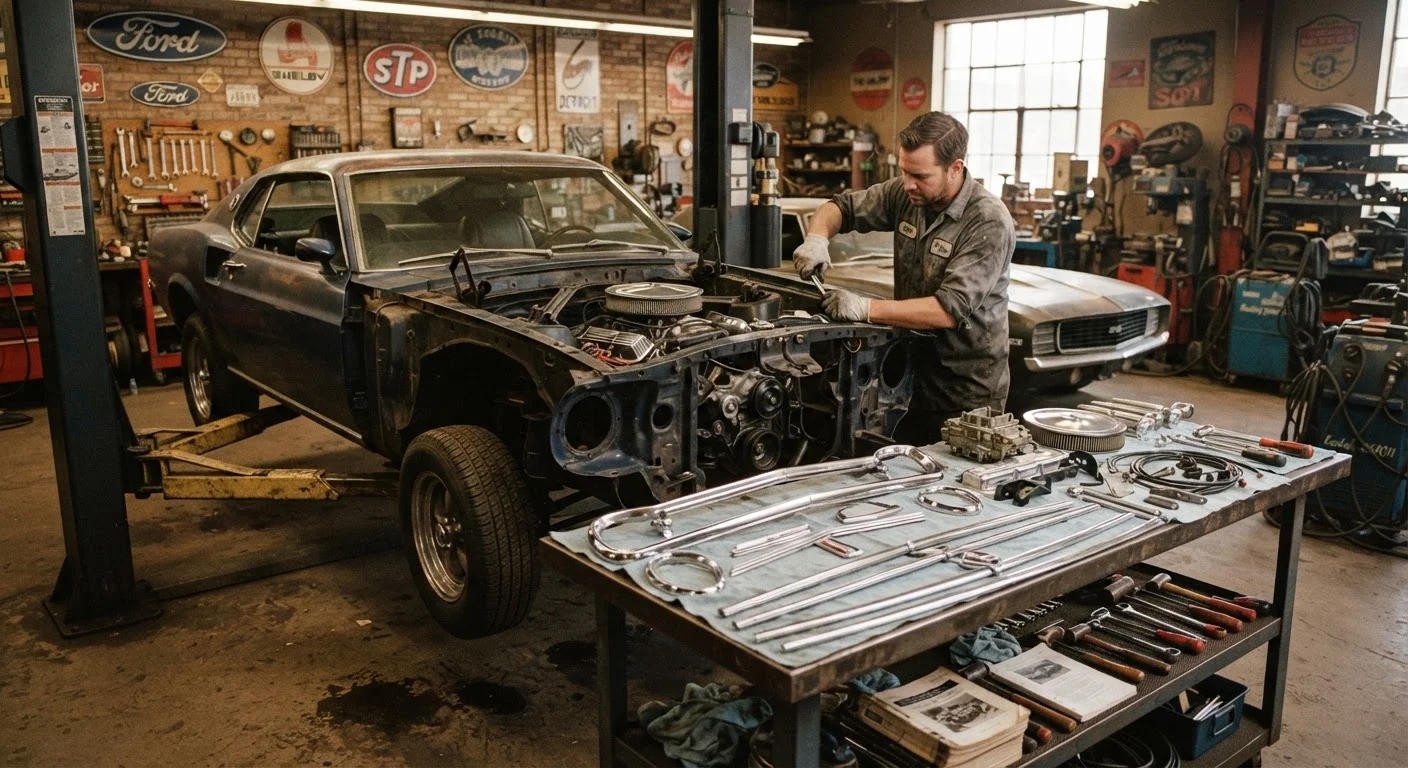
Photograph and retain receipts for every component, finish, and specialist service involved in the restoration. A complete paper trail - from bare-metal bodywork through final assembly - is a credible quality signal to future buyers and appraisers. Restorations with thorough documentation consistently receive stronger valuations than comparable undocumented work.
Restoration quality matters as much as scope. Amateur bodywork with visible waves, mismatched panel gaps, or incorrect paint formulations will be penalized by knowledgeable appraisers. Conversely, a meticulously documented restoration performed by recognized specialists - with receipts, photographs, and parts provenance - can approach or equal a well-preserved original in market reception.
Common myths circulate in the hobby about what restoration automatically does for value. The classic car value myths article addresses several of these directly, including the persistent belief that any restoration necessarily adds value.
Understanding the Hidden Cost Curve
Budgets for classic restoration projects routinely diverge from initial estimates - sometimes dramatically. The divergence is structural, not accidental: older vehicles conceal problems that only reveal themselves once disassembly begins, and sourcing correct parts for low-production models involves real scarcity premiums.
Bodywork is the category most prone to overrun. What appears as surface rust in inspection can mask perforated inner structure requiring fabrication rather than patch repair. Specialist labor - frame-off restoration, chrome plating, correct upholstery - is priced accordingly, and qualified craftspeople are often booked months in advance.
Scope Creep Is the Norm, Not the Exception
Once a classic vehicle is disassembled, previously hidden structural or mechanical issues routinely add 20-40% or more to original project estimates. Build a contingency reserve of at least 25% into any restoration budget before work begins. Proceeding without this buffer is the most common financial mistake first-time restorers make.
The hidden costs that can erode a restoration's return covers these categories in detail: bodywork overruns, rare parts sourcing, and the cumulative weight of specialist labor. Reading that analysis before committing a budget is strongly advisable. For those planning to handle mechanical work personally, the DIY vehicle maintenance guide provides a grounded framework for what home mechanics can realistically undertake - and when a job warrants professional hands.
Reading the Market with Confidence
Asking prices are not market prices. The spread between what sellers list and what transactions actually close at is often substantial in the classic vehicle segment, where emotion, condition disputes, and regional demand variations all influence outcomes.
Serious enthusiasts anchor valuations to completed sales: major auction results (published by established auction houses), private-party transactions reported through marque registries, and insurance appraisal data. These sources reflect what buyers actually paid, not what sellers hoped to receive. The strengths and limits of online valuation tools explains why automated estimates should be treated as a starting point rather than a final answer for collector vehicles.
For readers newer to the discipline, the beginner's introduction to classic vehicle valuation lays out the foundational variables - condition grades, rarity factors, and comparables - that underpin every serious price assessment. For a broader view of what owning a classic actually entails across the full ownership lifecycle, the full spectrum of classic car ownership offers an authoritative end-to-end perspective.
This article is for general informational and educational purposes only. It does not constitute financial, investment, or professional appraisal advice. Consult a qualified vehicle appraiser or financial professional before making significant purchase or restoration decisions.