How the Three Mount Types Work
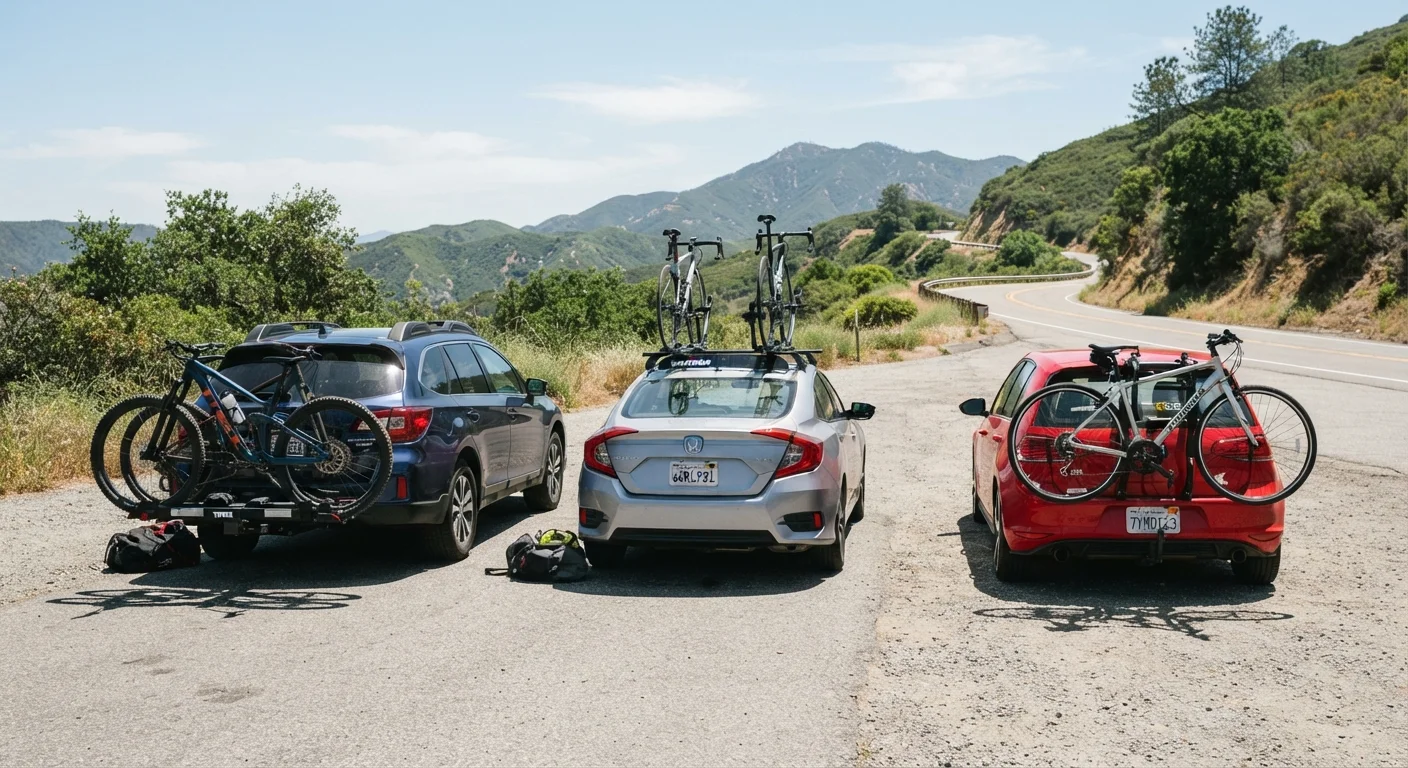
Bike racks for road trips fall into three categories defined by how they attach to your vehicle, and each one carries a distinct set of physical requirements and daily trade-offs.
Hitch-mount racks slide into a 1.25-inch or 2-inch receiver hitch and hold bikes either on a hanging arm or a tray-style platform. They sit at bumper height, making loading straightforward, and most tray-style designs support bikes regardless of frame shape - an advantage if you ride a step-through or full-suspension mountain bike. The main prerequisite is an installed receiver hitch; not all sedans or smaller crossovers have one from the factory, though aftermarket hitches are widely available. See also: towing setup considerations.
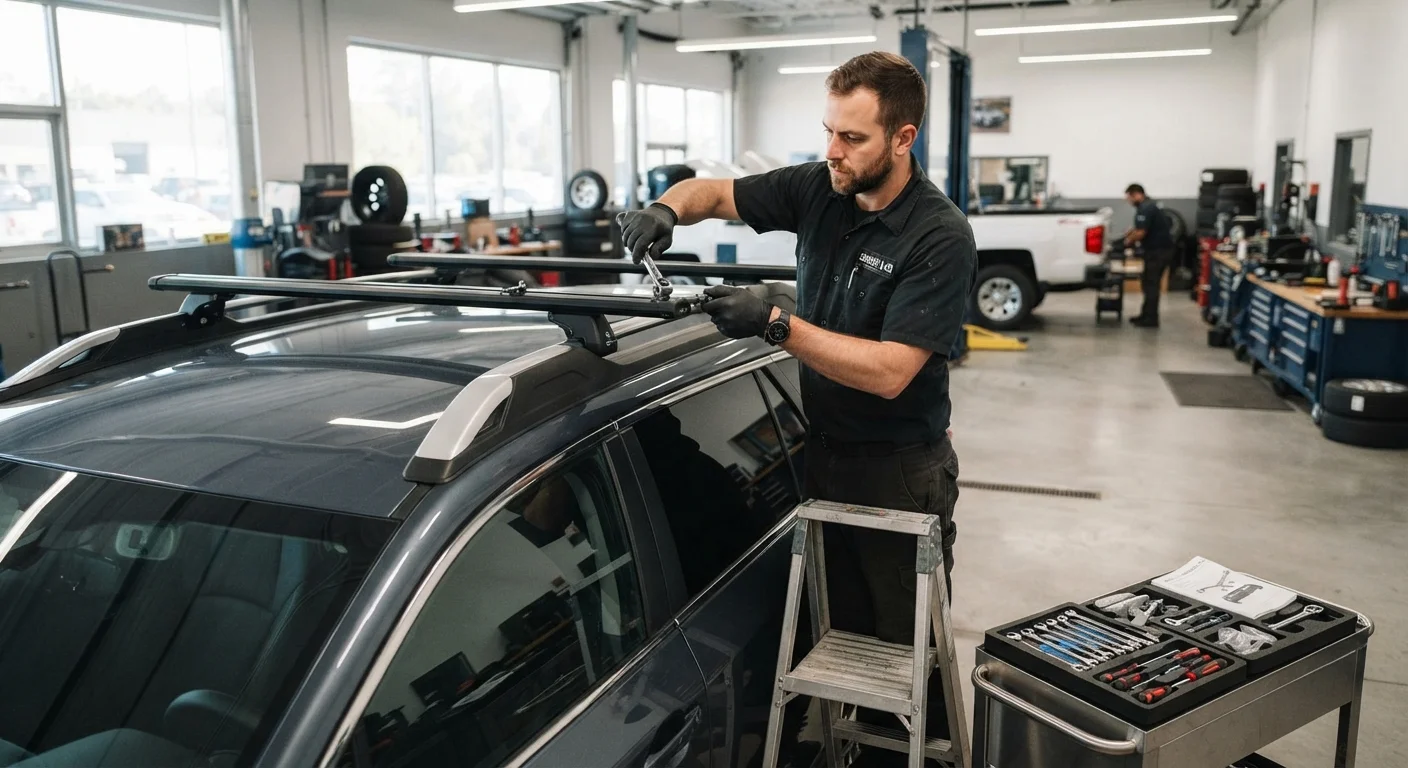
Roof racks mount to factory crossbars or aftermarket rail systems and hold bikes upright or inverted above the roofline. They keep your vehicle's rear entirely clear - useful if you tow a trailer or need frequent cargo access. The trade-off is lift height; loading a heavy trail bike onto a tall SUV or truck is physically demanding and can be a genuine barrier for some riders.
Trunk-mount racks attach via straps and hooks to the lip of a trunk lid or hatchback. They require no permanent hardware and transfer between vehicles in minutes. Their load limits are lower - typically two to three bikes - and they work best with standard diamond-frame road or hybrid bikes.
| Hitch-Mount | Roof-Mount | Trunk-Mount | |
|---|---|---|---|
| Vehicle requirement | Receiver hitch (1.25" or 2") | Factory or aftermarket crossbars | None - strap attachment |
| Typical bike capacity | 2-5 bikes | 1-4 bikes | 2-3 bikes |
| Loading effort | Low - bumper height | High - overhead lift | Medium - handlebar height |
| Frame compatibility | Tray: broad; hanger: limited | Good with fork mount; step-through harder | Best for standard diamond frames |
| Security | Strong - locking hitch and arms | Moderate - height is deterrent | Low - strap-based, no lock standard |
| Aerodynamic drag | Low-moderate | High at speed | Low-moderate |
| Rear vehicle access | Blocked (tilt-away models help) | Fully clear | Blocked |
| Portability / transferability | Moderate - fits any hitch vehicle | Low - requires compatible bars | High - fits most vehicles |
| Relative cost range | Moderate to high | Moderate to high | Low to moderate |
Compatibility, Security, and Day-to-Day Practicality
Compatibility deserves scrutiny before you invest. Hitch racks, particularly hanging-arm styles, can struggle with non-traditional frame geometries. Tray designs solve most of that, but check whether the rack accommodates your wheel size and axle standard - many thru-axle bikes need an adaptor for older hanger-style racks. For a broader look at hauling-gear compatibility, matching cargo accessories to your actual needs covers the key questions.
Roof racks demand attention to garage and parking-structure clearance. Adding even one bike can push overall vehicle height past the 7-foot threshold common in urban structures. A memorable moment of distraction at a low-clearance entrance can damage bike and vehicle alike.
Mind Your Garage Clearance With Roof-Mount Bikes
Adding bikes to a roof rack can raise your vehicle's total height by 18 inches or more. Many parking structures and residential garages sit at or below 7 feet. Make it a habit to note your loaded height before any trip involving enclosed parking - the cost of forgetting, even once, can be significant.
Trunk mounts introduce another concern: strap-based attachment puts pressure on painted surfaces, and vibration over highway miles can cause rubbing. Protective pads help, but the contact points should be checked regularly on longer trips.
Security varies significantly. Hitch racks typically include locking mechanisms for both the rack-to-hitch connection and the bike-to-rack hold. Roof racks make opportunistic theft harder simply by virtue of height, though a determined thief with time can still remove an unlocked bike. Trunk mounts offer the least inherent security; a cable lock through the frame is a minimum precaution at any overnight stop.
Fuel economy takes a hit with any external carry system, but the effect differs. Roof-mounted bikes create substantial aerodynamic drag - especially at highway speeds - whereas hitch racks extend behind the vehicle and add comparatively less drag, though they do add length that affects parking maneuverability. Expanding your road-trip storage options breaks down how each system affects overall vehicle dynamics.
Choosing the Right Rack for Your Trip Profile
The rack that suits you depends on how often you ride, how many bikes you carry, and what your vehicle can support. A family hauling four full-suspension bikes to a trail network every weekend has very different requirements from a solo cyclist making two or three trips per year with a lightweight gravel bike.
Check Tilt and Swing-Away Access Before You Buy
Many hitch racks now offer a tilt or swing-away mechanism that lets you open the tailgate or trunk without removing the bikes. If you plan to access rear cargo frequently on a road trip, this feature is worth prioritizing - it eliminates one of the biggest practical frustrations of hitch-mount ownership.
If you're combining a bike trip with bikepacking gear, the rack choice affects how much external storage you still have available. Packing a bikepacking kit for multi-day touring walks through how load distribution on the bike itself interacts with your carry setup - worth reading before you commit to a configuration.
RV and camper travelers face a unique version of this decision. Hitch racks compete with the tow hitch for the same receiver, so a swing-away model or a dedicated tow vehicle setup is often the solution. RV living and setup covers how full-timers and weekend campers approach exactly this kind of gear stacking problem.
Finally, consider how the rack interacts with your other cargo needs. If the bike rack blocks your trunk or tailgate, that matters on a multi-day trip where you'll be loading and unloading coolers and gear repeatedly. A fold-away or tilt-access hitch rack, or a roof setup, may be worth the extra investment for that reason alone.