Why Colour and Location Both Matter
A puddle under your vehicle isn't just a nuisance - it's a communication from one of several sealed systems. Interpreting it correctly requires two pieces of information: the colour and consistency of the fluid, and where on the garage floor it appears relative to the vehicle's footprint. Neither clue alone is fully reliable, because fresh fluids can look different from aged ones, and pooling can shift depending on how the vehicle is parked. Use both together.
Before crouching under a vehicle, place clean white cardboard or paper under the suspected area overnight to get a fresh, uncontaminated sample. This removes the ambiguity of old staining on driveways. Once you have a good sample, the lookup table below will help you narrow the source.
Fluid Colour Reference: What Each Puddle Signals
The following breakdown covers the most common fluids found in passenger cars, trucks, campers, and light commercial vehicles. Note that dyes added by some manufacturers can shift colours slightly - always cross-reference with location.
ATF (Automatic Transmission Fluid)
A hydraulic oil specifically formulated for automatic transmissions. It lubricates moving parts, acts as a hydraulic medium for gear changes, and is typically dyed red for easy identification.
Coolant / Antifreeze
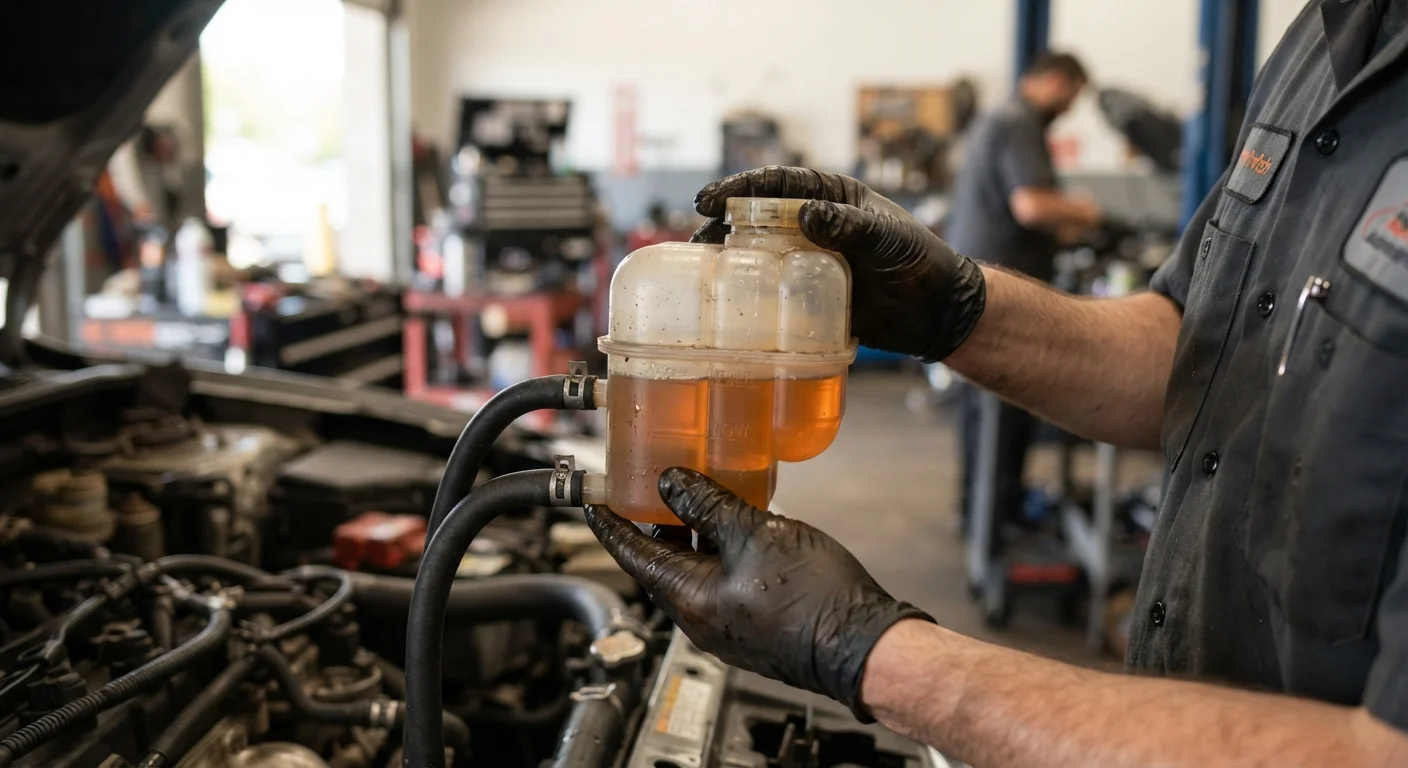
A water-based fluid mixed with ethylene or propylene glycol that regulates engine temperature and prevents freezing or boiling. Available in multiple colour formulations tied to different additive chemistries.
Brake Fluid
A glycol-ether or silicone-based hydraulic fluid that transmits pedal force through the brake lines to the calipers and wheel cylinders. It absorbs moisture over time, lowering its boiling point.
Rear Main Seal
A rubber seal at the back of the engine crankshaft that prevents oil from escaping where the crankshaft exits the block. Leaks here appear under the engine toward the rear and often require significant disassembly to repair.
Heater Core
A small radiator-like component inside the dashboard that uses hot engine coolant to warm cabin air. A leaking heater core can produce a sweet smell inside the vehicle and wet or foggy interior glass.
Power Steering Rack
The steering gear assembly that converts steering wheel input into wheel movement, assisted by hydraulic pressure in traditional systems. Leaks typically appear under the front of the vehicle.
Brown or Black
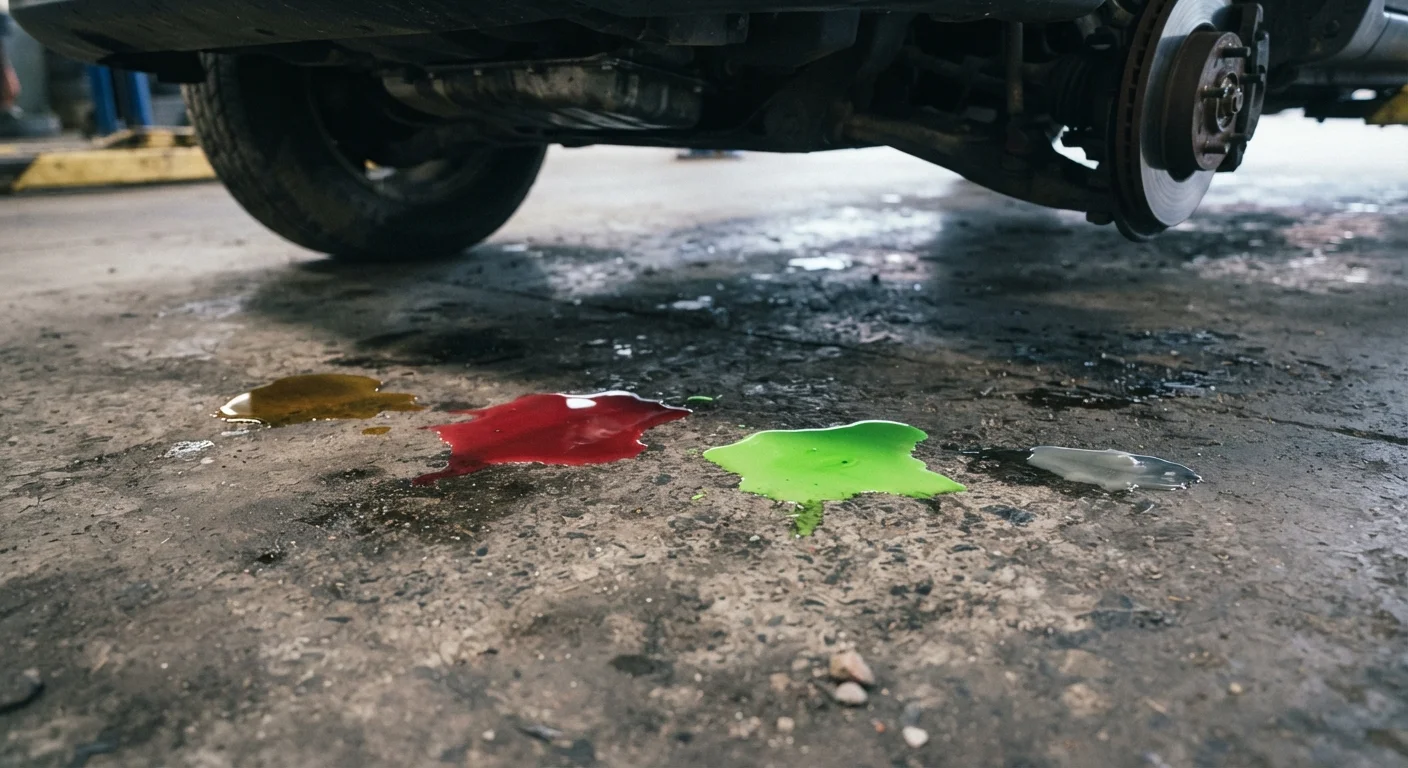
Engine oil starts amber-gold when new and darkens to brown or near-black with heat and combustion byproducts. A brown puddle directly under the engine block or oil pan almost always points to an oil leak - valve cover gasket, oil pan gasket, or rear main seal are the most common sources. A very dark, thin film with a slight sheen may also be gear oil from the differential or manual transmission.
Red or Pink
Automatic transmission fluid (ATF) is typically dyed red, making it one of the easier fluids to identify. Fresh ATF is bright red and slightly sweet-smelling; aged ATF turns darker and may smell burnt. A red puddle centered under the middle of the vehicle usually points to the transmission pan or cooler lines. Power steering fluid is also often red or pink - if the puddle sits forward under the engine bay, the power steering pump or rack is more likely. For a full breakdown of each fluid's role and service interval, see the fluid-by-fluid reference guide.
Green, Orange, or Blue-Green
Coolant (antifreeze) is the most colour-variable fluid - manufacturers use green, orange, pink, yellow, and blue formulations depending on the additive package. All share a distinctly sweet smell and a slightly slippery feel. Coolant puddles typically appear under the front of the vehicle near the radiator, below the water pump, or under the cabin heater core area. A sweet smell inside the cabin without visible floor wetness is a heater core warning. Before drawing conclusions from coolant colour alone, it helps to understand what colour changes actually mean - the coolant flush myths article separates fact from fiction on this point.
Clear or Light Yellow
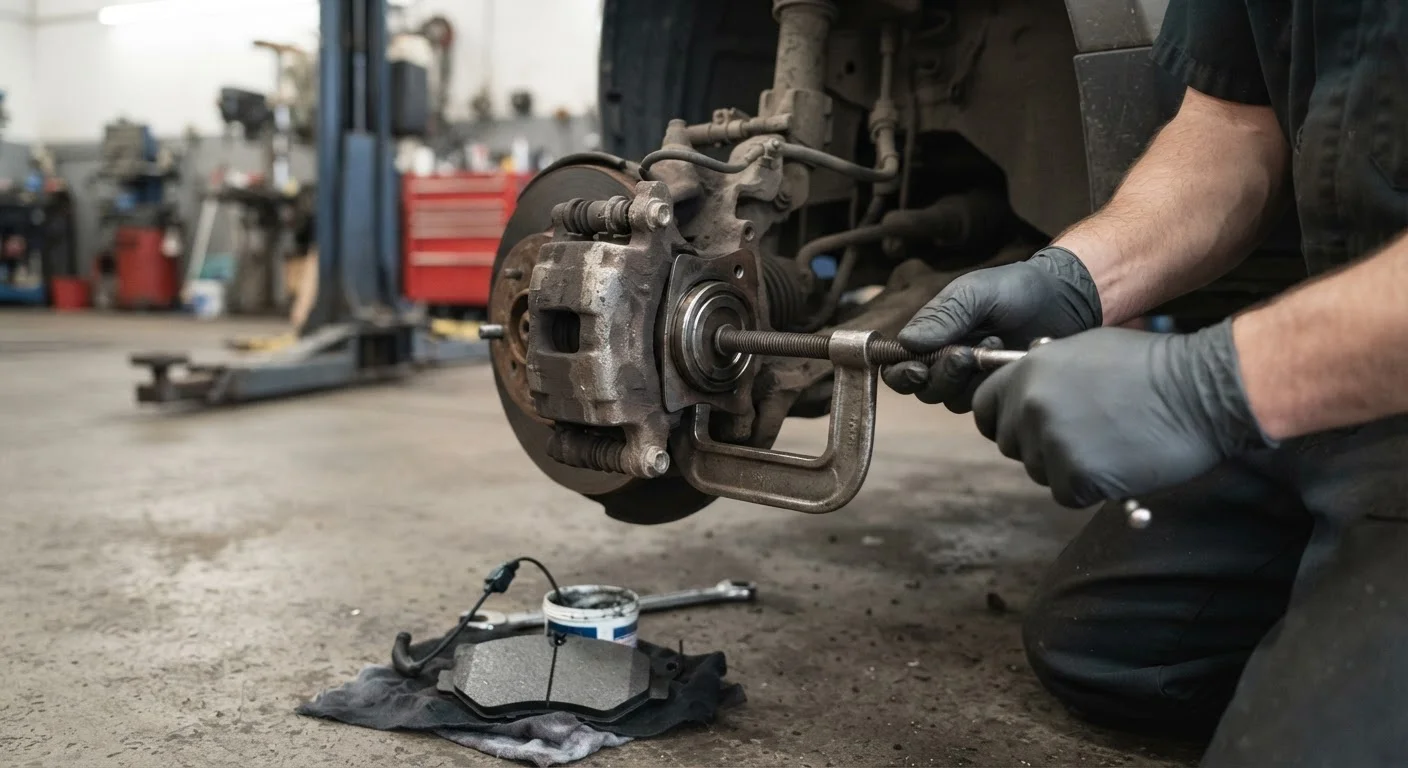
Water condensation from the air conditioning evaporator drain is clear, odourless, and drips from under the passenger-side dash area - this is completely normal during humid weather. Brake fluid is clear to light yellow when fresh and has a distinctly chemical, slightly oily smell. It's glycol-based and will damage paint. A brake fluid leak near any wheel well - particularly at the caliper, wheel cylinder, or brake line junction - is a safety-critical issue requiring immediate attention before driving. Do not delay diagnosis or repair of a suspected brake fluid leak.
Oily Sheen on Water, No Distinct Colour
A rainbow-coloured sheen on a water puddle often indicates a very small oil leak or fuel residue washing off the undercarriage in rain. Fuel itself is clear to light amber and evaporates quickly, leaving little pooling but a strong odour. Any fuel smell under a vehicle warrants prompt investigation - fuel leaks pose a fire risk.
When to DIY and When to Stop
Many minor leaks - a weeping valve cover gasket, a loose drain plug, a cracked coolant hose - are within reach of a confident home mechanic with basic tools and a factory service manual. However, some fluid leaks indicate conditions where driving the vehicle or attempting repairs without proper equipment creates real risk.
Brake Fluid Leaks: Do Not Drive
Any confirmed or strongly suspected brake fluid leak should be treated as a do-not-drive condition until the system is inspected by a qualified mechanic. Even a small loss of hydraulic pressure can dramatically reduce stopping ability. Have the vehicle towed if the pedal feels soft, spongy, or sinks to the floor.
As a general guideline: if the leak involves brake fluid, fuel, or power steering fluid, treat it as a priority repair rather than something to monitor. These systems directly affect vehicle control. Oil and coolant leaks that are slow and caught early are more forgiving, but even a slow oil leak allowed to progress can result in a catastrophically low oil level without warning. Check fluid levels before every drive if you know a leak exists.
For RV and camper owners, fluid leak diagnostics share the same principles but the vehicle footprint is larger and there may be additional systems - hydraulic slide-outs, leveling systems - that use their own hydraulic fluid, typically red or amber. If you're also managing holding tank issues alongside fluid leaks, the RV holding tank myths guide addresses the plumbing side separately.
This article is for general informational and educational purposes only. Vehicle repair involves risk of injury and damage if performed incorrectly. Consult a qualified mechanic for diagnosis and repair of any safety-critical system, including brakes, fuel, and steering.