Why Fluid Knowledge Matters
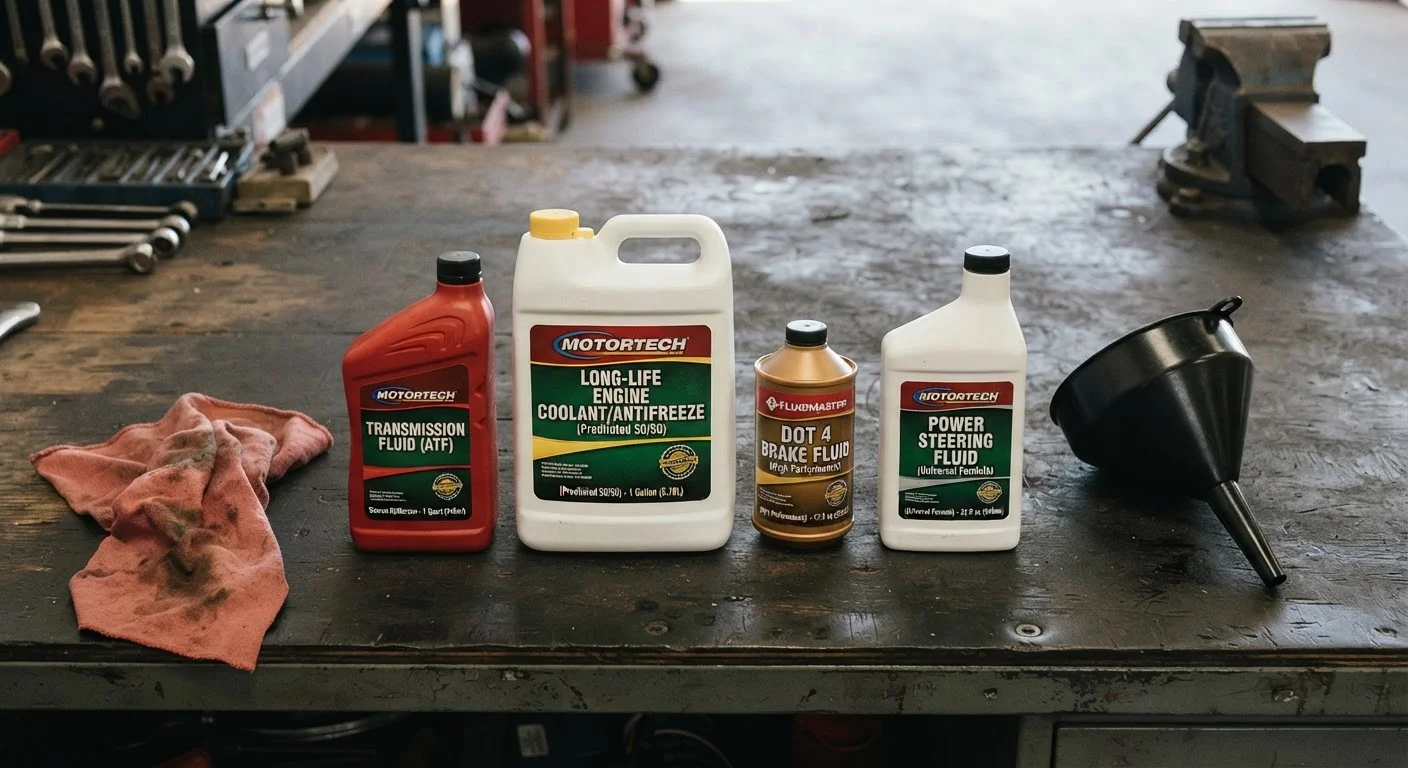
Your vehicle runs on more than fuel. A half-dozen fluids circulate through separate systems, each doing a job that no other fluid can substitute for. When one degrades or drops below spec, the system it serves suffers - sometimes quietly for months before a failure becomes obvious.
This reference breaks down transmission fluid, engine coolant, and brake fluid individually: what each does, how it degrades, when to replace it, and what early warning signs look like. For a broader overview of check intervals across all fluids, see our fluid checks reference. For diagnosis when something's already leaking, matching leak color to source is the right starting point.
| Transmission fluid change interval (auto) | 30,000-60,000 miles typical; varies by duty cycle (OEM service schedules; verify with owner's manual) |
| Coolant change interval (OAT/HOAT) | Up to 5 years / 150,000 miles (OEM-dependent) (Varies by coolant type and manufacturer specification) |
| Brake fluid change interval | Every 2 years regardless of mileage (Common industry recommendation; check OEM schedule) |
| Brake fluid boiling point (DOT 3 dry min.) | 401°F (205°C) (U.S. Federal Motor Vehicle Safety Standard No. 116) |
| Brake fluid boiling point (DOT 4 dry min.) | 446°F (230°C) (U.S. Federal Motor Vehicle Safety Standard No. 116) |
| Coolant corrosion inhibitor depletion | IAT: ~2 years; OAT: up to 5 years (Industry general guidance; confirm with fluid manufacturer data) |
Transmission Fluid
Transmission fluid is both a lubricant and a hydraulic medium. In automatic transmissions, it transfers power through the torque converter and actuates clutch packs and bands that control gear shifts. In manuals, it lubricates gear sets and synchronizers. Neither function tolerates a wrong fluid type or severely depleted volume.
Degradation and Replacement
Heat is the primary enemy. Fluid oxidizes over time, losing its viscosity stability and friction-modifier additives. Automatic transmission fluid (ATF) that has turned dark brown or smells burnt has typically reached the end of its service life. Most manufacturers specify a drain-and-fill interval between 30,000 and 60,000 miles under normal driving, though severe-duty use - towing, stop-and-go traffic, mountain driving - shortens that window considerably. Always consult your owner's manual for the correct fluid specification, as using the wrong ATF grade can damage clutch packs.
Failure Signatures
- Delayed or harsh gear engagement
- Slipping between gears at steady throttle
- Shudder during torque converter lockup
- Transmission overheating warning light
Manual gearbox fluid (typically a gear oil rated GL-4 or GL-5, or a specific MTF) is often overlooked because it has no dipstick. Many manufacturers rate it as lifetime fill, but many technicians recommend inspection at 50,000-mile intervals, particularly if whining or notchy shifting develops.
Engine Coolant
Coolant - also called antifreeze - circulates through the engine block, cylinder head, and radiator to carry away combustion heat. It also raises the boiling point of the cooling system above the temperatures an engine routinely reaches, and lowers the freezing point to protect against cold-weather damage. A corrosion-inhibitor package protects aluminum, iron, and copper components throughout the system.
Degradation and Replacement
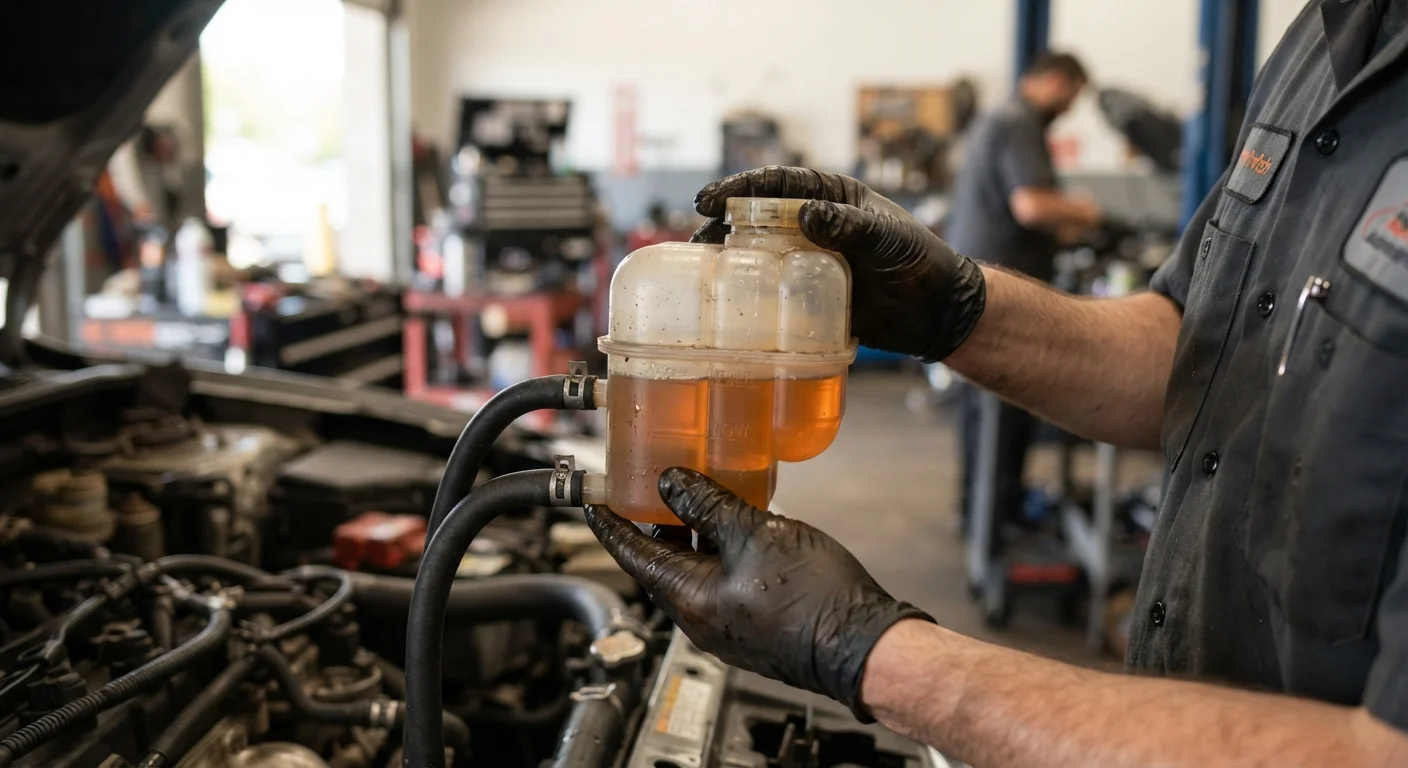
The corrosion inhibitors deplete before the base fluid wears out. Once depleted, coolant becomes acidic and can pit aluminum surfaces, damage water pump seals, and corrode radiator tubes. Coolant type matters enormously for service intervals: traditional green IAT (Inorganic Additive Technology) coolants typically require replacement every 2 years or 30,000 miles; OAT (Organic Acid Technology) and HOAT (Hybrid OAT) formulations used in most modern vehicles are rated for 5 years or 150,000 miles in some cases, but verify against your OEM spec before extending service.
Before changing your coolant, read through common coolant flush misconceptions - several widely repeated beliefs can lead to wasted effort or incorrect procedure.
Don't Mix Coolant Types Without Flushing
Mixing OAT and IAT coolants can cause the inhibitor packages to react, forming a gel that can restrict flow through the heater core or water pump passages. If you're topping off and don't know what's in the system, distilled water is a safer short-term measure than adding a different coolant type. A full flush and refill with the correct specification resolves the issue properly.
Failure Signatures
- Engine temperature gauge climbing above normal range
- Sweet smell from the engine bay or exhaust
- White exhaust smoke (possible head gasket ingestion)
- Visible rust or sediment when checking the overflow reservoir
Brake Fluid
Brake fluid is a hydraulic fluid that transmits pedal force to the calipers and wheel cylinders. It must maintain consistent viscosity under high heat - repeated hard stops can heat caliper fluid to temperatures exceeding 300°F - and it must not compress. Most passenger vehicles use glycol-ether-based DOT 3, DOT 4, or DOT 5.1 fluid. DOT 5 (silicone-based) is a separate specification not compatible with glycol systems and is rarely used outside specialized or classic vehicles.
ATF (Automatic Transmission Fluid)
A specialized hydraulic and lubricating fluid formulated for automatic transmissions. ATF specifications vary by manufacturer and generation; mixing incompatible types can damage internal clutch components.
IAT / OAT / HOAT Coolant
Three coolant inhibitor technology categories. IAT (Inorganic Additive Technology) uses silicates and phosphates; OAT (Organic Acid Technology) uses organic corrosion inhibitors with longer service life; HOAT combines both approaches and is common in modern OEM applications.
Hygroscopic
A property of glycol-based brake fluids describing their tendency to absorb moisture from the atmosphere. Increasing water content lowers the fluid's effective boiling point over time.
Vapor Lock (Brake)
A braking failure condition where moisture in overheated brake fluid vaporizes, creating a compressible bubble in the hydraulic line. The result is a spongy or unresponsive brake pedal. It is distinct from fuel-system vapor lock.
DOT Rating
A U.S. Department of Transportation specification for brake fluid that defines minimum dry and wet boiling point thresholds. Higher DOT numbers (DOT 4, DOT 5.1) indicate higher boiling point minimums and are not always interchangeable.
GL-4 / GL-5 Gear Oil
API service classifications for manual transmission and differential gear oils. GL-4 is typically used in manual transmissions; GL-5 suits differentials. Using GL-5 in some manual gearboxes can damage brass synchronizer rings.
Degradation and Replacement
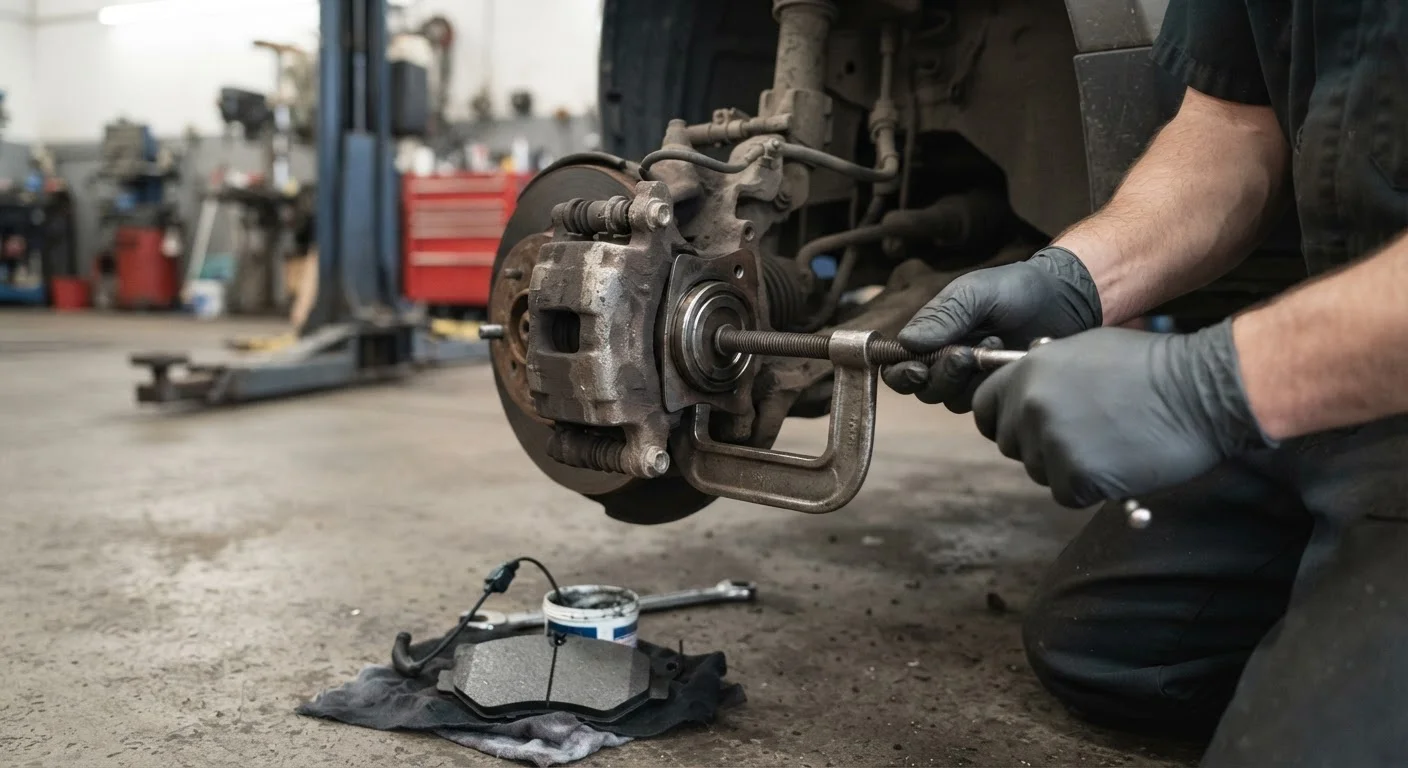
Glycol-based brake fluids are hygroscopic - they absorb moisture from the air over time. As water content rises, the fluid's boiling point drops. Under heavy braking, water in the fluid can vaporize, creating a compressible vapor pocket that causes a spongy or fading pedal - a condition called vapor lock. The DOT rating on a fluid describes its dry and wet boiling point minimums; as absorbed water content increases, effective boiling point moves toward the lower wet rating. Most manufacturers recommend replacement every 2 years regardless of mileage. A brake fluid tester can measure moisture content directly.
For a full picture of how the braking system ages as a whole, see brake system maintenance basics.
Failure Signatures
- Spongy or soft pedal feel
- Pedal fade under repeated hard stops
- Fluid appearing dark brown rather than clear or light yellow
- Low reservoir level without obvious external leak (may indicate pad wear, not necessarily fluid loss)
Brake fluid service is a safety-critical task. If you are uncertain about bleeding procedure or system condition, have the work performed by a qualified mechanic. All fluid maintenance is part of the broader routine maintenance schedule that keeps your vehicle operating reliably.